

Sindh cuisine
Aloo Tuk (Sindhi Double-Fried Spiced Potatoes)
Aloo Tuk (Sindhi Double-Fried Spiced Potatoes) is a traditional Sindh Pakistani dish. Thick potato slices that go through two rounds of frying — first to cook through, then pressed flat and fried again until shattery and golden — then immediately tossed in a fierce spice mix of amchoor, red chilli, and chaat masala while still blazing hot. The result is a snack that is simultaneously crispy, soft inside, sour, spicy, and completely addictive. You will eat them faster than you can fry them.
Aloo Tuk is one of the most beloved street snacks of Sindh, and once you understand the double-frying technique, you'll use it on everything.
This double-frying technique is the same principle behind the Belgian double-fried chip and Japanese korokke — independent discoveries of the same method. The word 'tuk' refers to the pressing-and-flattening step — after the first fry, you press each potato slice with your palm or a flat-bottomed glass to create more surface area, which becomes extra crispy in the second fry. The spices are tossed on hot out of the oil, so they stick to the surface and almost toast against the residual heat. Traditionally served with Sindhi dal and rice as a crunchy accompaniment, Aloo Tuk has also found its place as a standalone street snack, particularly in Karachi's Defence and Clifton areas where small stalls fry them to order.
Ingredients
Instructions
- PREPARE THE POTATOES: Peel all the potatoes. Cut each potato into thick, even slices — about 1 to 1.5 cm thick (roughly the thickness of two stacked 10-rupee coins). Try to make all the slices as even as possible so they cook at the same rate. Rinse the slices in cold water to remove surface starch. Pat completely dry with a clean cloth or kitchen paper. WHY: Thoroughly dried potatoes are essential. Any surface water will cause the oil to splutter violently and dangerously when you add them, and wet potatoes also steam rather than fry, preventing that signature crunch. HINT: If you have time, lay the sliced potatoes on a clean kitchen cloth for 20 minutes to air-dry further.
- MIX THE SPICE BLEND: In a small bowl, mix together the namak (salt), amchoor (dry mango powder), lal mirch powder (red chilli), chaat masala, and zeera powder (cumin powder). Mix well. Have this bowl ready and nearby before you start frying — you'll need to toss the spices on the moment the potatoes come out of the oil. FUN FACT: Using amchoor (powdered dried raw mango) instead of lemon juice is the Sindhi trick — it gives a concentrated sour punch without adding any moisture that would make the crispy coating go soggy. This is why Aloo Tuk stays crunchy even after the spices are added.
- FIRST FRY: Pour oil into a karahi (wok) to at least 3 inches depth. Heat the oil to medium heat — approximately 160–170°C. Test by dropping in a small piece of potato: it should sink briefly and then slowly float to the surface with gentle bubbling. If it sits at the bottom without bubbling, the oil is too cold. If it shoots to the top and browns immediately, too hot. Carefully add the potato slices in a single layer — don't overcrowd. Fry for 8–10 minutes, turning once halfway through, until the potatoes are cooked all the way through (test by piercing with a fork — it should slide in easily with no resistance) and are a pale golden colour. Remove with a slotted spoon and drain on paper towels. Fry in batches — never crowd the oil.
- PRESS THE POTATOES: While the potatoes are still hot from the first fry, place them one by one on a flat surface (a plate or cutting board). Using your palm, the flat bottom of a heavy glass, or the flat side of a large chamcha (ladle), press down firmly on each potato slice to flatten it to about half its original thickness. Don't be timid — press firmly. The slice will crack and spread slightly. HINT: The pressing exposes more rough, irregular surface area. Those rough edges are what become the extra-crispy, shatteringly crunchy parts in the second fry. A pressed tuk looks a bit rough and uneven — that's exactly what you want.
- SECOND FRY: Increase the oil heat to high — you want the oil hot now, approximately 180–190°C. Test with a tiny bread cube: it should brown in 30–40 seconds. Carefully add the pressed potato slices back into the hot oil in batches. Fry for 3–4 minutes, watching carefully, until they are deep golden and genuinely crunchy-looking — you'll see the surface go from smooth to bubbly and rough-textured, which means they're getting properly crispy. Remove with a slotted spoon immediately when they look and smell golden. WHY: High heat for the second fry is the critical step. It drives off surface moisture rapidly and creates that trademark shattery crust while the inside remains soft.
- SPICE AND SERVE IMMEDIATELY: Transfer the freshly fried hot potatoes directly into a large bowl or onto a serving plate. Immediately — while they are still smoking hot — sprinkle the entire spice mixture generously and evenly over them. Toss gently (use a spoon or shake the plate) to coat every slice. The heat from the potatoes will toast the spices slightly against the surface, intensifying their flavour. Garnish with fresh dhania (coriander) and sliced green chillies if using. Serve at once — every minute you wait, some crunch is lost. HINT: Aloo Tuk are one of life's peak experiences when eaten straight from the pan. Get everyone to the table before you start frying the second batch.
Essential for This Recipe
As an Amazon Associate, we earn from qualifying purchases
Kashmiri Red Chilli Powder
Adds deep red color with mild heat — essential for authentic karahi, biryani, and nihari without overwhelming heat
Whole Cumin Seeds (Zeera)
The foundation of tarka (tempering) in dals and curries — adds earthy warmth to every Pakistani dish
Coriander Powder (Dhania)
Citrusy and warm, essential for curry bases and curries throughout Pakistan
Chef's Secrets
- The two-fry technique (low heat first, high heat second) is the non-negotiable secret to Aloo Tuk. Single-frying at one temperature will never give you the same result.
- Use floury/starchy potatoes (desi brown-skinned potatoes work perfectly). Waxy potatoes — like red-skinned or new potatoes — won't get as crispy.
- Do not use lemon juice in place of amchoor. Lemon juice adds moisture and the crispy coating will go soggy within minutes.
- The spice quantities above are moderate — adjust lal mirch (chilli) up or down to your preference. Sindhi-style Aloo Tuk is traditionally quite spicy.
- Aloo Tuk can be partially prepared ahead: do the first fry and press the potatoes up to 2 hours in advance. Just before serving, do the second fry and add spices.
Common Questions
How long does Aloo Tuk (Sindhi Double-Fried Spiced Potatoes) take to make?
Total time is 45m — 15m prep and 30m cooking.
How many servings does this recipe make?
This recipe makes 4 servings, and is rated easy difficulty.
Which region of Pakistan is Aloo Tuk (Sindhi Double-Fried Spiced Potatoes) from?
Aloo Tuk (Sindhi Double-Fried Spiced Potatoes) is from Sindh, Pakistan — one of the country's most distinctive culinary traditions.
What do you serve with Aloo Tuk (Sindhi Double-Fried Spiced Potatoes)?
Serve as a snack with chai, as a starter before a meal, or as a crunchy side dish alongside Sindhi dal and plain rice. Also brilliant served with a cold yoghurt dip.
Goes Well With

Aloo Tuk Crispy
Aloo Tuk is Sindh's legendary twice-fried potato side dish — crispy, golden, and seasoned with the perfect blend of earthy spices. The ideal accompaniment to sindhi kadhi or as a standalone snack.

Masala Aloo Tuk
Masala Aloo Tuk takes the classic Sindhi twice-fried potato and loads it with a vibrant street-food style topping of yoghurt, chutneys, and chaat masala — a festival of textures and flavours in one plate.
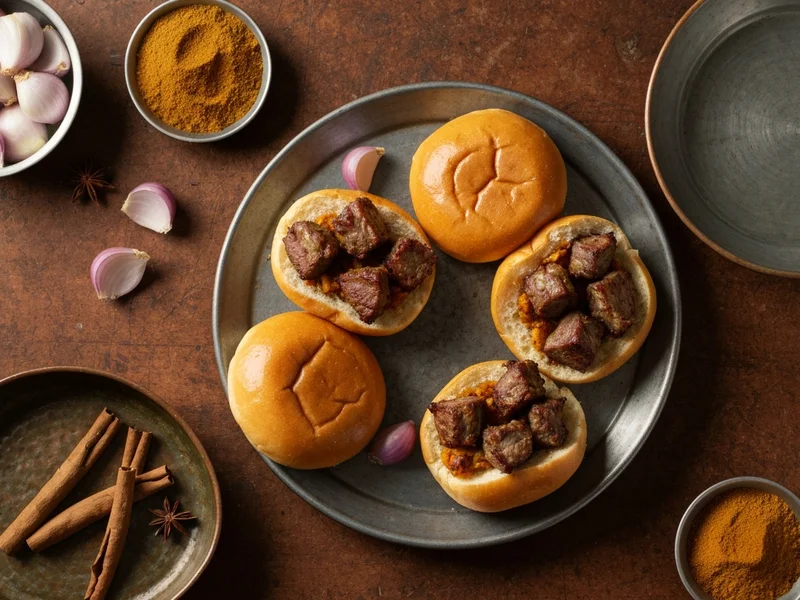
Bun Kebab Karachi Style
Karachi's original street burger — a spiced lentil patty tucked in a bun with sweet-tangy chutney, egg wash, and raw onions. The 50-rupee meal that punches above its weight.
Cite This Recipe
Writing about Pakistani food? Use these ready-made citations.
<a href="https://pakistani.recipes/recipes/bun-kebab/bun-kebab-karachi-style/">Bun Kebab Karachi Style</a> — Pakistani Recipes
Hina Jatoi. "Bun Kebab Karachi Style." Pakistani Recipes, 2024. https://pakistani.recipes/recipes/bun-kebab/bun-kebab-karachi-style/
Hina Jatoi. (2024). Bun Kebab Karachi Style. Pakistani Recipes. Retrieved 2026-07-20, from https://pakistani.recipes/recipes/bun-kebab/bun-kebab-karachi-style/
What Cooks Are Saying
Incredible depth of flavour. The spice balance is just right — not too hot, not too mild.
Nice recipe. I substituted one ingredient and it still came out great.
Solid recipe. Added a bit more ginger than suggested and it was excellent.