
Punjab cuisine
Bakarkhani
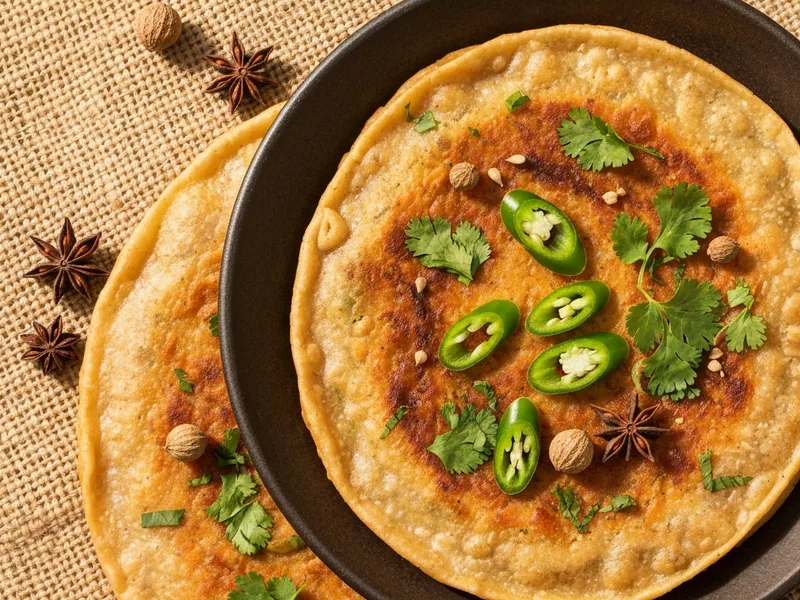
Bakarkhani is a traditional Punjab Pakistani dish. Bakarkhani is Lahore's layered, laminated breakfast bread — crisp on the outside, tender in the centre, with visible flaky layers that shatter satisfyingly when you break it. It is the Pakistani answer to a croissant, except it has been around longer than France, costs almost nothing, and tastes even better dunked in tea.
Bakarkhani has roots in the kitchens of the Bengal Sultanate, though its name has several competing origin stories — the most romantic credits it to a Nawab named Agha Bakar Khan who requested a special bread for his beloved.
The crisp, layered biscuit-bread has been made continuously in Old Delhi and Lahore for over 300 years and is one of the oldest named breads still in production in South Asia. Whatever the truth, Lahore adopted it wholesale, and today bakarkhani shops in the old city open before sunrise to sell to morning commuters and chai-drinkers. The lamination technique — spreading ghee on rolled dough and folding repeatedly — is the same principle behind croissants and puff pastry, though simpler. The result is a bread with distinct, crisp layers that stay crunchy at room temperature, making bakarkhani one of the few breads that is actually good not-fresh.
Ingredients
Instructions
- ACTIVATE YEAST: In a small bowl, combine lukewarm water, 1 teaspoon of the sugar, and yeast. Stir once and leave 8–10 minutes until foamy. This step is non-negotiable — the layers in bakarkhani rely on a proper rise to create the separation between them. A weak yeast start means flat, dense bread.
- MAKE THE BASE DOUGH: Mix flour, remaining sugar, salt, and cardamom powder in a large paraat. Add the yeast mixture and oil. Bring together into a medium-firm dough — slightly firmer than naan dough, because it needs to handle the lamination process without tearing. Knead for 8 minutes until smooth. WHY: A slightly stiffer dough holds the layered ghee better during the folding process. Too soft and the ghee will just ooze out instead of staying in distinct layers.
- FIRST RISE: Cover and rest in a warm spot for 45 minutes to 1 hour until the dough has puffed and is noticeably lighter. FUN FACT: Bakarkhani bakers in Lahore's Walled City often make their dough in the late evening, let it rise overnight, and begin the lamination process before fajr (dawn) prayers so the bakarkhani is hot and ready by 6am for the breakfast crowd.
- LAMINATE THE DOUGH — STEP ONE: Punch down the dough and divide it into 6 equal portions. Take one portion and roll it out on a lightly floured chakla into a thin rectangle or oval shape, as thin as you can get it without tearing — roughly 3–4mm thick. Spread 1 teaspoon of soft ghee evenly all over the surface using the back of a spoon or your fingers, all the way to the edges. HINT: The ghee should be soft enough to spread easily — if it is cold and solid, warm it briefly. If it is liquid, it is too hot and will absorb into the dough rather than staying in distinct layers.
- LAMINATE THE DOUGH — FOLD: Now fold the dough accordion-style (like how you would fold a letter to put in an envelope, but several times). Fold one third over the centre, then fold the remaining third over that. You should now have a long, narrow rectangle with 3 layers. Spread a little more ghee on top, then fold this rectangle in half crosswise. You now have a small square of dough with multiple layers packed inside. WHY: Each fold traps a layer of ghee between dough layers. When it bakes, the steam from the ghee separates the layers, giving you the flaky, crisp structure bakarkhani is famous for.
- REST THE LAMINATED DOUGH: Place the folded dough squares on a lightly floured surface. Cover with a cloth and rest for 15 minutes. WHY: The gluten has been worked during the folding and needs to relax — if you try to roll immediately, the dough will spring back and fight you at every step. Let it rest, and it will cooperate beautifully.
- ROLL INTO ROUNDS: After resting, take one folded square and gently roll it out with the belan into a round or oval shape about 15–18cm across and 5–6mm thick. Roll gently and evenly — do not press too hard or you will flatten the layers you worked so hard to create. HINT: If you see layers of dough visible at the edges as you roll — almost like you can see the striations — you are doing it right. That is the lamination working.
- PREHEAT AND PREPARE: Set your oven to 200°C (390°F) with a baking tray inside preheating. Brush the top of each shaped bakarkhani with egg yolk wash — this gives the classic deep golden-brown colour. Sprinkle poppy seeds and/or sesame seeds on top and press them in lightly with your palm so they stick. HINT: Poppy seeds on bakarkhani are not just decorative — they add a nutty, slightly toasty flavour and a beautiful speckled appearance. Do not skip them if you can find them.
- BAKE: Slide the bakarkhani onto the hot baking tray and bake at 200°C for 12–15 minutes until deep golden brown and crisp. The top should be richly coloured — much darker than sheermal or kulcha. When you tap the surface, it should sound hollow and feel firm. If it gives softly under your finger, it needs more time. FUN FACT: Proper bakarkhani should be crisp enough that it does not bend — it snaps. That crispness is what makes it so good for dunking in tea without immediately going soggy.
- COOL SLIGHTLY AND SERVE: Remove from the oven and let rest for 5 minutes. Unlike most Pakistani breads, bakarkhani does not need to be eaten immediately — it stays good and crisp for several hours and is considered perfectly acceptable (even preferred by some) at room temperature. Serve with hot chai and watch it vanish.
Essential for This Recipe
As an Amazon Associate, we earn from qualifying purchases
Green Cardamom Pods (Elaichi)
The fragrant heart of biryanis, pulaos, chai, and desserts — use whole pods for best flavor
Pure Ghee (Clarified Butter)
The authentic cooking fat for Pakistani dishes — adds rich flavor that oil can't match
Chef's Secrets
- For extra flaky layers, do two rounds of lamination: after the first fold, let it rest, roll, spread ghee again, fold again, then roll into the final shape.
- If you do not have poppy seeds, nigella seeds (kalonji) are an excellent substitute and equally traditional.
- Bakarkhani stays crisp in an airtight box for up to 3 days — making it excellent to bake in advance for guests.
- For a sweeter version, increase sugar to 3 tablespoons and add a few drops of kewra water to the dough.
Common Questions
How long does Bakarkhani take to make?
Total time is 1h — 30m prep and 30m cooking.
How many servings does this recipe make?
This recipe makes 6 servings, and is rated medium difficulty.
Which region of Pakistan is Bakarkhani from?
Bakarkhani is from Punjab, Pakistan — one of the country's most distinctive culinary traditions.
What do you serve with Bakarkhani?
The only correct way to eat bakarkhani is dunked in strong, hot chai. Also excellent broken into pieces and served alongside halwa puri or with a soft-boiled egg and green chutney for a full Lahori breakfast spread.
Goes Well With
Butter Naan (Home Tawa Method)
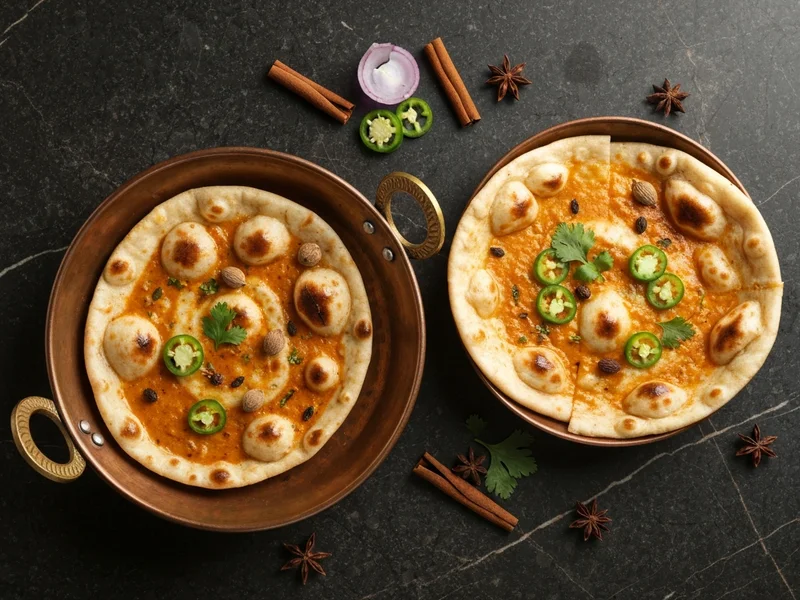
Soft, pillowy butter naan made at home on a tawa (flat griddle) — no tandoor required. Brushed with makhan (butter) the moment it comes off the heat, this leavened flatbread is the perfect vehicle for any Pakistani curry.
Roghni Naan
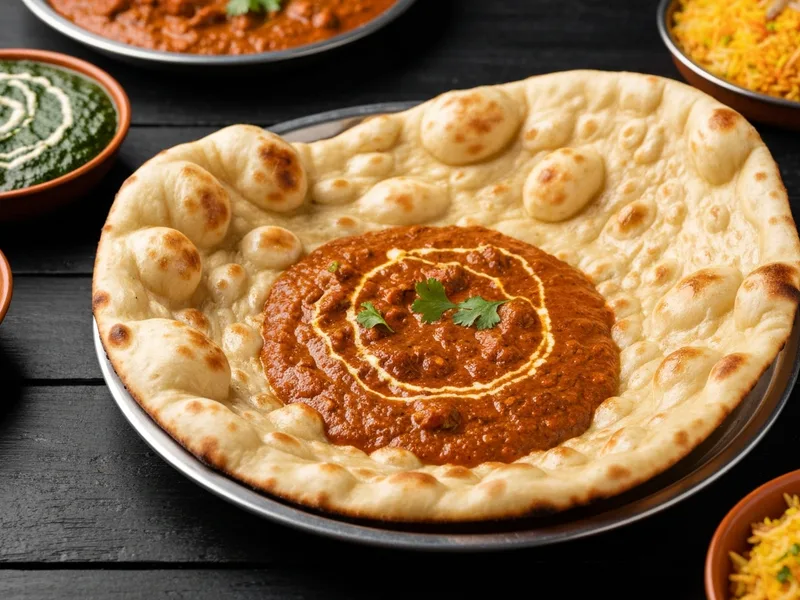
Roghni Naan is the Rolls-Royce of Pakistani bread — leavened, egg-enriched, oil-glossed, and studded with sesame and nigella seeds, baked until golden and billowy. It is the bread that makes any meal feel like a celebration, and once you've baked your own, the bakery version will never quite measure up.
Garlic Naan
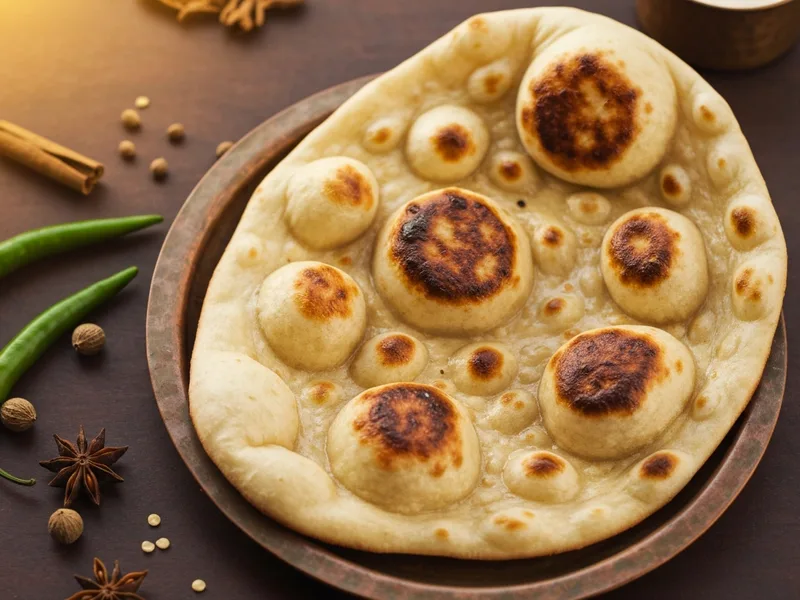
Garlic Naan takes everything great about a classic leavened naan and then — at the very last second — hits it with raw garlic butter and fresh coriander that cook against the bread's scorching heat. It is aggressively good, impossible to stop eating, and ready in under 10 minutes of baking.
Cite This Recipe
Writing about Pakistani food? Use these ready-made citations.
<a href="https://pakistani.recipes/recipes/garlic-naan/garlic-naan/">Garlic Naan</a> — Pakistani Recipes
Ahmed Khan. "Garlic Naan." Pakistani Recipes, 2024. https://pakistani.recipes/recipes/garlic-naan/garlic-naan/
Ahmed Khan. (2024). Garlic Naan. Pakistani Recipes. Retrieved 2026-07-20, from https://pakistani.recipes/recipes/garlic-naan/garlic-naan/
What Cooks Are Saying
The instructions are so clear and easy to follow. Came out perfectly first try.