
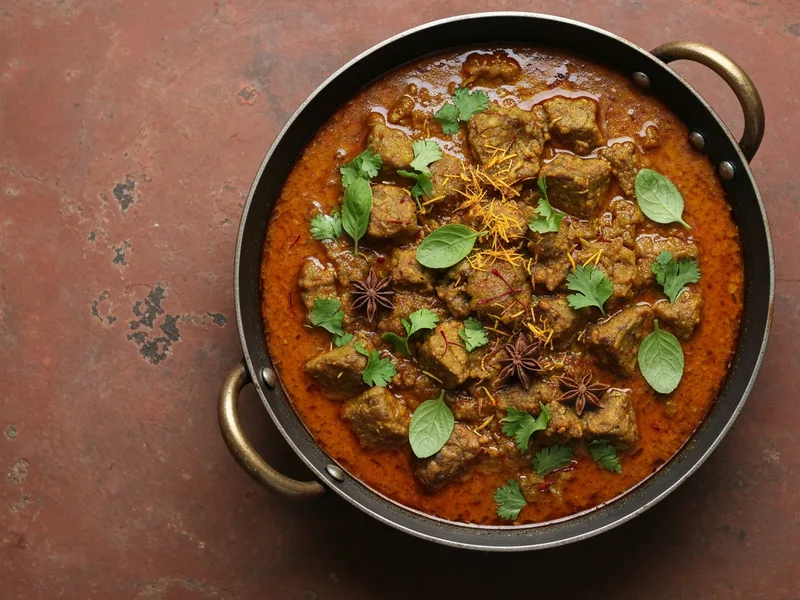
Balochistan cuisine
Balochi Rosh
Balochi Rosh is a traditional Balochistan Pakistani dish. Balochistan's slow-cooked mutton — either the Namkeen Rosh street version (salt only, no masala, cooked in water until fat renders into a clear broth) or the home version with whole spices. Always a broth dish — never dry. The namkeen (salted) version from Quetta's Kuchlack is the most authentic.
In the vast, rocky highlands of Balochistan, cooking has always followed a simple philosophy: let the animal speak for itself.
Rosh — which means 'meat' in Balochi — is the cornerstone of Balochi hospitality, prepared for weddings, tribal gatherings, and the arrival of honoured guests. Unlike most Pakistani meat dishes that start with a heavy-handed bhuno (frying) in oil, Rosh uses zero added fat. The goat's own fat slowly renders out over hours of low, covered heat, creating a rich, golden broth that is the sauce itself. This dish is a lesson in restraint — and restraint, it turns out, tastes extraordinary.
Ingredients
Instructions
- PREPARE YOUR COOKING VESSEL: Find your heaviest pot — a degh (heavy-bottomed pot) or a large, thick-based saucepan. This is non-negotiable. A thin pot will cause the bottom to burn before the meat cooks. Rinse the pot with water and shake out excess — a wet pot helps prevent early sticking. HINT: If you have a cast-iron pot or Dutch oven, this is its moment to shine.
- SALT THE MEAT: Place all your goat or mutton pieces into the pot. Sprinkle the namak (salt) evenly over every piece. Use your hands to rub it in — make sure every surface gets salt. FUN FACT: In traditional Balochi cooking, the animal is salted immediately after slaughter. The salt draws moisture out and then back in, seasoning the meat all the way to the bone. WHY: Salt this early ensures the flavour penetrates deeply rather than just sitting on the surface.
- ADD THE WHOLE SPICES: Scatter the cracked badi elaichi (black cardamom), laung (cloves), kali mirch (black peppercorns), and darchini (cinnamon stick) directly over the meat. Do not grind them, do not add ginger, garlic, onion, tomato, or any powder spice. HINT: The restraint is the recipe. Every extra ingredient you add will move this away from Rosh and toward a generic curry. Trust the process.
- ADD A SPLASH OF WATER: Pour the 100ml of pani (water) into the pot — just enough to cover the base. This prevents the meat from scorching before it releases its own fat and juices. The water will cook off within 20-30 minutes; after that, the meat is on its own. WHY: Goat fat needs a little time to begin rendering. The water buys that time.
- SEAL AND START COOKING: Place a tight-fitting lid on the degh (heavy-bottomed pot). If your lid is loose, place a sheet of foil over the pot first, then press the lid down on top to create a seal. Put the pot on your stove over medium heat to start. You want to hear a gentle sizzle and see steam beginning to build — not a violent boil.
- LOWER THE HEAT AND WAIT: After 10 minutes, turn the heat to low — as low as your stove goes while still producing heat. Set your timer for 3 hours and walk away. Do not lift the lid. Do not stir. The steam inside the sealed pot is doing the cooking, and every time you lift the lid you lose precious steam. HINT: If you have a heat diffuser (a metal disc that sits between the flame and the pot), use it — it prevents any hot spots. FUN FACT: Traditional Rosh is cooked in a sealed degh buried in hot coals or placed on a slow wood fire — the sealed environment is the entire technique.
- CHECK AT 3 HOURS: After 3 hours, carefully lift the lid away from you (steam is very hot — it will burn). Look inside. The meat should be sitting in a pool of clear, golden fat-infused broth. The pieces should look pale and falling-apart, not browned. Tilt a piece with a spoon — if it slides off the bone easily, it is done. If there is any resistance, re-seal and cook for another 30-45 minutes. HINT: The smell at this point should be deeply meaty, subtly spiced — like the best slow-roasted lamb you've ever encountered, but cleaner.
- FINAL TASTE AND REST: Taste the broth. Adjust salt if needed. Do not add anything else. Turn off the heat and let the Rosh rest in the pot, lid on, for 10 minutes before serving. WHY: Resting allows the meat fibres to relax and reabsorb some of the broth, making every bite juicier. The meat is so tender at this point that rough handling will make it fall apart entirely — serve carefully.
- SERVE: Ladle the meat and broth into a large serving dish. The golden fat-broth is part of the dish — do not discard it. Serve immediately with kaak (hard Balochi bread) or sajji roti for soaking up every drop of that liquid gold.
Chef's Secrets
- The quality of the goat is everything in this dish. Because there is nowhere to hide behind spices, use the freshest, most flavourful meat you can find.
- If the meat is releasing a lot of liquid and boiling rather than steaming, crack the lid slightly to let some steam escape and reduce — you want tender meat in a rich concentrated broth, not watery soup.
- Leftover Rosh reheats beautifully. The fat will solidify when cold — simply reheat gently, covered, over low heat. The fat re-melts into the broth.
- Some Balochi cooks add a single whole dried red chilli to the pot — it adds depth without heat if kept whole and not broken.
- For a smokier version at home, place a small piece of charcoal in a foil cup inside the pot for the last 15 minutes, drizzle a drop of oil on the charcoal, and quickly re-seal the lid.
- Two legitimate variants: (1) Namkeen Rosh — the authentic street version from Quetta: only salt, green chillies, and black pepper. No onion, no spice powders. Cooked in water on very low heat 90-120 minutes until fat renders. (2) Spiced home version — whole spices, ginger-garlic paste. Both are real; namkeen is the more traditional.
- Rosh is always a broth dish — it should always have a shorba (broth) from the rendered fat and cooking water. If yours is dry, you reduced it too far. Add water and bring back to a loose consistency.
- Two legitimate variants: (1) Namkeen Rosh — the authentic street version from Quetta: only salt, green chillies, and black pepper. No onion, no spice powders. Cooked in water on very low heat 90-120 minutes until fat renders. (2) Spiced home version — whole spices, ginger-garlic paste. Both are real; namkeen is the more traditional.
- Rosh is always a broth dish — it should always have a shorba (broth) from the rendered fat and cooking water. If yours is dry, you reduced it too far. Add water and bring back to a loose consistency.
Common Questions
How long does Balochi Rosh take to make?
Total time is 3h 45m — 15m prep and 3h 30m cooking.
How many servings does this recipe make?
This recipe makes 4 servings, and is rated easy difficulty.
Which region of Pakistan is Balochi Rosh from?
Balochi Rosh is from Balochistan, Pakistan — one of the country's most distinctive culinary traditions.
What do you serve with Balochi Rosh?
Serve with kaak (hard Balochi bread), sajji roti, or any thick flatbread for soaking up the broth. A side of raw sliced onion and green chillies is traditional. Yoghurt raita on the side is optional but welcome.
Goes Well With
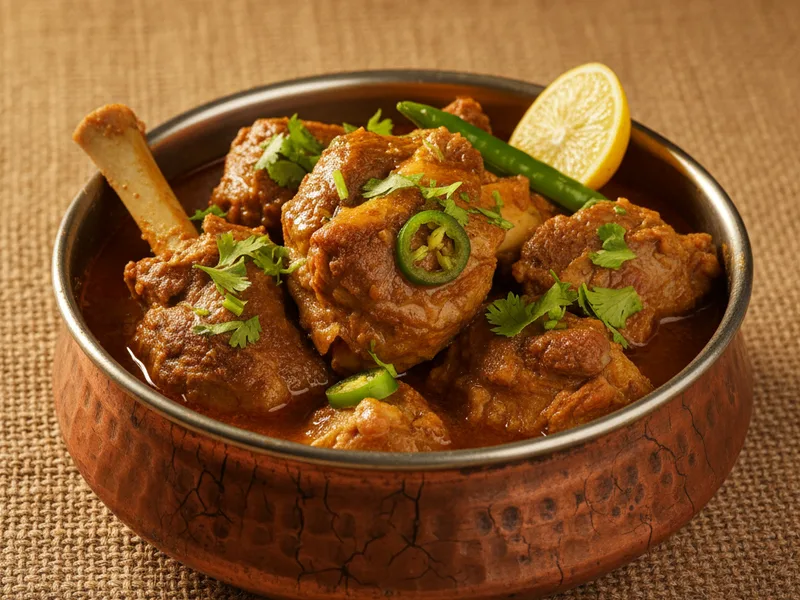
Balochi Rosh — Simple Roadside Version
Balochi Rosh is a humble, honest lamb curry — minimally spiced, cooked low and slow until the meat is fall-apart tender. The roadside dhabas (food stalls) of the RCD Highway serve this daily, and it is one of Pakistan's most underrated meat dishes.
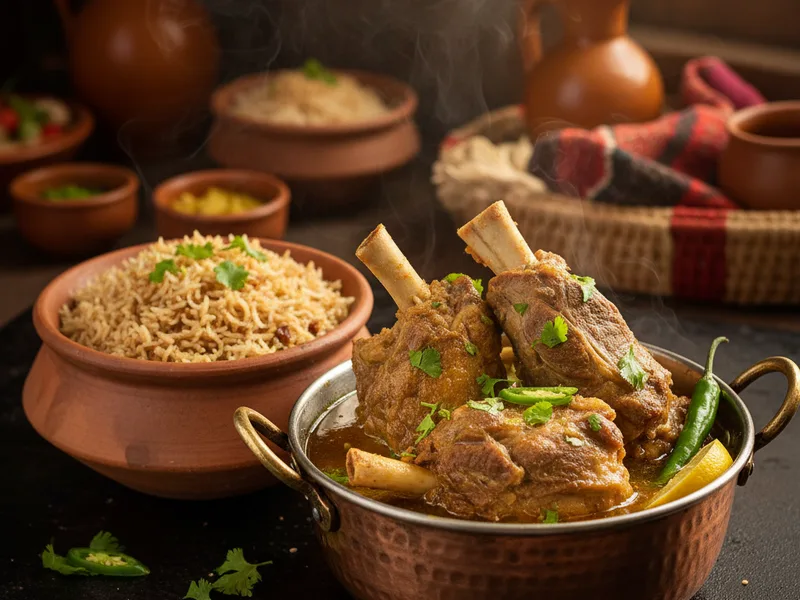
Mutton Rosh — Wedding Feast Style
The elevated wedding-feast version of Balochi Rosh — larger portions, richer with dumba fat, and finished with dried fruit and a touch of rose water in true Baloch celebratory tradition.
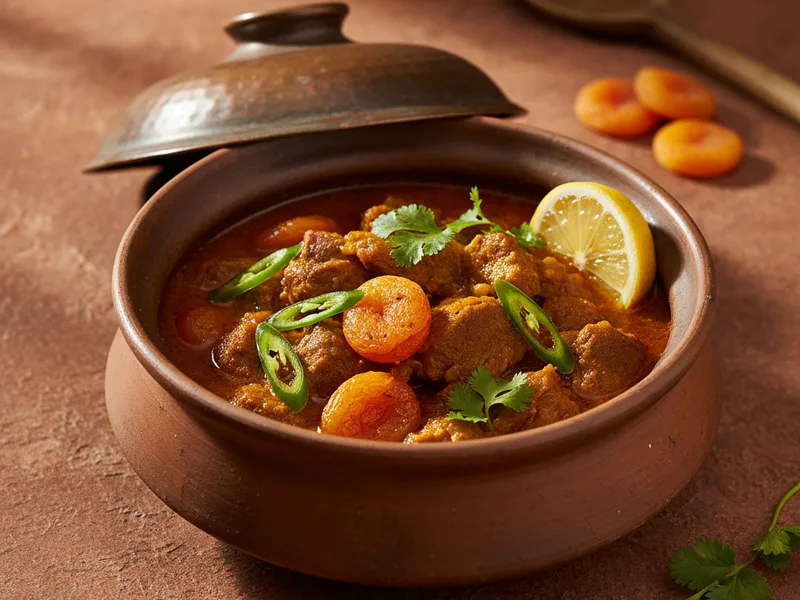
Gilgit Apricot Gosht — Mountain Fruit and Lamb
The extraordinary fruit-and-meat stew of Gilgit-Baltistan — lamb slow-cooked with dried apricots (khubani) until the fruit dissolves into a sweet-tart gravy that perfectly balances the rich meat. One of Pakistan's most unique and least-known dishes.
What Cooks Are Saying
Great flavours, took a little longer than the stated time but worth every minute.
This recipe is a keeper. Followed it exactly and it turned out perfect.