

Sindh cuisine
Bhee Aloo (Lotus Stem and Potato Curry)
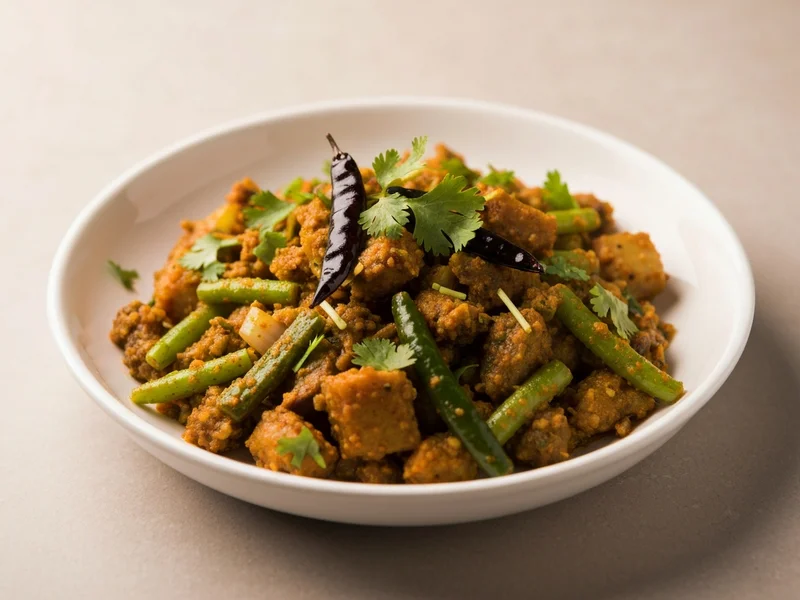
Bhee Aloo (Lotus Stem and Potato Curry) is a traditional Sindh Pakistani dish. Crunchy, hollow lotus stems (bhee) cooked with soft cubes of potato in a tangy, spiced tomato-tamarind masala — this Sindhi speciality is one of those dishes that makes you reconsider everything you thought you knew about vegetables. The lotus stem has a satisfying crunch and a mild, almost nutty flavour that soaks up the sour masala beautifully. It looks dramatic on the plate, it tastes even better.
Bhee, also known as kamal kakdi (lotus stem), has been part of Sindhi cooking for generations.
Lotus has been harvested for food in the Indus Valley for over 4,000 years, with lotus seeds and stems appearing in both food and religious contexts. The lotus plant grows abundantly in the Indus delta region and across the wetlands of Sindh, and virtually every part of the plant — leaves, seeds, stem, and root — has found its way into traditional cooking. Bhee Aloo is one of the most popular ways to cook lotus stem: the firm, crunchy texture of the bhee contrasts with the soft, yielding aloo (potato), and the tangy tamarind-tomato masala ties everything together. The hollow, tube-like cross-section of the lotus stem is visually striking — slice it thin and you get beautiful lacy rings, slice it thick and you get satisfying, crunchy coins. Both are correct.
Ingredients
Instructions
- PREPARE THE LOTUS STEM: If using fresh bhee (lotus stem), peel away the outer skin with a vegetable peeler — it peels off easily in strips. Rinse thoroughly under running water, paying attention to the hollow channels inside the stem where soil can hide. Slice the cleaned bhee into rounds about 1 cm thick. As you cut through it, you'll see the beautiful lacy pattern of hollow tubes — this is what makes bhee so distinctive and lovely. If using canned bhee, simply drain, rinse, and slice. FUN FACT: The hollow tubes in lotus stem are the plant's air channels — they allow air to reach the roots which grow underwater in ponds and rivers. These same channels make bhee brilliant at absorbing sauces and gravies.
- BRIEFLY BOIL THE BHEE: Place the sliced bhee in a pateela (saucepan) and cover with water. Add 1/4 tsp salt and 1/4 tsp haldi. Bring to a boil and cook for 5–7 minutes until the bhee is just slightly softened but still has a firm bite — test by pressing a piece between your thumb and finger. It should yield with some resistance, not be completely soft. WHY: This pre-boiling removes any residual earthiness, reduces the cooking time in the curry, and takes the edge off the raw crunch while preserving that satisfying firmness. Do not overcook — mushy bhee is the enemy. Drain and set aside.
- FRY THE BASE: Heat 4 tbsp of oil in a karahi (wok) over medium heat. Add the whole sabut garam masala (cloves, cardamom, cinnamon). Let them sizzle for 20–30 seconds until you can smell their warm perfume filling the kitchen. Add the sliced pyaz (onion) and fry for 10–12 minutes, stirring regularly, until deep golden brown. Add minced lehsun and grated adrak — fry for 1–2 more minutes, stirring continuously, until fragrant. HINT: Don't rush the onions. Golden-brown onions are the flavour backbone of this dish. Pale onions give a thin, sweet taste. Dark brown (nearly burnt) gives bitterness. Aim for the colour of a digestive biscuit.
- ADD TOMATOES AND SPICES: Add the blended or finely chopped tamatar (tomatoes). Stir everything together and cook for 5–6 minutes until the tomatoes have broken down completely and the masala is thick. Add all the ground spices: haldi, lal mirch powder, dhania powder, zeera powder, amchoor, and namak. Stir well and cook the masala for 3–4 more minutes, stirring regularly, until the oil begins to separate and float around the edges. The masala will darken and become concentrated and fragrant.
- ADD TAMARIND, BHEE, AND ALOO: Stir in the imli (tamarind) paste — the masala will immediately smell bright and tangy. Add the par-boiled bhee slices and the cubed aloo (potatoes). Stir gently to coat everything in the masala. Add 1/2 cup of water. Stir once more, scraping up any masala stuck to the bottom of the karahi.
- COOK UNTIL DONE: Cover the karahi with a lid and cook on medium-low heat for 15–18 minutes, stirring gently every 5 minutes to prevent sticking. The aloo should be fully cooked (a fork or knife slides in without resistance) and the bhee should be tender but still retain some bite — it should NOT be mushy. The masala should be thick, coating all the vegetables, with a little oil visible on top. If the masala is too dry, add 2–3 tablespoons of water. HINT: Bhee and aloo cook at different rates — the aloo cooks faster. If your aloo pieces are large, add the bhee first, cook for 5 minutes, then add the aloo.
- FINAL CHECK AND SERVE: Taste the curry and adjust salt or tamarind if needed — the dish should have a clear, pleasant tanginess. Garnish generously with fresh hara dhania (coriander). Serve hot. The dish should have a thick, clinging masala, beautiful lotus stem coins nestled among golden potato cubes, and a colour that is a deep, rich reddish-brown.
Essential for This Recipe
As an Amazon Associate, we earn from qualifying purchases
Tamarind Paste (Imli)
Adds tangy sourness to chaats, Sindhi cooking, and curries — naturally sour without citrus
Turmeric Powder (Haldi)
The golden spice in every curry, dal, and rice dish — adds color, earthiness, and health benefits
Kashmiri Red Chilli Powder
Adds deep red color with mild heat — essential for authentic karahi, biryani, and nihari without overwhelming heat
Coriander Powder (Dhania)
Citrusy and warm, essential for curry bases and curries throughout Pakistan
Chef's Secrets
- Fresh bhee is ideal, but canned kamal kakdi (available at Pakistani grocery stores and online) works very well. Just skip the pre-boiling step for canned — it's already cooked.
- If you can't find bhee, this masala works beautifully with raw banana (kachcha kela) or raw papaya (kacha papita) as substitutes — they have a similar firm texture.
- The tamarind is what makes this dish Sindhi — without it, you have a generic aloo curry. Don't skip it or reduce it too much.
- The bhee should retain crunch even after cooking. If yours came out soft, reduce the pre-boiling time next time.
- Bhee Aloo improves dramatically the next day as the spices deepen overnight. Make it a day ahead for best results.
Common Questions
How long does Bhee Aloo (Lotus Stem and Potato Curry) take to make?
Total time is 1h — 20m prep and 40m cooking.
How many servings does this recipe make?
This recipe makes 4 servings, and is rated easy difficulty.
Which region of Pakistan is Bhee Aloo (Lotus Stem and Potato Curry) from?
Bhee Aloo (Lotus Stem and Potato Curry) is from Sindh, Pakistan — one of the country's most distinctive culinary traditions.
What do you serve with Bhee Aloo (Lotus Stem and Potato Curry)?
Serve as a side dish with plain rice or Sindhi pulao. Also works beautifully as part of a dal-chawal-sabzi (lentils, rice, vegetable) lunch spread.
Goes Well With

Bhee Aloo Sindhi
Bhee Aloo is Sindh's beloved lotus stem and potato curry — a uniquely textured, deeply flavoured dish that showcases one of Sindhi cuisine's most distinctive ingredients in a warming, aromatic gravy.
Sindhi Sai Bhaji
Sindh's beloved green mash — spinach, split chickpeas, and whatever vegetables are to hand, slow-cooked together until completely unified into a thick, deeply flavourful green mass. Finished with a sizzling garlic tarka.

Sindhi Peas and Carrot Pulao
This Sindhi Peas and Carrot Pulao is a colourful, warming rice dish that combines sweet gajar (carrots) and matar (peas) in a lightly spiced, fragrant basmati. A vegetarian side dish that holds its own against any main course.
Cite This Recipe
Writing about Pakistani food? Use these ready-made citations.
<a href="https://pakistani.recipes/recipes/pulao/peas-carrot-pulao/">Sindhi Peas and Carrot Pulao</a> — Pakistani Recipes
Bilal Soomro. "Sindhi Peas and Carrot Pulao." Pakistani Recipes, 2025. https://pakistani.recipes/recipes/pulao/peas-carrot-pulao/
Bilal Soomro. (2025). Sindhi Peas and Carrot Pulao. Pakistani Recipes. Retrieved 2026-07-20, from https://pakistani.recipes/recipes/pulao/peas-carrot-pulao/
What Cooks Are Saying
Absolutely delicious! The flavours are spot on — tastes just like what I grew up eating.
Delicious and fairly straightforward. A few steps took longer than expected but the result was worth it.