
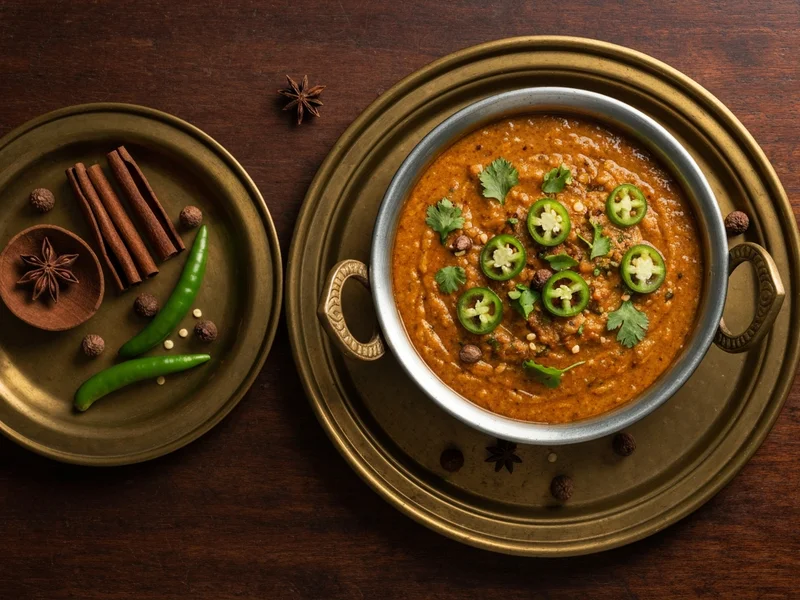
Gilgit-Baltistan (Hunza Valley) cuisine
Hunza Chapshuro
Hunza Chapshuro is a traditional Gilgit-Baltistan (Hunza Valley) Pakistani dish. Hunza Valley's iconic meat-filled whole wheat flatbread — simple whole wheat dough stuffed with spiced minced beef, coriander, and onion, cooked on a tawa until golden. Called the 'Hunza pizza' by travellers worldwide.
Chapshuro is the kind of food that makes you stop and think: why is the simplest thing always the most satisfying? There's no elaborate spice blend here. No marinating overnight. No slow-cooking for three hours. Just good whole wheat dough, quality minced meat, onion, coriander, and a hot tawa (griddle). That's it. That's the recipe. And it is extraordinary.
Researchers and journalists have been visiting for decades to study why Hunzakutz people historically live such long, healthy lives. The diet is consistently highlighted: whole grain bread, dried apricots, glacier water, and minimal processed food. Chapshuro — whole wheat bread stuffed with protein-rich meat — is essentially the optimal meal. It gets millions of views from health and longevity content internationally. But almost nobody outside Gilgit-Baltistan has a proper recipe. This changes that. FUN FACT BONUS: 'Chapshuro' comes from the Burushaski language (the indigenous language of Hunza, unrelated to any other known language family — a linguistic island). 'Chap' means flat/bread, 'shuro' means meat. Flat meat-bread. Exactly what it is.
Ingredients
Instructions
- MAKE THE DOUGH: In a large bartan (bowl), mix 2.5 cups of atta (whole wheat flour) with half a teaspoon of salt. Make a well in the centre and begin adding warm water gradually — start with half a cup, mix with your fingers in circular motions, then keep adding tablespoons of water until a dough comes together. Knead on a clean surface for 6-8 minutes until smooth and slightly springy. HINT: Whole wheat dough needs a bit more water than white flour dough. If the dough feels stiff and cracks at the edges when you fold it, add a splash more water and knead again. The finished dough should feel like a firm earlobe — soft but with resistance. Cover with a damp cloth and rest for 20-30 minutes. WHY: The rest lets the gluten relax, making the dough much easier to roll without springing back, and allows the wheat bran to fully hydrate.
- MAKE THE FILLING: In a bartan, combine the minced qeema (beef or mutton), very finely chopped onion, chopped green coriander (dhania), finely chopped green chillies, half tsp black pepper, half tsp cumin, and half tsp salt. Mix thoroughly with your hands — really squeeze and press everything together for 2 minutes until the mixture feels uniform and slightly cohesive. HINT: Squeeze the finely chopped onion in your fist over the sink first to remove excess moisture. Wet onion makes the filling liquid, which can cause the Chapshuro to split or leak while cooking. The filling should look like a uniform, slightly sticky mixture with flecks of green throughout. Smell it — you should get the freshness of coriander and the warmth of pepper. FUN FACT: In Hunza households, the filling is seasoned simply because the local meat is flavourful — animals graze on mountain pastures at high altitude. The quality of the meat carries the dish.
- DIVIDE AND ROLL THE DOUGH: Divide the rested dough into 4 equal balls — each about the size of a small fist. On a lightly floured surface, roll one ball into a circle about 20-22cm in diameter (roughly the size of a dinner plate) and about 3-4mm thick. Not as thin as a chapati — a little thicker, because it needs to hold the filling. Divide your filling into 4 equal portions. Spread one portion of filling evenly across one half of the rolled dough circle, leaving a 1.5cm border at the edges. HINT: Keep the filling layer even and relatively thin — mounding it in the centre makes it hard to seal and harder to cook through evenly.
- STUFF AND SEAL: Fold the empty half of the dough circle over the filled half to create a half-moon shape. Press the edges firmly together with your fingertips, working from one end to the other. Then fold and crimp the edge — like folding over a pie crust — pressing firmly so the seal is tight. WHY: A weak seal will burst open during cooking and the filling will spill onto the tawa — messy and sad. Run a fork along the crimped edge for extra security if you like. Now gently roll the sealed Chapshuro with a rolling pin — very lightly — to flatten it slightly and even it out. It should be roughly 1.5-2cm thick. HINT: If filling breaks through anywhere during rolling, pinch it closed immediately. Do not continue rolling that spot — you'll make it worse.
- COOK ON THE TAWA — FIRST SIDE: Heat a large tawa (flat griddle) or heavy frying pan over medium heat. No oil needed for the first side — dry cook on the tawa first. Place the Chapshuro carefully on the hot tawa. Cook on medium heat for 4-5 minutes until the bottom is golden-brown with darker spots. You will see the top begin to puff slightly in some places — this is the steam from the filling inside. Do not press down with a chamcha (spatula). WHY: Pressing down forces the filling to the edges and can break the seal. Let it cook naturally. HINT: The right heat is crucial — medium is correct. Too high burns the outside before the inside cooks; too low makes it pale and the raw meat inside will be undercooked. You should hear a gentle sizzling sound.
- FLIP AND FINISH ON THE TAWA: Carefully flip the Chapshuro using a wide chamcha (spatula) or two smaller ones together. The cooked side should be beautifully golden-brown. Drizzle half a teaspoon of oil or ghee around the edges of the Chapshuro on the tawa. Cook the second side for another 4-5 minutes until equally golden-brown. HINT: The filling is raw meat and must be fully cooked through. After 4-5 minutes on each side, press the centre lightly — it should feel firm, not squishy. If it feels soft and raw-ish in the centre, reduce the heat slightly and cook for another 2-3 minutes per side. The total tawa cooking time should be around 10 minutes.
- FINISH IN THE OVEN (OPTIONAL BUT RECOMMENDED): Transfer the tawa-cooked Chapshuro to a baking tray and place in a pre-heated oven at 180°C (350°F) for 8-10 minutes. WHY: This optional oven step ensures the filling is completely cooked through, especially the centre, without burning the outside. It's the method used by Chapshuro shops in Hunza — they cook on the tawa for colour, then finish in a wood-fired oven for even heat. If you don't have an oven, extend the tawa cooking to 6-7 minutes per side on medium-low heat. HINT: You can cook all 4 Chapshuro on the tawa first, then finish them all together in the oven — this is more practical when cooking for a family.
- BRUSH, CUT, AND SERVE: Remove from the oven (or tawa) and immediately brush the top surface with a light coating of ghee or butter while still hot. The ghee melts into the surface and gives the Chapshuro a beautiful sheen and a richer flavour. Cut each Chapshuro into 3-4 wedges, like a pizza (hence the nickname). Serve hot. HINT: Chapshuro is best eaten the moment it comes off the heat — the dough is at its most tender, the filling is juicy, and the crust has a slight crispness. It softens as it sits. If you must wait, wrap in a clean cloth to keep warm and soft. FUN FACT: Chapshuro has gone viral multiple times on international travel vlogs. Tourists trekking through Hunza Valley and Karimabad consistently call it the best thing they ate in Pakistan. It wins converts effortlessly — simple, satisfying, and unlike anything you've had before.
Chef's Secrets
- Squeeze the chopped onion before adding to the filling to remove excess moisture. This is the single most important tip for preventing a soggy or leaky Chapshuro.
- The dough thickness matters — aim for 3-4mm before stuffing, which will compress slightly to 2-3mm after the filling is added and you do the light final roll. Too thin and it tears; too thick and the dough-to-filling ratio is off.
- If making for guests, prepare all the Chapshuro up to the sealing stage, then stack them with parchment paper between each one and refrigerate for up to 4 hours before cooking. Cook fresh when guests arrive.
- In Hunza, dried apricot chutney is the traditional accompaniment. It pairs beautifully — the sweet-tart apricot against the savoury meat. Blend 6-8 dried apricots (soaked in warm water) with a clove of garlic, lemon juice, and a pinch of salt for an instant chutney.
- The oven finishing step is optional but makes a dramatic difference to the filling — the internal temperature reaches 70°C+ reliably, guaranteeing fully cooked meat even in the thick centre portion.
- For a more authentic finish: fry the chapshuro in apricot kernel oil (khoobani ka tail) or walnut oil rather than ghee. The nutty, fruity oil is distinctive to Hunza cooking and appears in Food Fusion and multiple Gilgiti community sources.
- Raw filling is the traditional method — do not pre-cook the meat. Stuff raw mince directly into the dough and the tawa heat cooks it through. This is confirmed by Pakistan Atlas, GBiT.pk, and Hunza community sources as the authentic technique.
Common Questions
How long does Hunza Chapshuro take to make?
Total time is 1h 5m — 35m prep and 30m cooking.
How many servings does this recipe make?
This recipe makes 4 servings, and is rated easy difficulty.
Which region of Pakistan is Hunza Chapshuro from?
Hunza Chapshuro is from Gilgit-Baltistan (Hunza Valley), Pakistan — one of the country's most distinctive culinary traditions.
What do you serve with Hunza Chapshuro?
Serve hot, cut into wedges, with a cup of Hunza green tea (kawa) — light, floral, unsweetened green tea brewed with dried apricots or rose petals. A simple raita (yoghurt with salt and mint) or dried apricot chutney works as a dipping sauce. No other sides needed — Chapshuro is a meal in itself.
Goes Well With
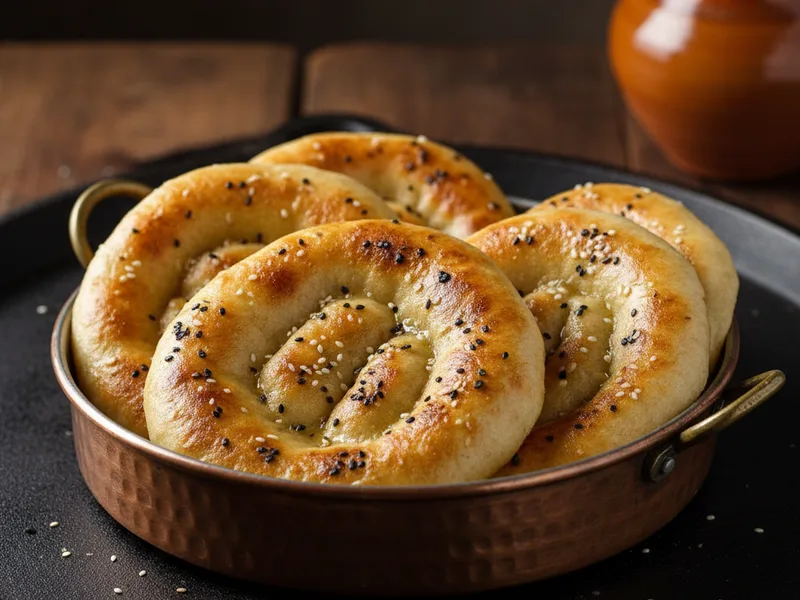
Hunza Chapshuro — Beef-Stuffed Mountain Bread
Hunza Valley's iconic stuffed flatbread — whole wheat dough filled with spiced minced beef and pan-cooked on a tawa. The mountain-traveler's complete meal in bread form, beloved from Gilgit-Baltistan to the surrounding KP regions.
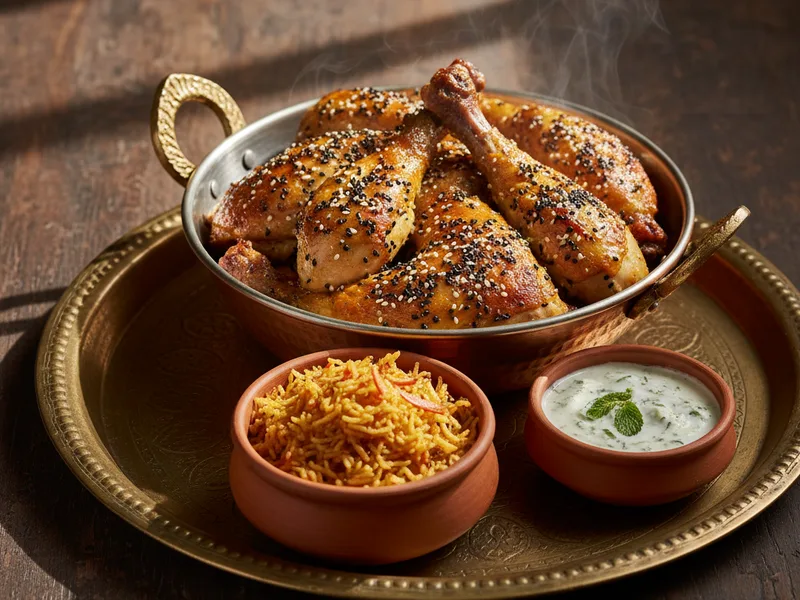
Chicken Chapshuro — Valley Variation
A lighter chicken-filled chapshuro — the minced chicken version popular in the tourist guesthouses of Hunza Valley, adapted for those who prefer poultry but still want the authentic stuffed mountain bread experience.
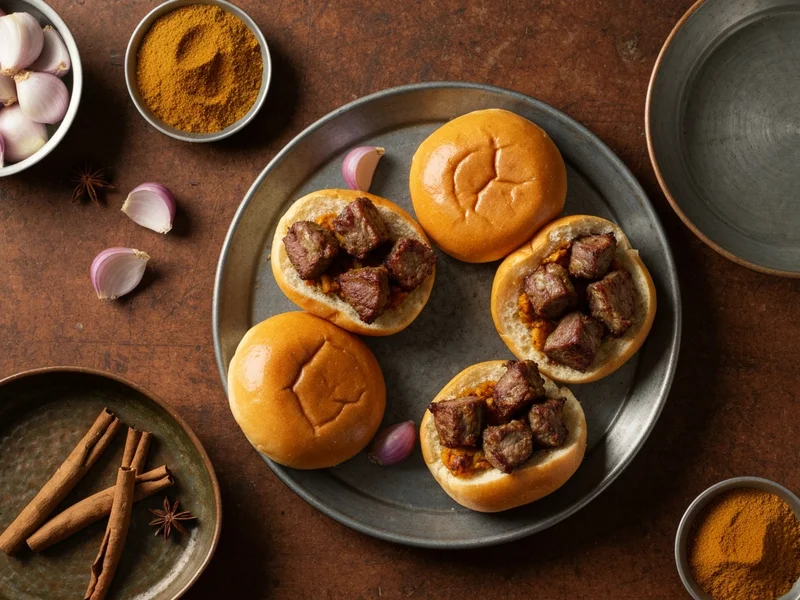
Bun Kebab Karachi Style
Karachi's original street burger — a spiced lentil patty tucked in a bun with sweet-tangy chutney, egg wash, and raw onions. The 50-rupee meal that punches above its weight.
What Cooks Are Saying
Incredible depth of flavour. The spice balance is just right — not too hot, not too mild.
Nice recipe. I substituted one ingredient and it still came out great.
Solid recipe. Added a bit more ginger than suggested and it was excellent.
Leave a Review
Tried this recipe? Share your experience — your review helps other cooks.