
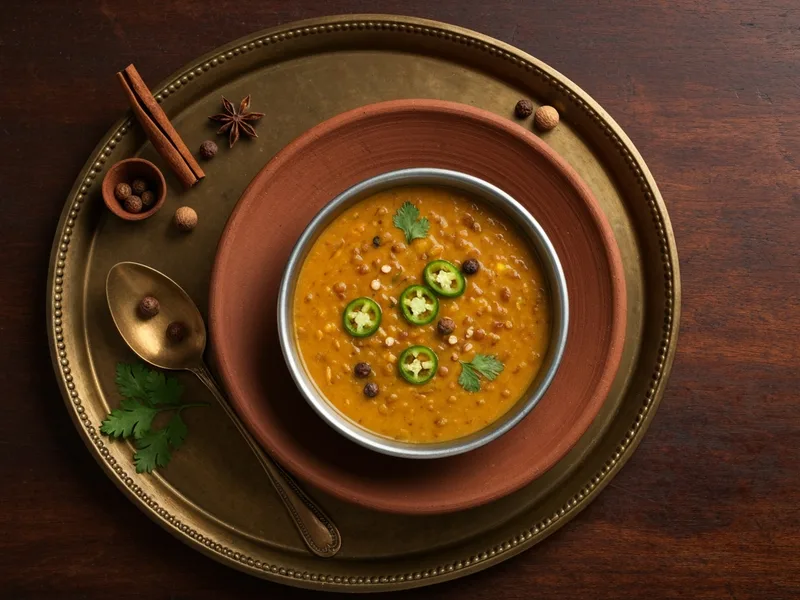
Punjab cuisine
Daal Masoor (Masoor Ki Daal)
Daal Masoor (Masoor Ki Daal) is a traditional Punjab Pakistani dish. Pakistan's most-cooked everyday daal — red split lentils with a cumin-onion-garlic tarka, on the table in 30 minutes. Plus the kali masoor (whole black/brown lentil) variant for a heartier, earthier alternative.
Masoor ki daal is what 'daal' means in most Pakistani households. When ammi says 'aaj daal bana rahi hoon' (I'm making daal today), she means this one.
They're split, hull-removed masoor beans, and because they have no skin to soften first, they cook astonishingly fast: 20-25 minutes from dry, no soaking required. This is the daal of Tuesday evenings when you're tired, of 11pm hunger pangs, of 'we have nothing in the house but somehow still ate well'. The tarka here is the classic: zeera (cumin) + pyaz (onion) + lehsan (garlic) — in that order, in hot oil, served sizzling. We also cover kali masoor — whole brown-black lentils that are a completely different experience: dense, earthy, and deeply satisfying. Think of red masoor as the weeknight version and kali masoor as the weekend one.
Ingredients
Instructions
- COOK THE DAAL: Rinse the masoor daal in cold water until the water runs mostly clear. Add to a pateela (pot) with 3 cups of water, haldi (turmeric), and slit hari mirch (green chillies). Bring to a boil on high heat — skim off any froth that forms. Reduce heat to medium, cover partially, and cook for 20-25 minutes. Red masoor dissolves into a smooth, orange-yellow puree as it cooks — you won't see individual lentils in the finished daal, and that's correct. HINT: For kali masoor (whole brown lentils), the process is longer. After soaking 4-6 hours, cook for 45-60 minutes until the skins have softened and the insides are creamy — each lentil should mash easily between your fingers.
- SEASON THE DAAL: Once the lentils have cooked down into a smooth, thick consistency, add namak (salt) to taste. Stir well and taste — the seasoning should feel complete at this point, not flat. If the daal is too thick, add hot water (cold water can make the daal grainy) and stir to your preferred consistency. Too thin? Cook uncovered on medium heat for 5 minutes, stirring to prevent sticking. You're aiming for a consistency that flows off the back of a chamcha (ladle) in a slow, steady ribbon.
- START THE TARKA — BLOOM THE ZEERA: Heat tel (oil) or ghee in a small, heavy-bottomed karai (wok) or a small pot on medium-high. It's ready when a single zeera (cumin seed) dropped in sizzles and dances immediately. Add all the zeera at once — they'll pop and crackle. Resist the urge to stir; let them spit for 10-15 seconds until their colour darkens slightly and the fragrance hits you — an earthy, nutty, slightly smoky smell. That smell means you're doing it right.
- BUILD THE TARKA — ONION AND GARLIC: Add the sliced lehsan (garlic) and stir constantly for 30 seconds until it turns pale golden. Now add the sliced pyaz (onion) and reduce heat slightly to medium. Cook, stirring every minute or two, until the onions turn a rich golden-amber — 8-10 minutes. Don't rush this: pale onions mean weak tarka; dark brown-black onions mean bitter tarka. The colour you want looks like strong tea. Add the chopped tamatar (tomatoes) and cook until they dissolve into the oil — about 4-5 minutes. Add lal mirch powder (red chilli powder). Stir for 1 minute. Add the sabut lal mirch (whole dried chillies) and let them sizzle for 20 seconds.
- POUR AND SERVE: Pour the entire sizzling tarka over the cooked daal. It should sizzle loudly on contact — that sound is the flavours locking in. Stir gently twice, then garnish with chopped hara dhaniya (fresh coriander) and a squeeze of nimbu (lemon). FUN FACT: The kali masoor (whole brown lentil) version, though made the same way, has a completely different character — earthy, dense, and almost meaty in texture. It's popular in northern Punjab and pairs beautifully with makki ki roti (cornmeal flatbread).
Chef's Secrets
- The difference between good and great tarka is patience with the onions. Cook them all the way to golden-amber — if you stop at translucent or pale yellow, you've made onion soup, not a proper tarka.
- Never salt the daal while it's cooking — the salt draws water out of the lentils and can prevent them from softening properly. Always salt at the end.
- For kali masoor: the skins give it a dense, earthy texture and a slightly smoky flavour that red masoor doesn't have. The two daals are related but taste completely different — don't substitute one for the other expecting the same result.
- A small piece of adrak (ginger) blended into the cooking water adds digestive warmth. Some cooks also add a piece of imli (tamarind) for tang — remove before serving.
- Masoor daal is the fastest protein on a Pakistani stove. On those days when there's nothing in the fridge and hunger is urgent, this is your move. Lentils, water, haldi, salt, tarka. Twenty-five minutes.
Common Questions
How long does Daal Masoor (Masoor Ki Daal) take to make?
Total time is 40m — 5m prep and 35m cooking.
How many servings does this recipe make?
This recipe makes 4 servings, and is rated easy difficulty.
Which region of Pakistan is Daal Masoor (Masoor Ki Daal) from?
Daal Masoor (Masoor Ki Daal) is from Punjab, Pakistan — one of the country's most distinctive culinary traditions.
What do you serve with Daal Masoor (Masoor Ki Daal)?
The classic serving: masoor ki daal over a mound of plain chawal (white rice) with a pool of ghee melting into the rice. Add a raw pyaz (onion) sliced into rings and a hari mirch (green chilli) on the side — this is the dhaba setup and there's nothing better. With roti and achaar (pickle), it becomes a complete weeknight dinner.
Goes Well With
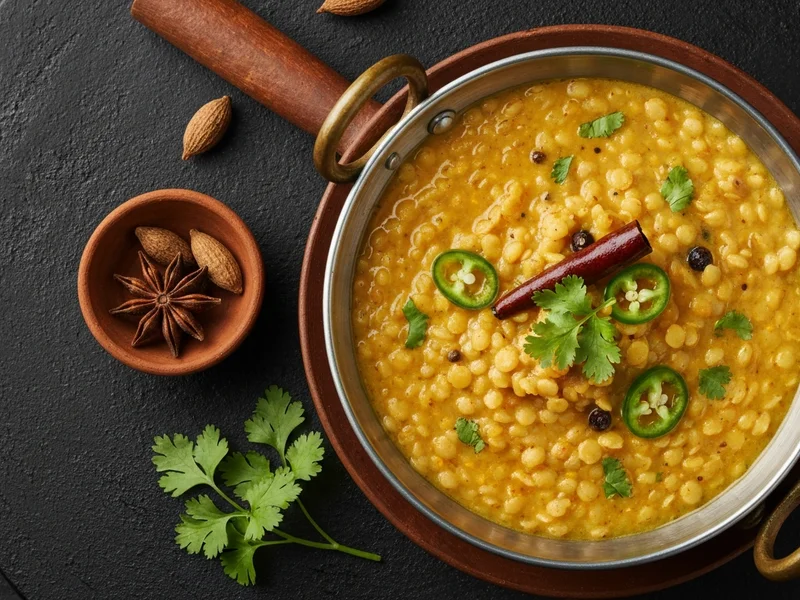
Daal Mash — White Lentil Dal with Tarka
Daal Mash is Pakistan's most beloved weeknight comfort food — creamy white lentils slow-cooked until silky smooth, finished with a sizzling tarka (tempering) of ghee, fried onion, garlic, and whole red chillies. Pair with plain chawal (rice) for the Pakistani meal that fixes everything.
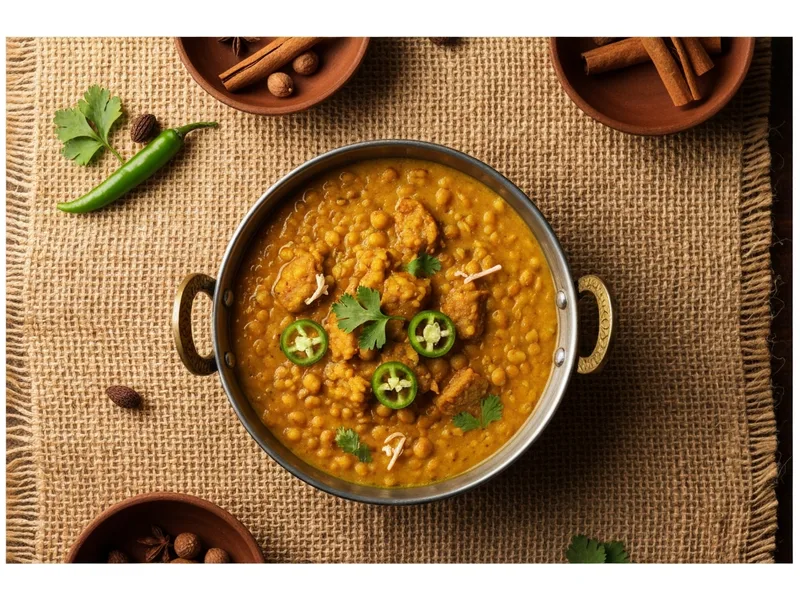
Daal Chana (Chanay Ki Daal)
Hearty, nutty split yellow chickpea daal — slow-cooked until thick, with optional lauki (bottle gourd) and a rich ghee tarka. Pakistan's most substantial everyday daal.
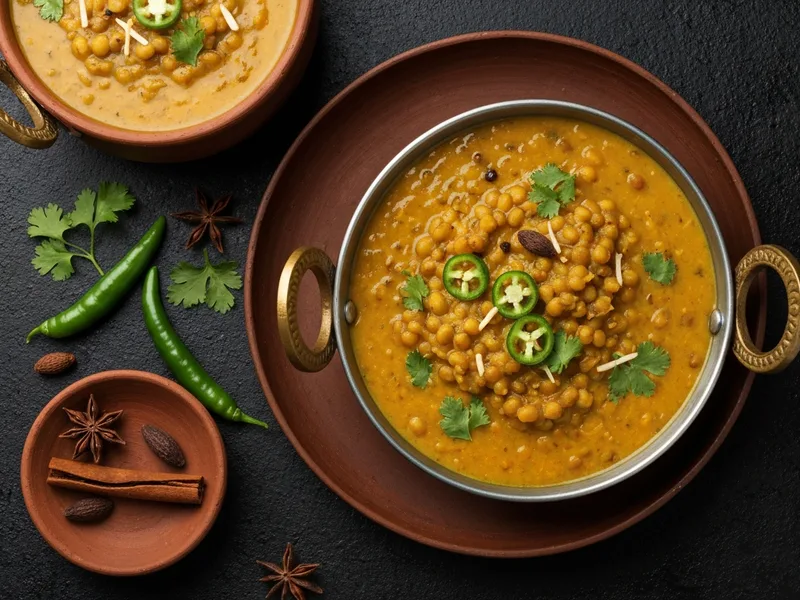
Daal Moong (Moong Ki Daal)
Light, mild, and deeply comforting split mung bean daal — the gentlest daal in the Pakistani kitchen, ready in 25 minutes with a simple cumin-garlic tarka. Perfect for children, the unwell, and anyone craving something uncomplicated.
What Cooks Are Saying
I've tried many recipes for this dish but this one is the best by far.
Nice recipe. I substituted one ingredient and it still came out great.
Leave a Review
Tried this recipe? Share your experience — your review helps other cooks.