
Sindh cuisine
Dal Pakwan
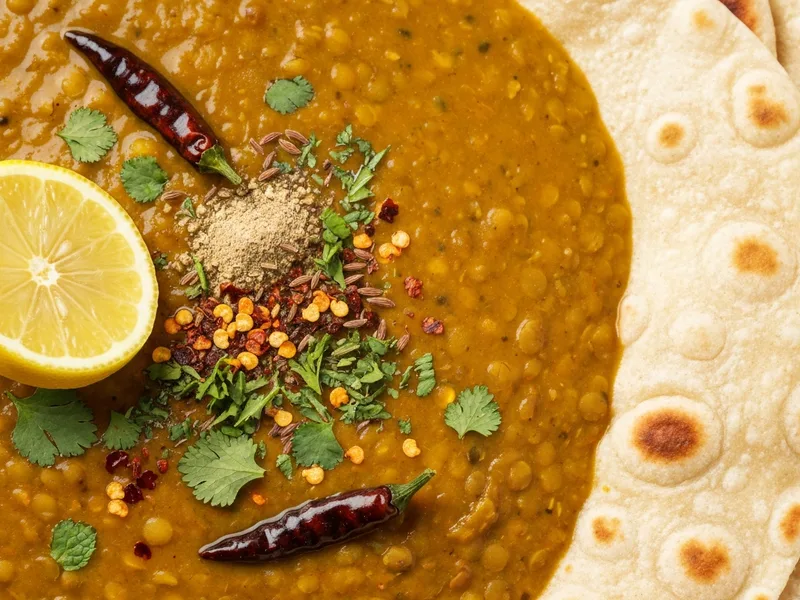
Dal Pakwan is a traditional Sindh Pakistani dish. Creamy chana dal poured over shatteringly crisp, sesame-flecked fried bread — Dal Pakwan is the Sindhi community's most beloved breakfast and one of the great unsung classics of Pakistani cuisine. It sounds simple, but the contrast of textures and the bold tadka make it something you'll dream about. Sunday morning will never be the same.
Dal Pakwan is a breakfast that has been eaten in Sindhi-Hindu households for centuries, and Pakistani Sindhis have carried this tradition proudly.
After Partition in 1947, Sindhi Hindus carried the recipe to India, where it remains a beloved dish in Sindhi communities in Mumbai and Rajasthan. The word 'pakwan' refers to the crispy fried flatbread — it comes from 'pakvaan', meaning a fried delicacy or festive food. Historically served at weddings and religious celebrations in the Sindhi community, it is now a beloved weekend breakfast across Karachi. The dal is a simple chana dal, but it's elevated by a generous tadka (tempering) of whole cumin, red chillies, and a dramatic dash of asafoetida (hing) that fills the kitchen with an almost magical aroma. Served with tamarind chutney, green chutney, and a pile of crispy sev on the side, it is the definition of a complete breakfast.
Ingredients
Instructions
- SOAK AND BOIL THE DAL: Wash 1.5 cups of chana dal in several changes of water until the water is no longer cloudy. Soak in fresh water for 2 hours — this helps the dal cook evenly and stay firm, not mushy. After soaking, drain the dal and put it in a pateela (saucepan). Add 4 cups of fresh water, 1/2 tsp haldi, and 1 tsp namak. Bring to a boil on high heat — you'll see white foam forming at the top. Skim this foam off with a chamcha (ladle). WHY: This foam is just starch — removing it gives you a cleaner, better-tasting dal. Reduce heat to medium-low, cover, and cook for 25–30 minutes until the dal is cooked through but each grain is still whole and holds its shape. It should NOT be a mush. Drain any excess water if needed.
- MAKE THE TADKA: Heat 3 tbsp of oil in a small tawa (flat pan) or a small karahi (wok) over medium-high heat until the oil is shimmering and hot. Add the whole zeera (cumin seeds) — they should sizzle and pop immediately. Listen for that satisfying crackling sound. FUN FACT: The moment cumin hits hot oil is called the 'bloom' — the essential oils inside the seeds open up and release an incredible nutty, earthy fragrance that completely transforms the dish. Now add the whole sabut lal mirch — they'll darken and puff slightly. Finally, add the pinch of hing (asafoetida). HINT: Hing smells strong and almost sulfurous on its own — do not be alarmed! Once it hits the hot oil and mixes with everything else, it mellows into a gorgeous umami depth that is the signature of Sindhi cooking. Add lal mirch powder and dhania powder, stir for 10 seconds, then immediately pour this entire tadka over the cooked dal.
- FINISH THE DAL: Stir the tadka through the dal gently. Add amchoor (dry mango powder) and the remaining 1/2 tsp salt. Taste the dal — it should be savoury, slightly tangy from the amchoor, with a warmth from the chillies. Adjust salt if needed. Scatter chopped hara dhania on top. Keep warm while you make the pakwan. The dal should look golden-yellow with a glossy tadka coating and beautiful whole grains.
- MAKE THE PAKWAN DOUGH: In a large bowl (patila), mix together 2 cups maida, 2 tbsp sooji, 2 tbsp til, 1 tsp ajwain, and 1/2 tsp namak. Mix these dry ingredients with your fingers. Now add 2 tbsp of oil — rub it into the flour mixture using both hands, squeezing and rubbing, until the flour looks like breadcrumbs or sand and holds its shape when you squeeze a handful. WHY: This step (called moyen in Urdu) is what makes the pakwan crispy — without enough fat rubbed in, the fried bread will be chewy rather than shattery and crisp. Add water a little at a time — roughly 1/2 to 3/4 cup — and knead into a medium-firm dough. It should feel like playdough: firm, not sticky. Rest covered with a damp cloth for 15 minutes.
- ROLL THE PAKWAN: Divide the dough into 10–12 equal balls. On a flat surface (no dry flour needed — the oil in the dough prevents sticking), roll each ball into a thin, flat circle about 5–6 inches in diameter, roughly the size of a side plate. They should be quite thin — about 2–3mm. Use a fork or a skewer to prick the rolled pakwan all over with holes. WHY: The holes prevent the pakwan from puffing up into a balloon shape while frying — you want them to stay flat and crispy, not round like a puri.
- FRY THE PAKWAN: Heat oil in a karahi to medium heat — test it by dropping a tiny piece of dough in. It should rise to the surface slowly and steadily. If it shoots straight to the top and browns immediately, the oil is too hot — reduce the flame. Slide in 1–2 pakwan at a time. They'll start bubbling all over — that's correct. Fry for about 2 minutes per side, pressing down gently with a slotted spoon if they try to bubble up. They should be pale golden and completely stiff and crispy when done. HINT: Medium heat is the secret to crispy pakwan. High heat browns the outside before the dough is cooked through and you get soft, greasy pakwan. Slow and steady wins here. Drain on kitchen paper and set aside. They stay crispy for a couple of hours.
- SERVE: Pour the hot dal into a serving bowl. Arrange the crispy pakwan on a large plate beside it. Put small bowls of imli chutney, hari chutney, and sev on the side. To eat: break a piece of pakwan, ladle some dal on top, add a drizzle of each chutney and a pinch of sev, and eat it all together in one glorious bite. FUN FACT: In Karachi's Sindhi Mohalla (Sindhi Colony) areas, dal pakwan is still served at dawn during festivals, and the smell of hing in hot oil is the unofficial alarm clock of the neighbourhood.
Essential for This Recipe
As an Amazon Associate, we earn from qualifying purchases
Chickpea Flour (Besan)
For pakoras, kadhi, and batters — adds protein and authentic texture to fried snacks
Turmeric Powder (Haldi)
The golden spice in every curry, dal, and rice dish — adds color, earthiness, and health benefits
Whole Cumin Seeds (Zeera)
The foundation of tarka (tempering) in dals and curries — adds earthy warmth to every Pakistani dish
Kashmiri Red Chilli Powder
Adds deep red color with mild heat — essential for authentic karahi, biryani, and nihari without overwhelming heat
Chef's Secrets
- Don't overcook the chana dal — individual grains that hold their shape are the goal. Mushy dal is a common mistake.
- Hing (asafoetida) is available at any kirana (grocery) store and in the spice section of large supermarkets like Imtiaz or Naheed. Don't skip it — there is no substitute.
- Pakwan can be made the day before and stored in an airtight container. They stay crispy for 24 hours at room temperature.
- If the dough is too stiff to roll, add water a teaspoon at a time and knead again. If it's too soft and sticky, add a little flour.
- For extra golden colour on the pakwan, fry on low heat for longer — patience gives you the best colour.
Common Questions
How long does Dal Pakwan take to make?
Total time is 1h 30m — 30m prep and 1h cooking.
How many servings does this recipe make?
This recipe makes 4 servings, and is rated medium difficulty.
Which region of Pakistan is Dal Pakwan from?
Dal Pakwan is from Sindh, Pakistan — one of the country's most distinctive culinary traditions.
What do you serve with Dal Pakwan?
Serve as a weekend breakfast or brunch. Chai (tea) on the side is non-negotiable. Also wonderful as a light dinner with a side salad.
Goes Well With
Sindhi Koki
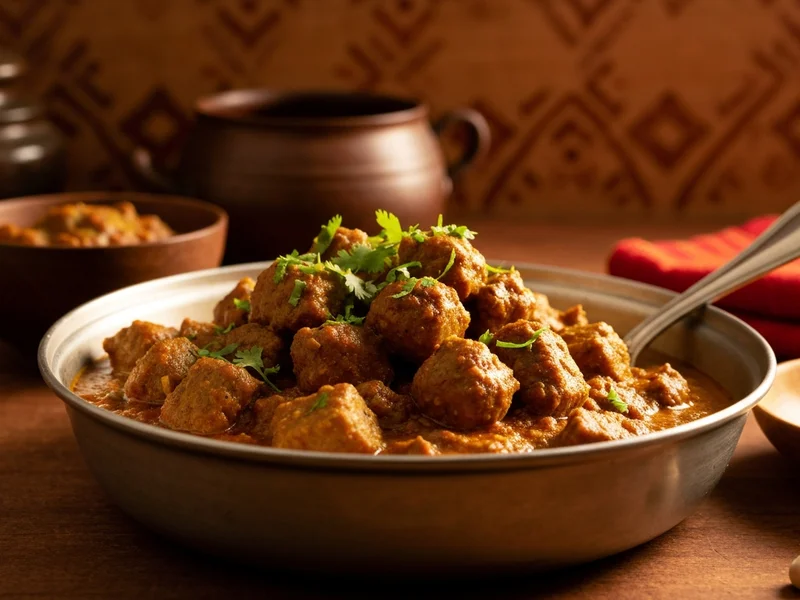
Sindh's thick, crispy, flavour-packed breakfast flatbread — whole wheat dough loaded with onion, green chilli, fresh coriander, and carom seeds, pressed thick, scored in a crosshatch pattern, and cooked on a tawa with generous ghee until crackling and golden.
Keema Bhurji
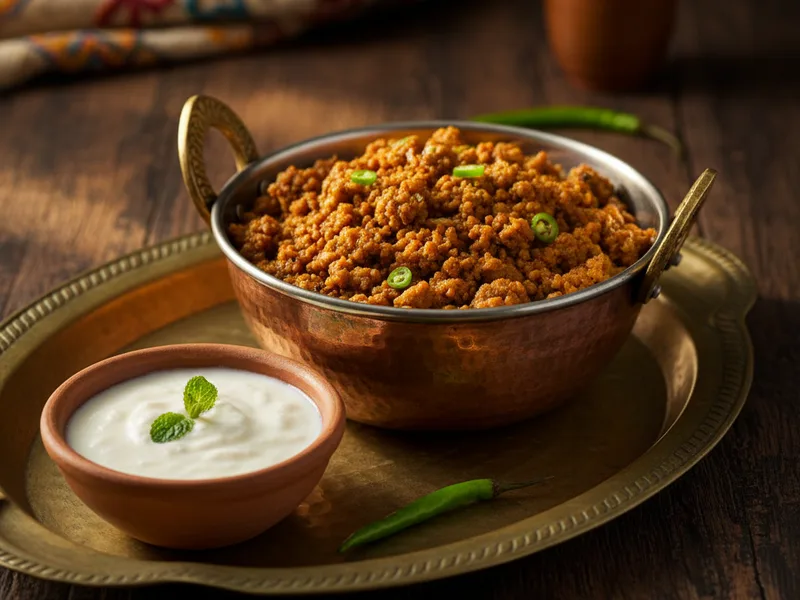
Karachi's beloved breakfast qeema — loose, scrambled-style spiced mince cooked quickly with eggs, green chillies, and fresh herbs. Street food speed, restaurant flavour.
Karachi Halwa Puri
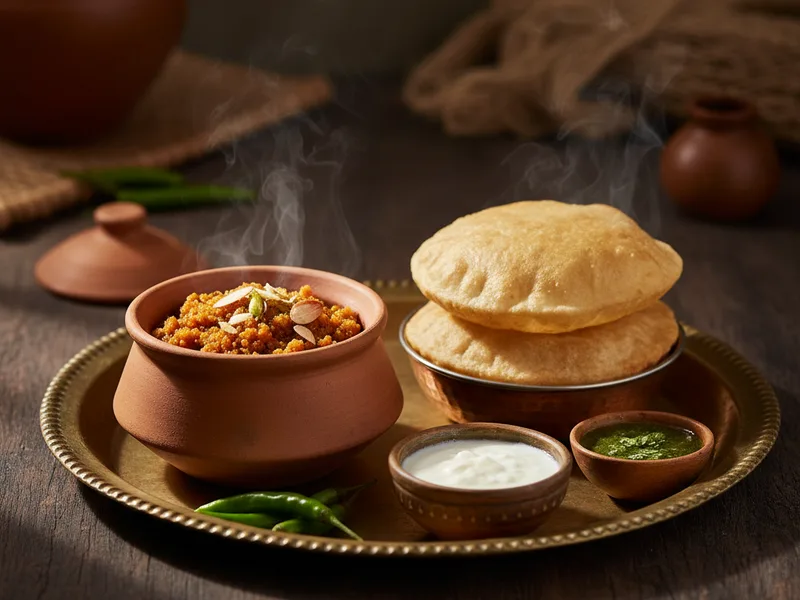
Karachi Halwa Puri is the city's most celebrated breakfast — golden, pillowy-soft puri bread paired with intensely sweet sooji halwa and spiced chana, a Sunday morning tradition that Karachiites fiercely defend.
Cite This Recipe
Writing about Pakistani food? Use these ready-made citations.
<a href="https://pakistani.recipes/recipes/halwa-puri/karachi-halwa-puri/">Karachi Halwa Puri</a> — Pakistani Recipes
Bilal Soomro. "Karachi Halwa Puri." Pakistani Recipes, 2025. https://pakistani.recipes/recipes/halwa-puri/karachi-halwa-puri/
Bilal Soomro. (2025). Karachi Halwa Puri. Pakistani Recipes. Retrieved 2026-06-03, from https://pakistani.recipes/recipes/halwa-puri/karachi-halwa-puri/
What Cooks Are Saying
Incredible depth of flavour. The spice balance is just right — not too hot, not too mild.
Better than the restaurant version. The tips in the recipe really make a difference.