
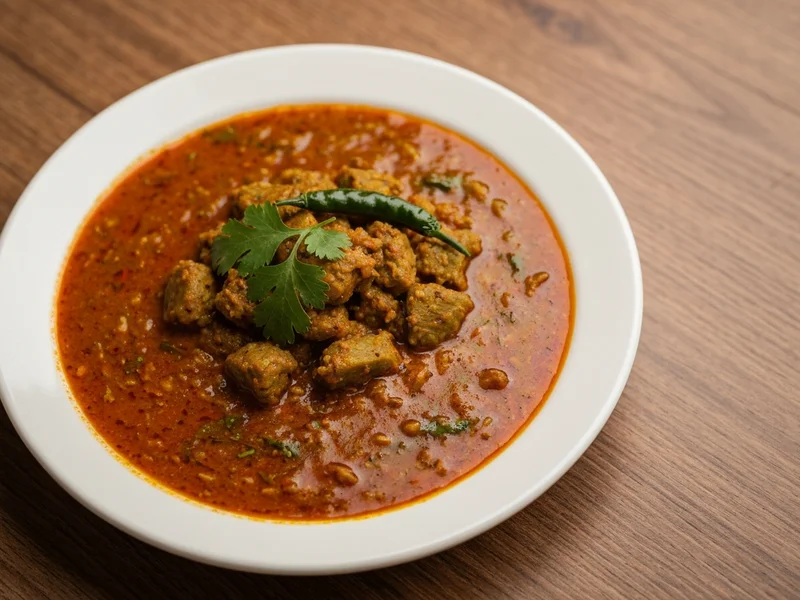
Balochistan cuisine
Balochi Dampukht
Balochi Dampukht is a traditional Balochistan Pakistani dish. Balochistan's above-ground sealed-pot slow-cook — meat layered over charbi (sheep tail fat) with whole unpeeled vegetables, lid sealed with flour dough, cooked for 2-3 hours in its own steam with no added water. Salt and black pepper only. The charbi renders and bastes everything from below. NOT an underground dish — that is Khaddi Kabab.
Dampukht (dam = steam, pukht = cooked) is above-ground sealed-pot cooking — completely different from underground Khaddi Kabab.
The technique of sealing a pot and letting food cook in its own steam is one of the oldest cooking methods in the region, predating the Mughal era. A heavy pot is lined with charbi (sheep tail fat) at the base, then loaded with whole bone-in meat, unpeeled potatoes, whole onions, whole tomatoes, and whole green chillies. Salt and black pepper only — no masala, no ginger-garlic paste. The lid is sealed airtight with raw dough packed around the rim. High flame for 10 minutes builds initial pressure, then very low flame for 2-3 hours. The meat and vegetables generate their own steam which cannot escape. When the seal-dough cracks or whistles, it is ready. Shared between Balochistan and KP culinary traditions.
Ingredients
Instructions
- FRY THE BARISTA PYAZ (FRIED ONIONS): In a heavy-bottomed degh (pot) or large karahi (wok), heat 4 tbsp ghee or oil over medium heat. Add 2 of the sliced onions. Fry, stirring every minute, for 15-18 minutes until they are deep golden brown — the colour of dark honey — and some edges are beginning to crisp. HINT: Do not rush this. Medium heat is correct. High heat burns the outside before the inside caramelises. If your onions look pale yellow after 8 minutes, raise the heat slightly. Remove with a slotted spoon and spread on a plate lined with kitchen paper to drain. Leave the remaining ghee in the pot — don't discard it. WHY: The barista pyaz sweeten the gravy and add the only 'colour' to this otherwise pale dish. They also provide a textural contrast when the dish is served.
- MARINATE THE MUTTON: In a large bartan (bowl), combine the mutton pieces with full-fat yoghurt, ginger matchsticks, whole garlic cloves, all the whole spices (cardamom, cinnamon, cloves, peppercorns, cumin seeds, bay leaves), half the fried barista pyaz, and salt. Mix thoroughly so every piece of mutton is coated in the yoghurt and spice mixture. WHY: The yoghurt marinade begins tenderising the meat immediately — the acids break down the proteins slightly. Even 20-30 minutes of marination makes a difference. If you have time, marinate for 2-4 hours in the fridge. FUN FACT: The technique of marinating meat in yoghurt before slow cooking is a direct inheritance from Central Asian (Turkic and Persian) cooking traditions. Balochistan sits on ancient trade and migration routes between Iran and the Indian subcontinent — the cuisine reflects this.
- LAYER THE DEGH (POT): Into the same degh that still has the ghee in it, scatter the third onion (raw, thinly sliced) in an even layer at the bottom. WHY: This raw onion layer is a barrier between the metal pot bottom and the marinated meat — it prevents scorching during the long slow cook. On top of the raw onion layer, arrange all the marinated mutton pieces in a single layer as much as possible. Pour all the remaining yoghurt marinade, ginger, garlic, and spices from the bartan on top. Scatter the remaining barista pyaz on top. Do not add any water. HINT: Resist the urge to add water. Trust the process. The yoghurt and the natural moisture in the meat will generate more than enough steam inside the sealed pot.
- SEAL THE POT: This is the defining step of Dampukht. Mix 2 cups of atta (whole wheat flour) with enough water to make a firm, non-sticky dough — about half a cup of water. Roll it into a long rope, about the thickness of your thumb. Press this dough rope firmly around the rim of the degh lid, like a gasket. Press the lid down onto the pot so the dough seal squeezes between lid and pot, creating an airtight seal. HINT: Make sure the rope is thick enough and presses firmly — any gap will let steam escape and the technique won't work. Alternatively, if your degh has a very heavy, tight-fitting lid, you can simply place it on and weight it down with a heavy stone or a filled pot of water on top. The goal is zero steam escaping. FUN FACT: This dough-sealing technique is called 'dum' (breath/steam) — the same root word in 'Dampukht.' The moment you seal the pot, you are trapping the 'breath' of the cooking inside.
- THE FIRST PHASE — HIGH HEAT: Place the sealed degh on your stove over medium-high heat for the first 10 minutes. You should begin to hear a faint sizzling sound from inside the pot — this tells you the liquid has begun to boil and steam is building up inside. WHY: This initial high-heat phase builds up the steam pressure quickly so the cooking environment inside reaches temperature fast. After 10 minutes, reduce the heat immediately to the lowest possible flame your stove can produce. If you have a tawa (griddle), place the degh on top of the tawa — the tawa acts as a diffuser and prevents any direct scorching on the pot bottom.
- THE LONG SLOW COOK — DO NOT OPEN: Cook on the lowest possible heat for 2 to 2.5 hours without opening the pot. Set a timer and do not open the lid, do not check, do not lift the corner to peek. HINT: If you see steam escaping from around the dough seal, press a damp cloth around the edges to reinforce the seal. You should hear a very faint, occasional burbling sound from inside — this is correct and means there is still active steam cooking happening inside. Silence after the first 30 minutes is also fine — the meat is still cooking in residual steam. WHY: Every time you break the seal, you lose the steam that has built up inside and interrupt the slow-cook environment. The entire technique depends on an unbroken cooking session.
- BREAK THE SEAL AND CHECK: After 2-2.5 hours, turn off the heat. Let the pot rest for 10 minutes — this allows the steam pressure to reduce before you open it. Then, carefully break the dough seal by pulling it away from the rim of the lid. Be very careful opening — residual steam will billow out. Open away from your face. The scene inside should stop you in your tracks: the mutton will have released from the bone and will be sitting in a concentrated, silky gravy of yoghurt and meat juices. The colour will be a warm, pale golden-brown. WHY: The meat releases its collagen over those 2+ hours, turning the yoghurt marinade into a rich, gelatinous gravy — no water added, no stock, just the meat's own essence. HINT: If the meat is not yet tender enough (test by pressing with a fork — it should fall apart), re-seal with fresh dough and cook for another 30 minutes.
- FINISH AND SERVE: Taste the gravy for salt — adjust if needed. The Dampukht is served directly from the degh at the table. No garnish is strictly necessary, but a scattering of fresh green coriander (dhania) and a few thin slices of raw onion alongside adds brightness. Serve with Balochi roosh (thin flatbread) or naan. Each person should get a piece of bone-in mutton so they can extract the marrow — a prized part of the meal. FUN FACT: In Balochistan, Dampukht is the dish of honour. When a guest of great importance arrives — a tribal elder, a long-absent family member, a dignitary — Dampukht is cooked. It communicates respect through time invested. You cannot rush Dampukht, and that is precisely the point.
Chef's Secrets
- The dough seal is not optional — it is the entire technique. If your lid doesn't seal well, use a double layer of heavy-duty aluminium foil tightly crimped around the lid and pot rim before placing the lid.
- Full-fat yoghurt is mandatory. If the yoghurt breaks (the fat separates and you see white curds floating in yellow oil), it usually means the heat was too high. The dish is still edible but the gravy texture won't be as smooth.
- A tawa or heat diffuser under the degh during the slow-cook phase is highly recommended. Direct heat for 2+ hours, even on a low flame, can scorch the bottom. The tawa prevents this.
- Let the pot rest at least 10 minutes after turning off the heat before opening. The steam inside is extremely hot and pressurised — opening immediately risks burns.
- The dough rope you use for the seal becomes edible (it will be slightly steam-cooked). Some families eat it with the meal as a type of simple bread — soft inside, slightly crusty outside.
- Vegetables go in WHOLE and UNPEELED — whole potatoes, whole onions, whole tomatoes, whole green chillies. They cook in the trapped steam. Peeling or cutting them is not traditional Dampukht.
- No ground masala in authentic Dampukht. Depth comes from charbi, time, and steam — not spice quantity. Adding garam masala or ginger-garlic paste turns it into a generic curry, not Dampukht.
- Dampukht is above-ground. Khaddi Kabab is underground. They are completely different dishes and the confusion is common — do not let it happen in your kitchen.
Common Questions
How long does Balochi Dampukht take to make?
Total time is 3h — 30m prep and 2h 30m cooking.
How many servings does this recipe make?
This recipe makes 4 servings, and is rated medium difficulty.
Which region of Pakistan is Balochi Dampukht from?
Balochi Dampukht is from Balochistan, Pakistan — one of the country's most distinctive culinary traditions.
What do you serve with Balochi Dampukht?
Serve directly from the degh at the table with Balochi roosh (paper-thin flatbread) or plain naan. A simple raw salad of sliced onion, green chilli, and fresh coriander with lemon is all you need alongside. The gravy is rich enough that no other curry or side dish is required or appropriate.
Goes Well With
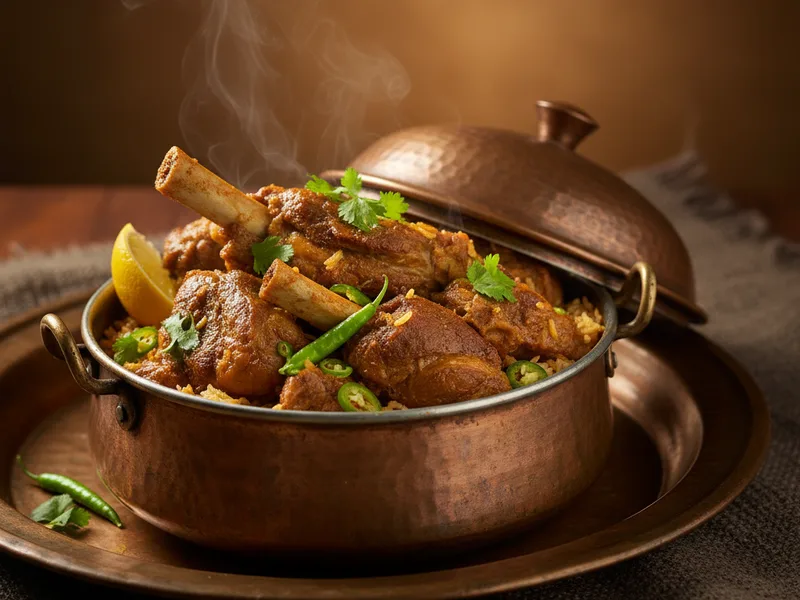
Balochi Dampukht Mutton
The ancient Balochi slow-cooked sealed meat — dampukht means 'cooked in its own steam' and this dish delivers mutton of extraordinary tenderness with minimal spicing and maximum natural flavour.
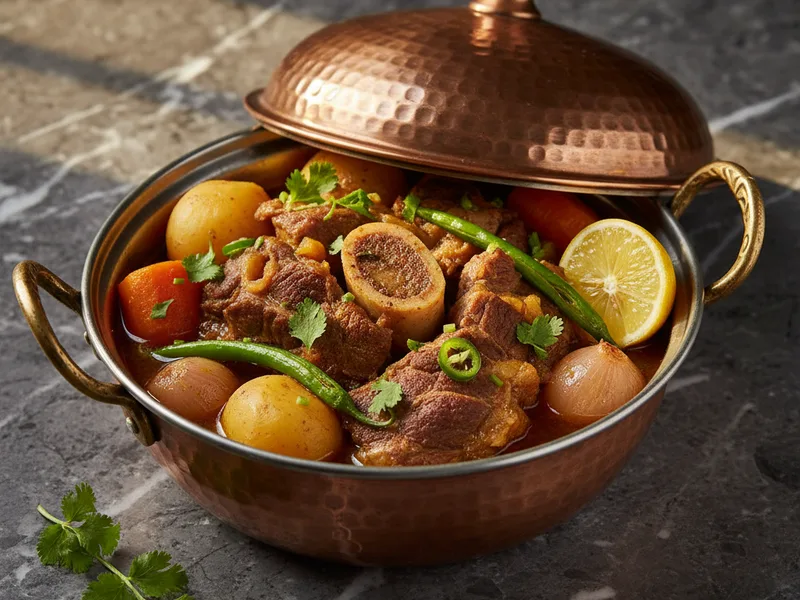
KP Dampukht Beef
KP's version of dampukht using beef — the Pashtun approach to sealed slow-cooked meat with slightly more whole spices than Balochistan, creating something with extra depth and warmth.
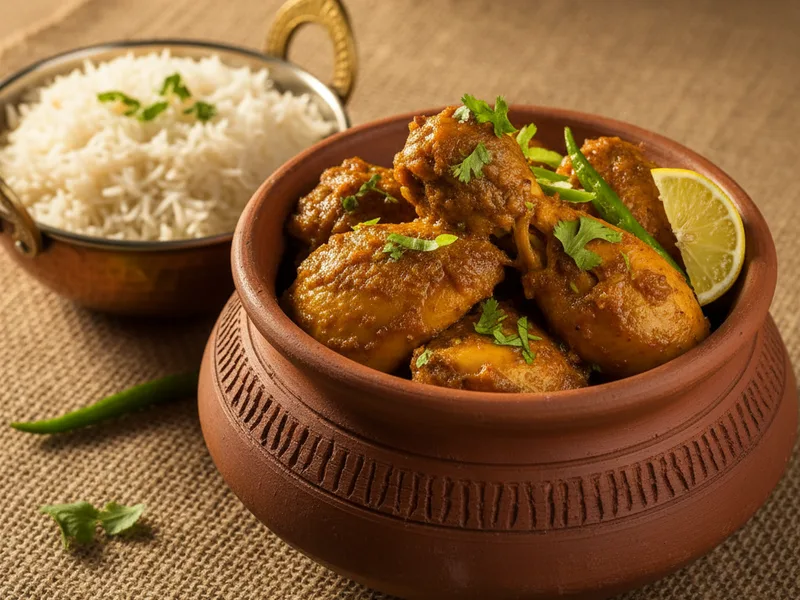
Slow Dum Chicken
Punjab's take on dum cooking applied to chicken — yogurt-marinated chicken sealed and slow-cooked so every piece is impossibly tender and infused with spiced aromatics. Restaurant quality at home.
What Cooks Are Saying
Made this last weekend and the whole family loved it. Will definitely make again.
Nice recipe. I substituted one ingredient and it still came out great.
Really good recipe. I reduced the chilli slightly for the kids and it worked perfectly.
Leave a Review
Tried this recipe? Share your experience — your review helps other cooks.