
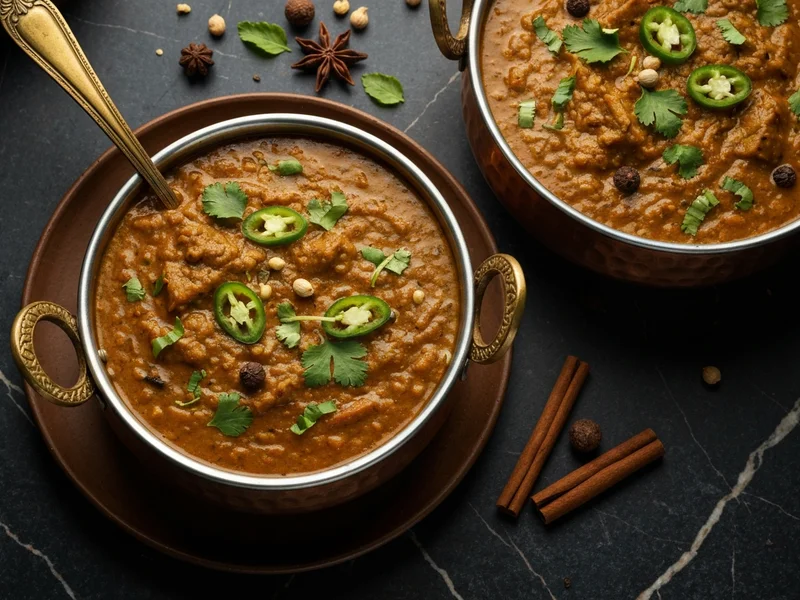
Sindh (Karachi — Parsi/Zoroastrian community) cuisine
Karachi Parsi Dhansak
Karachi Parsi Dhansak is a traditional Sindh (Karachi — Parsi/Zoroastrian community) Pakistani dish. Karachi's Parsi dish of slow-cooked lamb with 3-4 lentils, pumpkin, fenugreek, and brinjal in a sweet-sour-spicy broth. Traditionally served with caramelised Parsi brown rice and kachumber salad. Cultural note: Dhansak is Parsi mourning food — served on the fourth day after a death. It is not made at weddings or celebrations.
Dhansak is one of the most layered, complex dishes in the entire subcontinent — and almost nobody outside Karachi's small Parsi community knows how to cook it properly.
In Zoroastrian custom, it is cooked on the fourth day after a death, when the family gathers again to eat together for the first time. But the dish is so deeply satisfying and so beloved that it has completely broken out of its ceremonial role — today it's served at Parsi weddings, Nowruz (Persian New Year), family Sundays, and any occasion where someone says 'let's make something special.' The name comes from Gujarati: 'dhan' meaning lentils, 'sak' meaning vegetables. Zarnak Sidhwa — the only Parsi TV chef in Pakistan, known from Masala TV's Food Diaries — is the living authority on this recipe. This is our tribute to her community's extraordinary culinary heritage.
Ingredients
Instructions
- PREP YOUR LENTILS AND VEGETABLES: Wash all five dals together in a large bowl — masoor, chana, tuvar, moong, and urad — under cold running water until the water runs clear. This removes excess starch and any dust. Soak them together in cold water for 30 minutes while you prep everything else. WHY: Soaking lentils reduces cooking time and ensures they all cook to a similar doneness even though they have different textures. Peel and chop the kaddu (pumpkin) into large chunks — big is fine because it's going to dissolve into the gravy. Wash and roughly chop the methi (fenugreek) leaves. FUN FACT: The five-lentil combination is unique to Parsi Dhansak. Most Indian and Pakistani lentil dishes use one or two varieties. The Parsi blend is almost certainly Persian in origin — the ancient Zoroastrian settlers of Gujarat would have evolved this recipe over 1,000+ years.
- MAKE YOUR DHANSAK MASALA: In a small, dry tawa (griddle) or frying pan over low heat, dry-roast 2 tsp coriander seeds, 1 tsp cumin seeds, 1 cinnamon stick, 3 cardamom pods, 4 cloves, and 1 star anise. Stir constantly with a chamcha (spoon) for 2-3 minutes until you smell a warm, toasty fragrance rising from the pan — the spices will darken slightly. Do not walk away. They go from perfectly toasted to burnt in under 30 seconds. HINT: If you see smoke, you've gone too far — start again. Remove from heat, let cool for 2 minutes, then grind in a spice grinder or with a mortar and pestle to a fine powder. Mix with the remaining powdered spices: half tsp turmeric, 1 tsp red chilli powder, half tsp black pepper, quarter tsp nutmeg. This is your Dhansak masala — use it fresh today.
- COOK THE DAL AND VEGETABLES WITH MEAT: In a large pateela (deep pot) or degh (heavy-bottomed pot), add the drained soaked lentils, kaddu (pumpkin) chunks, chopped methi leaves, chopped tomatoes, and 1 roughly chopped onion. Add the mutton pieces on top. Pour in 1.5 litres of water. Bring to a boil, then reduce heat to medium-low. Cook covered for 45-50 minutes, stirring every 10 minutes, until the dal has completely broken down, the pumpkin has dissolved, and the mutton is tender. WHY: Cooking the meat directly in the lentils allows the collagen from the bones to enrich the dal while the dal breaks down into a thick, almost velvet-like gravy. This is what makes Dhansak different from any regular dal gosht. HINT: Use a pressure cooker to reduce this to 20 minutes on high pressure — release steam slowly.
- BLEND THE DAL (NOT THE MEAT): Remove the mutton pieces carefully with tongs and set aside in a bartan (bowl). Now use a hand blender directly in the pateela to blend the dal and vegetable mixture until smooth, OR transfer in batches to a regular blender. HINT: If using a blender, let the mixture cool slightly first and never fill it more than halfway — hot liquid expands and can blow the lid off. Blend until velvety smooth, then return the mutton pieces back into the blended dal. WHY: Blending the dal creates the characteristic thick, smooth Dhansak gravy — much richer than a chunky dal. The pumpkin completely melts in and adds body without any visible chunks.
- ADD THE SWEET-SOUR BALANCE: Into your blended dal-and-meat pot, stir in: 2 tbsp tamarind paste, 2 tbsp grated jaggery (gur), and your entire freshly ground Dhansak masala. Stir everything in thoroughly. Bring to a gentle simmer on medium heat. Taste the gravy — it should have a noticeable sourness from the tamarind, a definite sweetness from the jaggery, and a warming heat from the chilli. These three should be in balance, with none dominating. Add more jaggery if it tastes too sharp; add more tamarind if it tastes flat. FUN FACT: This sweet-sour-spicy combination is called 'khatta-meetha-teekha' in Urdu and is a Persian cooking principle the Parsi community preserved through millennia — the ancient Sassanid Persian court was famous for this balance in its royal cuisine.
- MAKE THE TARKA (TEMPERING): In a separate small karahi (wok) or frying pan, heat 3 tbsp oil or ghee over medium-high heat. Add 1 finely sliced onion. Fry, stirring frequently, for 12-15 minutes until deep golden brown and crispy — what's called barista pyaz. Watch carefully after the 10-minute mark; they go from golden to burnt quickly. Add the ginger-garlic paste and fry for 2 more minutes until the raw smell disappears. Pour this entire tarka — hot, sizzling oil and all — straight into the dal pot. Stir in. HINT: Adding the hot tarka to the dal makes a wonderful sizzling sound and blooms the flavours in a final burst. This is the moment the dish comes alive.
- MAKE THE CARAMELISED BROWN RICE: In a separate pateela, wash 2 cups of basmati rice and soak for 20 minutes. In a small pan, heat 2 tbsp sugar over medium heat without stirring until it melts and turns a deep amber caramel colour — 3-4 minutes. Add 2 cups of water carefully (it will splutter — stand back). Swirl to dissolve the caramel. Add this caramel water to your rice pot along with 2 more cups of water, salt to taste, and a pinch of cumin seeds. Cook the rice as normal — bring to a boil, then reduce heat to very low, cover tightly, and steam for 15 minutes. WHY: The caramel colours the rice a beautiful golden-brown and adds a subtle sweetness that's traditional with Dhansak. This is not the same as plain chawal (white rice) — the caramelised rice is as much a signature of Dhansak as the gravy itself.
- FINAL CHECK AND SERVING: Give the Dhansak a final stir and taste for salt. The gravy should be thick — thicker than regular dal, almost like a loose stew — and should coat the back of a chamcha (spoon). If it's too thick, add a splash of hot water and stir. Serve in a deep bartan with the caramelised brown rice on one side and the Dhansak gravy and meat ladled over and beside it. Eat together — the rice, the gravy, the tender mutton, all in the same spoonful. HINT: Dhansak tastes dramatically better the next day after the flavours have had time to meld overnight. Make it a day ahead if you can — this is a dish that rewards patience. Finish with a squeeze of fresh lemon over individual servings.
Chef's Secrets
- All five dals are non-negotiable — each one contributes a distinct texture and flavour to the gravy. Substituting even one dal changes the character of the dish. Buy them all from a Pakistani or Indian grocery store and store the extras for next time.
- Fresh methi is worlds apart from dried. If you can find fresh fenugreek, use it. If using dried kasuri methi, crush it between your palms before adding — this releases the volatile aromatic oils.
- Do not rush the tarka onions. Pale golden is not enough — they must be deep amber brown and slightly crispy. Under-fried onions give the Dhansak a raw, flat taste instead of a sweet, deep caramelised note.
- The sweet-sour balance is personal. Start with the recommended amounts of jaggery and tamarind, then taste and adjust. Some families make it sourer, some sweeter — find your family's balance.
- For the brown rice, don't let the caramel get too dark or it will turn bitter. Pull it off the heat at a rich amber — like the colour of strong chai (tea). If it gets too dark, start the caramel again rather than ruining the rice.
- Dhansak freezes exceptionally well. Make a double batch, freeze in portions, and you have one of the most impressive 'defrost-and-heat' meals imaginable.
- CULTURAL CONTEXT: Dhansak is Parsi mourning food — served on the chauthhi (fourth day after death). No traditional Parsi serves it at a wedding, Navroze, or any joyous occasion — it would be considered deeply inauspicious. This is important context missing from most non-Parsi recipes.
- The complete traditional meal is three dishes: (1) Dhansak, (2) Parsi Brown Rice — caramelise a tablespoon of sugar in the pot first, then add rice and whole spices. The caramelised sugar gives it a faintly sweet, nutty, mahogany colour. (3) Kachumber — raw onion, tomato, cucumber salad in red wine vinegar. Serving Dhansak with plain basmati misses the tradition entirely.
- Dhansak Masala is its own distinct spice blend — not garam masala. It includes: coriander, cumin, fenugreek seeds, black pepper, mustard seeds, dried red chilli, turmeric, cinnamon, cloves, cardamom, mace, and bay leaf. Using generic garam masala changes the flavour profile significantly. Buy Dhansak masala premixed or make your own.
- The "5 lentils" claim is common online but not fixed. ParsiCuisine.com (the most authoritative Parsi food source) says traditionally 3-4 lentils. Toor dal is always the base; masoor, chana, and sometimes moong are added. The exact combination varies by family recipe — flexibility here is authentic, not laziness.
Common Questions
How long does Karachi Parsi Dhansak take to make?
Total time is 2h 10m — 40m prep and 1h 30m cooking.
How many servings does this recipe make?
This recipe makes 5 servings, and is rated hard difficulty.
Which region of Pakistan is Karachi Parsi Dhansak from?
Karachi Parsi Dhansak is from Sindh (Karachi — Parsi/Zoroastrian community), Pakistan — one of the country's most distinctive culinary traditions.
What do you serve with Karachi Parsi Dhansak?
Serve Dhansak exclusively with caramelised brown rice (the pairing is non-negotiable in Parsi tradition). A simple kachumber salad of diced onion, tomato, green chilli, and fresh coriander with lemon juice on the side cuts through the richness. A wedge of fresh lemon for each person to squeeze over their own bowl.
Goes Well With
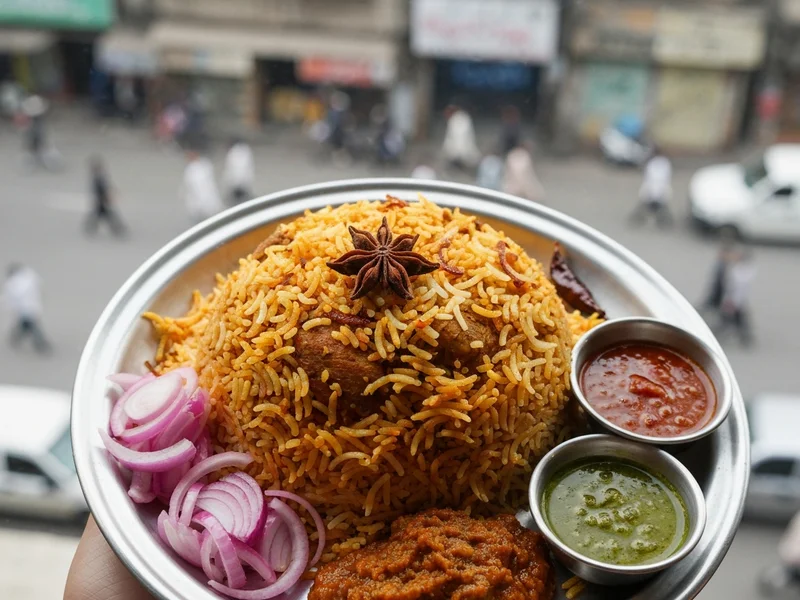
Authentic Karachi Biryani
The iconic Karachi-style biryani — fiery, tangy, loaded with potatoes and prunes. Born in the streets of Karachi, perfected by generations of Muhajir cooks.
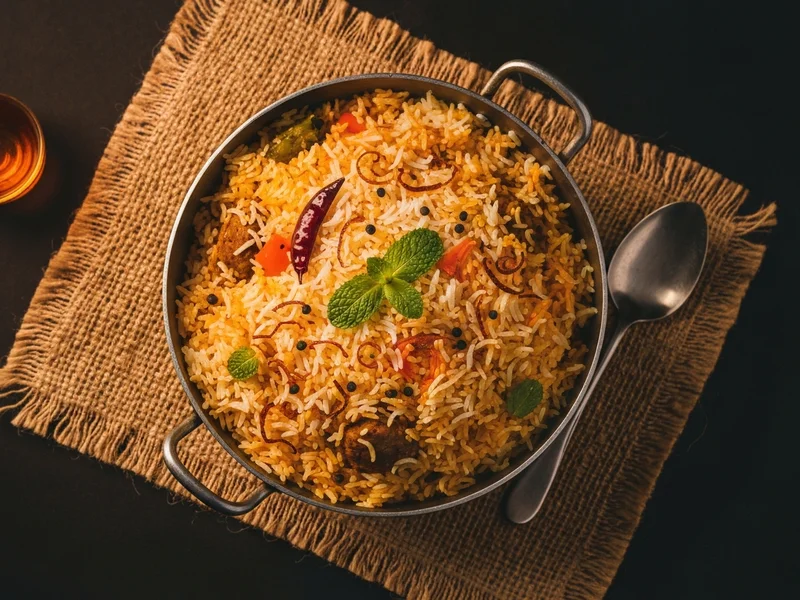
Hyderabadi Biryani
The kacchi biryani of Hyderabad, Sindh — raw marinated meat layered with parboiled rice, sealed, and slow-cooked until every grain absorbs the masala. No pre-cooking the meat.
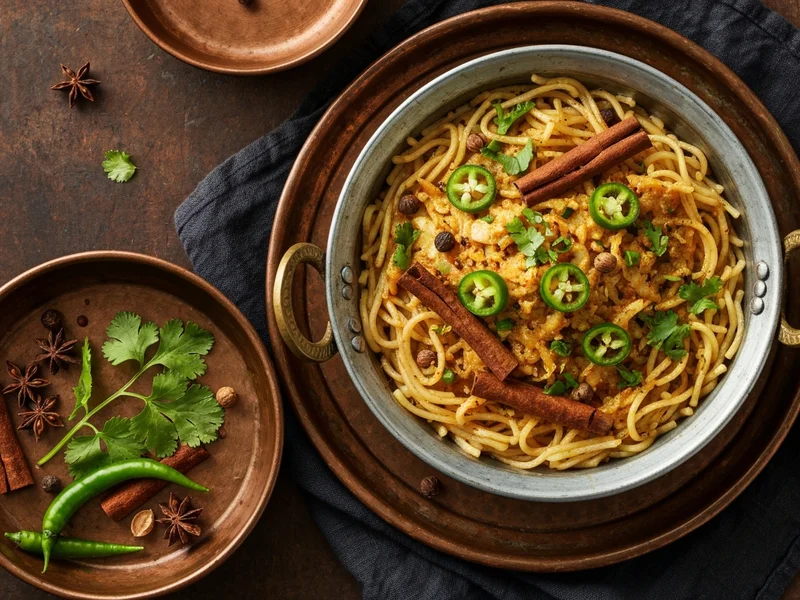
Karachi Khausa — The Memon Coconut Noodle Bowl
A Burmese coconut noodle soup adapted by Pakistani Memons who fled Burma at Partition — a fragrant coconut chicken curry poured over noodles and finished at the table with a customisable array of toppings.
What Cooks Are Saying
Really good recipe. I reduced the chilli slightly for the kids and it worked perfectly.
Incredible depth of flavour. The spice balance is just right — not too hot, not too mild.
Leave a Review
Tried this recipe? Share your experience — your review helps other cooks.