
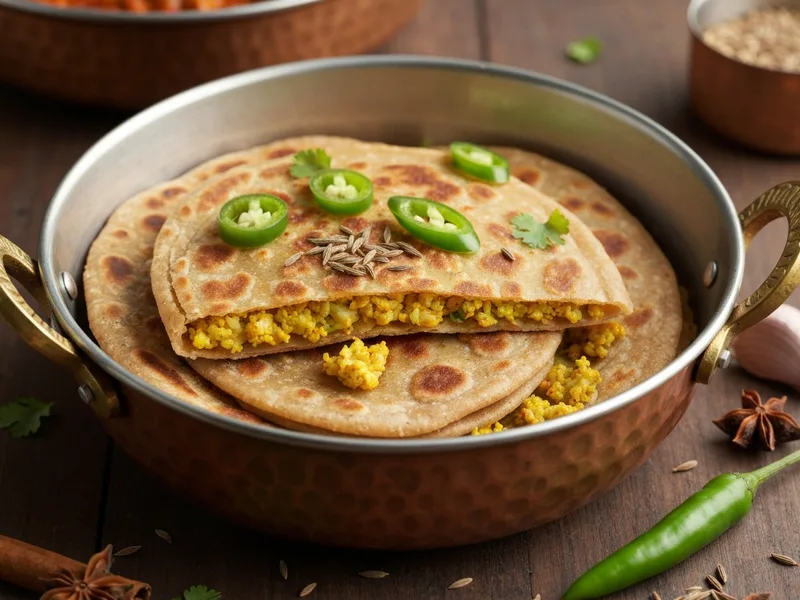
Punjab cuisine
Gobi Paratha
Gobi Paratha is a traditional Punjab Pakistani dish. Gobi Paratha is a golden, ghee-kissed Punjabi breakfast flatbread stuffed with spiced grated cauliflower — fragrant with ajwain, sharp with green chilli, and warming with ginger. It is the kind of breakfast that makes you feel properly fed before a long day. The trick, which every Punjabi aunt will tell you sternly, is squeezing the cauliflower bone-dry before it goes anywhere near the dough.
Gobi (cauliflower) paratha is a cornerstone of the Punjabi winter breakfast table, appearing at dhabas, home kitchens, and roadside stalls from Lahore to Rawalpindi as soon as cauliflower comes into season.
Within two centuries it had been fully absorbed into Punjabi cuisine — becoming so essential to the Punjabi kitchen that the combination of gobi paratha and white butter (makhan) is now one of the iconic images of Punjabi food. The vegetable is virtually odourless raw but transforms inside the hot dough into something aromatic and slightly sweet, amplified by ajwain and fresh ginger. Like all stuffed parathas, its reputation lives and dies by the moisture content of the filling — generations of Punjabi cooks have been drilled on this point from childhood. Serve it with white butter and lassi and you have one of the most satisfying breakfasts on the subcontinent.
Ingredients
Instructions
- MAKE THE DOUGH: Combine atta and ½ tsp salt in a wide paraat (mixing bowl). Add warm water gradually, mixing with your fingers until a dough forms. Knead for 5–6 minutes — push the dough away from you with the heel of your hand, fold it back, turn, and repeat. The dough is ready when it is smooth and springs back slowly when you poke it with a finger. HINT: If your knuckles leave a permanent indent, the dough is too soft — knead in a little more flour. Cover with a damp cloth and rest for 20–30 minutes. WHY: Resting relaxes the gluten, making the dough easier to roll without it snapping back.
- GRATE AND DRY THE CAULIFLOWER (the most critical step): Break or cut the cauliflower into chunks and grate them on the fine or medium holes of a box grater into a bowl. You want fine, snow-like shreds — not chunky pieces, which will poke through the dough. Sprinkle 1 tsp salt over the grated gobhi, mix, and leave for 10 minutes. FUN FACT: Cauliflower is about 92% water, and every drop of that is out to ruin your paratha. The salt draws the moisture to the surface — exactly as it does with mooli. After 10 minutes, take the gobhi in both hands and squeeze as hard as you can over the sink. Twist and squeeze again. Keep going until you can squeeze and almost nothing comes out. The gobhi should feel grainy and compact, like damp sand. HINT: If you are not sure whether it is dry enough, err on the side of more squeezing. You cannot over-squeeze a paratha filling.
- MIX THE FILLING: In a clean bowl, combine the squeezed gobhi, grated adrak, chopped hari mirch, ajwain, hara dhania, and lal mirch powder if using. Mix thoroughly. Taste a small pinch — it should be well-seasoned from the residual salt, fragrant from the ajwain, and have a little heat from the chilli. Do not add more salt without tasting first.
- DIVIDE AND FILL: Divide the rested dough into 6 equal balls. Take one ball, dust it in flour, and roll it on your chakla (rolling board) into a circle about 12 cm across using your belan (rolling pin). Place a heaped tablespoon of gobhi filling in the centre, leaving a clear 2 cm border all the way around. Bring the edges up around the filling, pleating them together like a drawstring bag, and pinch firmly to seal. Press the sealed ball gently flat with your palm. HINT: Make sure you pinch the seam completely — any gap is an escape route for the filling, which will leak onto the tawa and burn.
- ROLL THE PARATHA: Dust the filled ball lightly in flour and place seal-side-down on the chakla. Roll from the centre outward in all directions, rotating the paratha a quarter turn after every few rolls. Aim for a circle about 18–20 cm wide. Apply even, gentle pressure — do not press hard in one spot. WHY: Cauliflower pieces are harder than mooli shreds, so they are slightly more likely to poke through. Rotating as you roll distributes the filling evenly and reduces pressure on any one point.
- COOK ON THE TAWA: Heat your tawa (flat griddle pan) over medium heat for 2 minutes. Place the raw paratha on the dry tawa. Cook for about 90 seconds until the surface changes from glossy to matte and you see small bubbles forming. Flip with a spatula — the cooked side should be pale gold with dry speckles, not brown yet. Cook the second side for 90 seconds. Now add ½ tsp ghee on the top surface and flip. The sizzle when ghee hits the tawa is the sound of things going right. Add another ½ tsp ghee to the now-top side. Press lightly with a cloth or spatula and cook 30 seconds per side until both surfaces are golden brown. HINT: The gobhi inside needs to cook through too — slightly lower than scorching-hot is better here. Medium is your friend.
- SERVE HOT: Transfer to a plate or roti basket. Repeat with remaining dough balls. Stack finished parathas — they stay warm this way. Serve immediately with white makhan (unsalted butter), thick dahi (yoghurt), and a cold tall glass of lassi.
Essential for This Recipe
As an Amazon Associate, we earn from qualifying purchases
Carom Seeds (Ajwain)
Thyme-like and peppery — lifts parathas, pakoras, and breads with authentic Pakistani spice
Coriander Powder (Dhania)
Citrusy and warm, essential for curry bases and curries throughout Pakistan
Kashmiri Red Chilli Powder
Adds deep red color with mild heat — essential for authentic karahi, biryani, and nihari without overwhelming heat
Pure Ghee (Clarified Butter)
The authentic cooking fat for Pakistani dishes — adds rich flavor that oil can't match
Chef's Secrets
- Grate the cauliflower fine — large chunks poke through the dough and tear it.
- The 10-minute salt soak plus maximum squeezing is non-negotiable. This is the step most beginners skip and then wonder why their paratha tore.
- Do not add extra salt to the filling before tasting. The residual salt after squeezing is usually enough.
- Roll from the centre outward, rotating the paratha — this prevents the filling from bunching up on one side.
- Gobi paratha is best eaten immediately. It softens as it sits, so cook and serve in batches.
Common Questions
How long does Gobi Paratha take to make?
Total time is 55m — 30m prep and 25m cooking.
How many servings does this recipe make?
This recipe makes 6 servings, and is rated medium difficulty.
Which region of Pakistan is Gobi Paratha from?
Gobi Paratha is from Punjab, Pakistan — one of the country's most distinctive culinary traditions.
What do you serve with Gobi Paratha?
Serve straight off the tawa with a pat of white makhan (unsalted butter) on top, a bowl of thick dahi (yoghurt), and a spicy achaar (mango or mixed pickle). The classic Punjabi dhaba pairing is a tall glass of salted lassi — the cold, tangy drink cuts right through the richness of the ghee.
Goes Well With
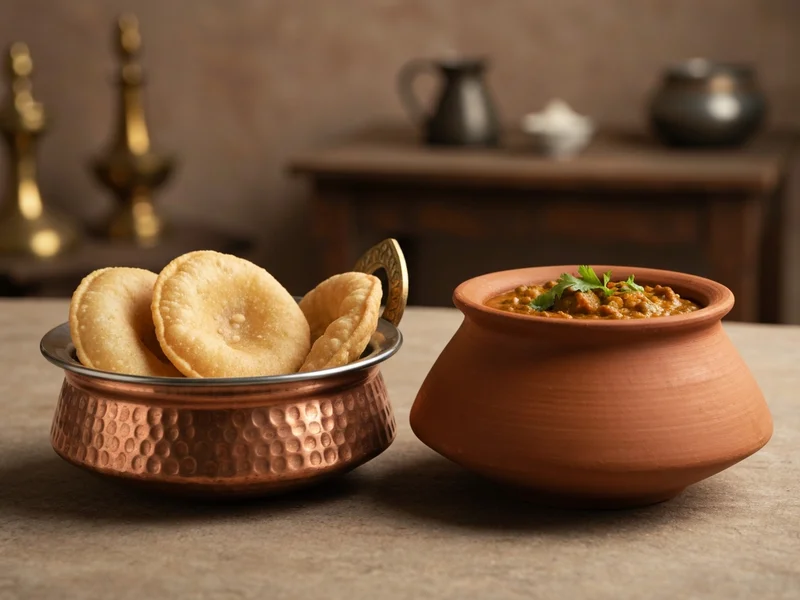
Lahori Halwa Puri with Channay
Lahori Halwa Puri is the iconic Pakistani Sunday breakfast — a full spread of suji (semolina) halwa, deep-fried puri bread, and spiced channay (chickpeas), served together as a feast. It is the meal that families plan weekends around, the one that means everything is okay with the world.
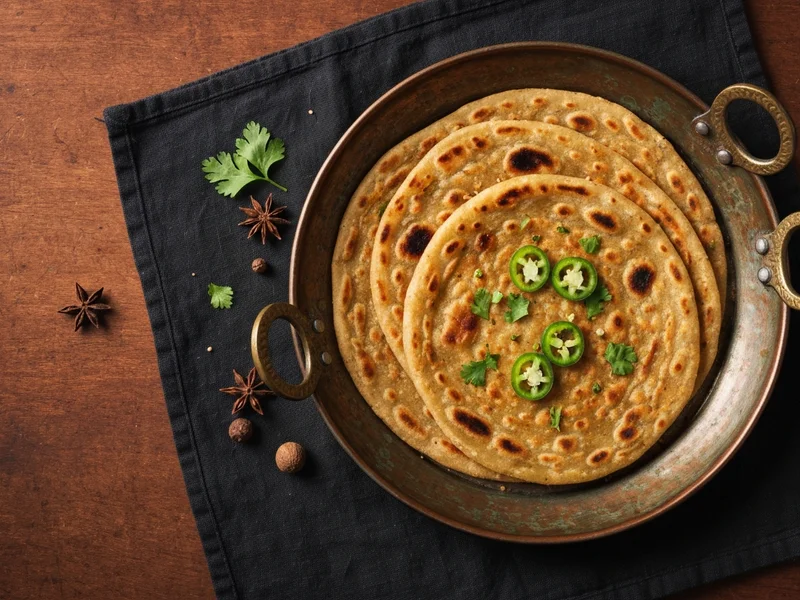
Aloo Paratha — Spiced Potato Stuffed Flatbread
Aloo Paratha is Pakistan's most beloved breakfast bread — whole wheat flatbread stuffed with a spiced potato filling, cooked on a tawa (griddle) with butter or ghee until crisp and golden on the outside, soft within. It is the meal that gets children out of bed without argument.
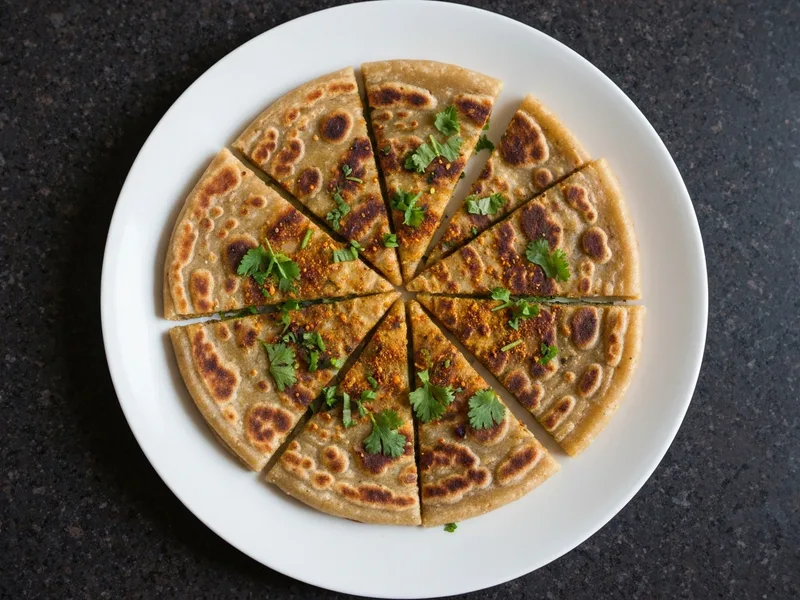
Mooli Paratha
Mooli Paratha is a Punjabi breakfast classic — a flaky whole-wheat flatbread stuffed with spiced grated daikon radish that packs a punchy, slightly peppery flavour. It is polarising in the best possible way: once you love it, you crave it on cold winter mornings with a cold glass of lassi. The secret is squeezing every last drop of water out of the radish, or your paratha will tear like a drama at dhabas.
Cite This Recipe
Writing about Pakistani food? Use these ready-made citations.
<a href="https://pakistani.recipes/recipes/mooli-paratha/mooli-paratha/">Mooli Paratha</a> — Pakistani Recipes
Zainab Tariq. "Mooli Paratha." Pakistani Recipes, 2025. https://pakistani.recipes/recipes/mooli-paratha/mooli-paratha/
Zainab Tariq. (2025). Mooli Paratha. Pakistani Recipes. Retrieved 2026-06-03, from https://pakistani.recipes/recipes/mooli-paratha/mooli-paratha/
What Cooks Are Saying
Really enjoyed this. Leftovers tasted even better the next day.
I've tried many recipes for this dish but this one is the best by far.