
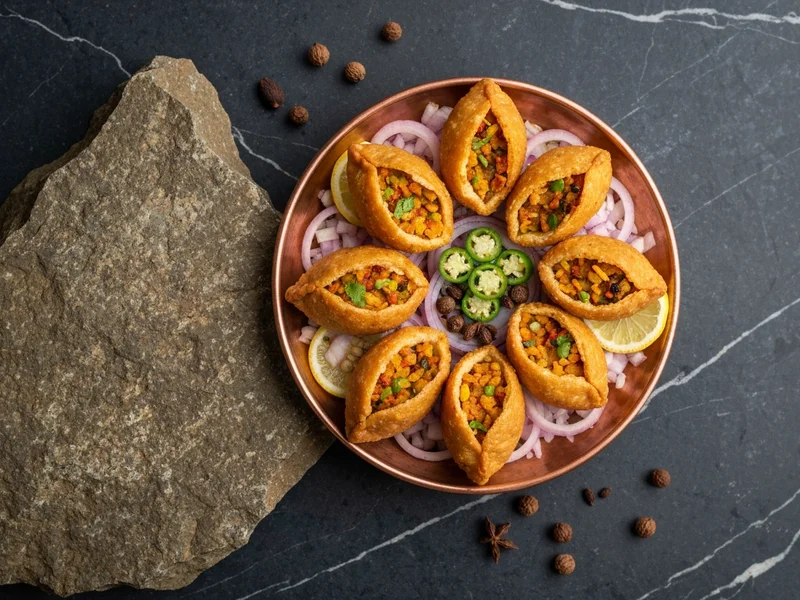
Punjab cuisine
Gol Gappay
Gol Gappay is a traditional Punjab Pakistani dish. Crispy hollow puris filled with spiced chickpeas and tangy tamarind water — Pakistan's most addictive street snack. Once you start, you physically cannot stop at one.
Gol gappay are Pakistan's great equaliser. Executives in suits and rickshaw drivers stand shoulder-to-shoulder at the same thela (street cart), heads tilted back, stuffing crispy purian (puris) into their mouths before the imli (tamarind) water drips down their wrists. There is no dignified way to eat gol gappay, and that is exactly the point.
The whole transaction takes 3 seconds. You eat it whole. Immediately. No chewing strategy, no delicate bites — just commit. The pani (flavoured water) is the rooh (soul) of this dish — khatti (sour), teekhi (spicy), thandi (cold), and slightly meethi (sweet), made from imli, podina (mint), and a secret blend of chaat masala that every vendor guards with their life. Liberty Market in Lahore, Burns Garden in Karachi, and Saddar in Rawalpindi are prime gol gappay territory — but today, you're bringing the thela to your kitchen.
Ingredients
Instructions
- START WITH THE PANI (make this first so it has time to chill). In a blender, combine the podina (mint) leaves, hara dhaniya (coriander — stems and all), hari mirch (green chillies), and 1 cup of water. Blend on high until completely smooth — about 30-45 seconds. You should have a vibrant green liquid.
- Pour the green mixture through a chalni (fine sieve or muslin cloth) into a bari jug (large jug or pitcher). Press with a chamcha (spoon) to extract all the liquid — you want the flavour, not the fibre. Discard the pulp.
- To the strained green liquid, add the remaining 3 cups of thanda pani (cold water), imli (tamarind) paste, chaat masala, bhuna zeera (roasted cumin powder), kala namak (black salt), regular namak (salt) to taste, and gur (jaggery). Stir well until the gur dissolves completely. Now taste it — this is important. It should hit you in waves: first sour (imli), then spicy (mirch), then a cooling freshness (podina), with a slight sweetness lingering at the end. Adjust anything that feels off. Too sour? Add more gur. Too bland? More kala namak. Too mild? More hari mirch. HINT: The pani should taste slightly more intense than you want, because it gets diluted by the puri and filling when you eat it. Refrigerate until ice cold — at least 1 hour.
- NOW MAKE THE PURI DOUGH. In a bari pyali (large bowl), mix the suji (semolina) and maida (all-purpose flour) with a pinch of namak (salt). Add water very gradually — about 1-2 tablespoons at a time — and mix as you go. You want an extremely sakht (stiff) dough, much stiffer than roti dough. It should feel firm and resist when you press it. If it feels soft and pillowy, you have added too much water. HINT: You will probably use about 1/3 cup of water total, but add slowly and stop when the dough comes together.
- Knead the dough for a full 10 minutes. Yes, 10 minutes. Your arms will complain. This kneading develops the gluten that gives the puris structure to hold their hollow shape when fried. The dough should become very smooth and elastic — no cracks, no rough patches. Cover with a damp cloth and rest for 30 minutes at room temperature. This lets the suji absorb the water and the gluten relax.
- After resting, divide the dough into 2-3 portions. Take one portion and roll it out on a lightly floured surface — VERY thin, about 1-2mm. Think almost translucent. If the dough is thick, the puris will not puff. Use a bottle cap or small round cookie cutter (about 4cm diameter) to cut out circles. Gather the scraps, re-knead briefly, and roll again. You should get about 40-50 puris from this batch. HINT: Keep the unrolled dough covered with a damp cloth so it does not dry out.
- Heat the tel (oil) in a karahi (wok) or deep pot to 180 degrees C (350 degrees F). If you do not have a thermometer, test with a tiny piece of dough — it should sink to the bottom and float up within 2-3 seconds, sizzling gently. Too many bubbles means too hot. No bubbles means too cool. HINT: Temperature control is everything here. Too cool and the puris absorb oil and do not puff. Too hot and they brown before the inside steam can inflate them.
- Fry the purian in small batches (4-5 at a time — do not crowd the karahi). Slide them gently into the oil. Within a few seconds, they should start to puff up. Here is the gol gappay wala technique: use a jharna (slotted spoon) to gently press each puri under the surface of the oil with quick, light taps. This forces hot oil over the top, creating steam inside that inflates the puri into a hollow ball. Each puri needs about 30-45 seconds total — golden, crispy, and fully puffed. Drain on paper towels or a wire rack.
- MAKE THE FILLING. In a pyali (bowl), combine the ublay chanay (boiled chickpeas), diced ublay aloo (boiled potatoes), chaat masala, lal mirch (red chilli powder), a pinch of bhuna zeera (roasted cumin powder), and namak (salt) to taste. Toss gently — you do not want to mash the aloo. The filling should be chunky and well-seasoned.
- TIME TO ASSEMBLE AND EAT. Take a puri in one hand. Use your thumb to crack a hole in the top — press firmly and the thin shell will give way, creating a perfect opening. Spoon in a small amount of the chanay-aloo filling (do not overstuff — the pani needs room). Dunk the filled puri into the ice-cold pani, scooping up liquid as you go. Now — this is critical — put the ENTIRE gol gappa into your mouth in ONE bite. Do not nibble. Do not try to eat it in two bites. Commit. The explosion of crunchy puri, spicy-tangy pani, and soft filling is the entire point. FUN FACT: The average Pakistani eats 6-8 gol gappay per sitting. The record at Liberty Market is rumoured to be 47. We do not recommend chasing that record, but we understand the urge.
Essential for This Recipe
As an Amazon Associate, we earn from qualifying purchases
Tamarind Paste (Imli)
Adds tangy sourness to chaats, Sindhi cooking, and curries — naturally sour without citrus
Whole Cumin Seeds (Zeera)
The foundation of tarka (tempering) in dals and curries — adds earthy warmth to every Pakistani dish
Chickpea Flour (Besan)
For pakoras, kadhi, and batters — adds protein and authentic texture to fried snacks
Kashmiri Red Chilli Powder
Adds deep red color with mild heat — essential for authentic karahi, biryani, and nihari without overwhelming heat
Chef's Secrets
- The dough must be very sakht (stiff) and kneaded for the full 10 minutes. Soft, under-kneaded dough makes puris that do not puff, are not crispy, and basically defeat the entire purpose of gol gappay. If your dough feels like roti dough, it is too soft. Add more suji and knead longer.
- Oil temperature is the make-or-break factor. Test with a small piece of dough before committing your puris. The dough should sink briefly and float up within 2-3 seconds. If it sits at the bottom, the oil is too cool. If it browns instantly, too hot. Adjust and test again.
- The pani MUST be thanda (ice cold). This is not a preference — it is physics. Cold pani provides the temperature contrast against the room-temperature puri and filling that makes each bite thrilling. Warm pani is just... sad spiced water. Add ice cubes to the jug if needed.
- Kala namak (black salt) is the single most important ingredient in the pani. Without it, you can add every other ingredient perfectly and the pani will still taste wrong. That distinctive sulphurous, egg-like tang IS gol gappay pani. Accept no substitutes.
- Store fried purian in an airtight dabba (container) — they stay crispy for 2-3 days at room temperature. But the pani should always be made fresh. Day-old pani loses its vibrancy and tastes flat.
- If your puris refuse to puff, check three things: (1) Is the dough stiff enough? (2) Are they rolled thin enough? (3) Is the oil at the right temperature? Fix these three and they will puff like magic.
Common Questions
How long does Gol Gappay take to make?
Total time is 1h 5m — 40m prep and 25m cooking.
How many servings does this recipe make?
This recipe makes 6 servings, and is rated medium difficulty.
Which region of Pakistan is Gol Gappay from?
Gol Gappay is from Punjab, Pakistan — one of the country's most distinctive culinary traditions.
What do you serve with Gol Gappay?
Serve dastarkhwan (table) style: a plate of crispy purian, a pyali (bowl) of chanay-aloo filling, and a jug of ice-cold pani with a ladle. Everyone cracks, fills, and dunks their own gol gappay. No plates needed — just lots of rumaal (napkins), because dripping is inevitable and dignity is optional. For a party, set up a DIY gol gappay station and watch your guests turn into the happiest, messiest versions of themselves.
Goes Well With

Karachi Gol Gappay with Imli Paani
Karachi-style gol gappay (pani puri) — hollow crispy semolina shells filled with spiced potato-chickpea mash and drowned in a tangy, spicy tamarind-mint water (imli paani). Making the shells from scratch is a labour of love that produces results no shop can beat.

Aloo Samosa (Crispy Potato-Filled Pastry)
Aloo Samosa is Pakistan's most iconic street snack — a perfectly crispy, triangular pastry filled with spiced mashed potatoes and peas, deep-fried to a golden crunch. Sold on every corner from Karachi to Peshawar.
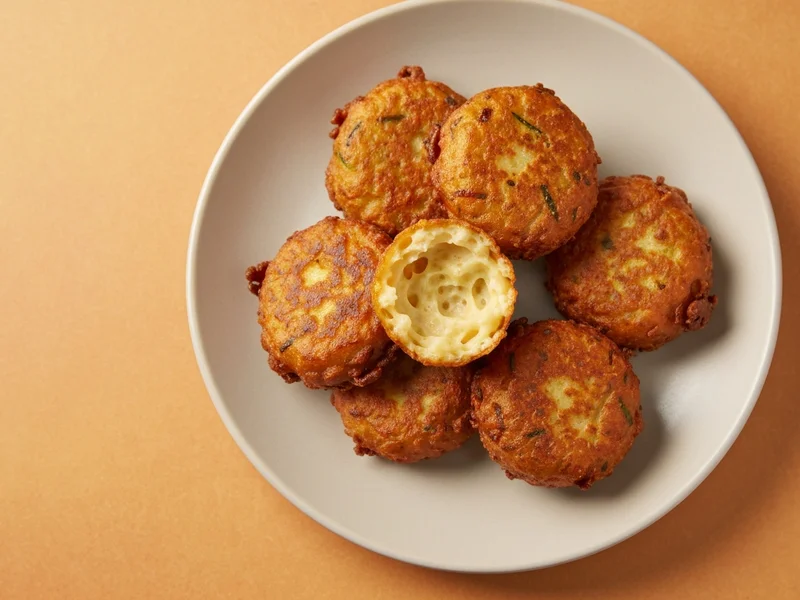
Pyaz Pakora (Onion Fritters)
Pyaz Pakora — crispy, lacy, golden onion fritters dipped in a spiced chickpea batter and deep-fried — is the first thing every Pakistani makes when it rains. The scent alone is enough to start a conversation.
Cite This Recipe
Writing about Pakistani food? Use these ready-made citations.
<a href="https://pakistani.recipes/recipes/pakora/pyaz-pakora/">Pyaz Pakora (Onion Fritters)</a> — Pakistani Recipes
Zainab Tariq. "Pyaz Pakora (Onion Fritters)." Pakistani Recipes, 2024. https://pakistani.recipes/recipes/pakora/pyaz-pakora/
Zainab Tariq. (2024). Pyaz Pakora (Onion Fritters). Pakistani Recipes. Retrieved 2026-07-20, from https://pakistani.recipes/recipes/pakora/pyaz-pakora/
What Cooks Are Saying
Authentic taste, clear steps. Exactly what I was looking for.
Incredible depth of flavour. The spice balance is just right — not too hot, not too mild.