
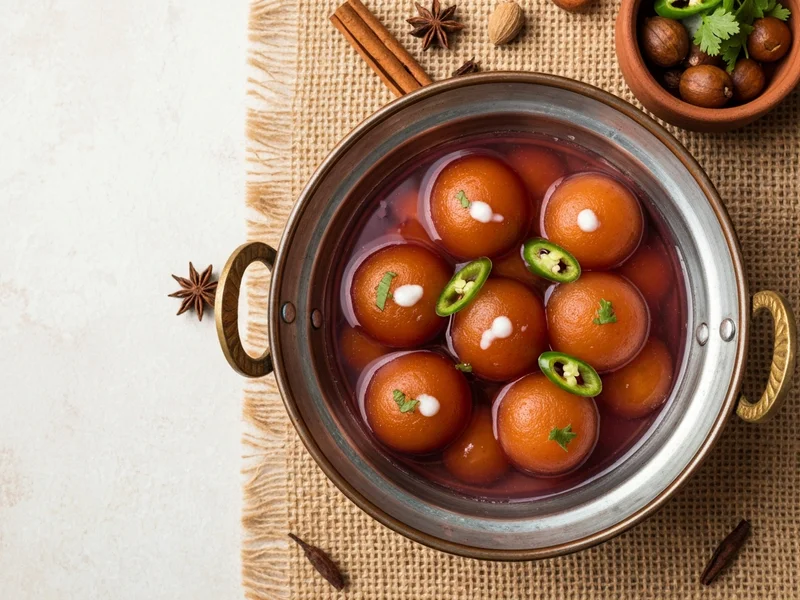
Punjab cuisine
Gulab Jamun — Soft Milk Dumplings in Rose Syrup
Gulab Jamun — Soft Milk Dumplings in Rose Syrup is a traditional Punjab Pakistani dish. Gulab jamun are soft, spongy milk dumplings deep-fried to a deep golden-brown and soaked in a fragrant sugar syrup perfumed with rose water and cardamom. Pakistan's most popular mithai (sweet), found at every wedding, celebration, and chai break.
In Pakistan, no celebration is complete without a plate — or more accurately, a mountain — of gulab jamun. At weddings, at Eid, at births, at cricket victories: gulab jamun arrive first and disappear fastest.
Despite feeling deeply Pakistani, the dish has roots in the Middle Eastern 'luqmat al-qadi' — a fried dough soaked in syrup introduced to the subcontinent by Persian and Central Asian cooks in the Mughal era. The good news is that making them at home is very achievable. The secret: gentle frying on low heat. Every beginner's instinct is to crank up the flame — resist it. Patience makes the inside cook through before the outside burns.
Ingredients
Instructions
- MAKE THE SYRUP FIRST: Combine cheeni (sugar) and pani (water) in a pateela (saucepan) over medium heat. Stir until sugar dissolves completely, then stop stirring. Add crushed elaichi (cardamom) pods. Bring to a gentle boil and cook for 5-6 minutes — you want a light syrup, not a thick toffee. HINT: To test consistency, drop a drop of syrup onto a plate — it should flow easily, not set. Remove from heat, stir in gulab jal (rose water) and saffron water if using. Keep warm on the lowest flame. The syrup must be warm when gulab jamun go in — cold syrup causes the skins to wrinkle.
- MAKE THE DOUGH: In a bartan (bowl), combine grated or crumbled khoya, maida (flour), and baking powder. Mix with your fingertips until it looks like coarse breadcrumbs. Add doodh (milk) one tablespoon at a time, working the mixture gently until it comes together into a smooth, soft dough. HINT: Do not knead the dough vigorously — this develops gluten in the flour and makes the gulab jamun tough. Just bring it together gently. The dough should be soft like an earlobe — smooth, not sticky. If it cracks when you roll a ball, add a few drops more milk.
- SHAPE THE BALLS: Divide the dough into 16-18 equal portions. Roll each one between your palms into a smooth ball with no cracks. HINT: Any crack in the surface will split open during frying and you'll have an exploded mess in your oil. Take your time rolling — smooth surfaces only. The balls should be roughly the size of a large marble. They will puff up slightly during frying. Place the shaped balls on a tray and cover with a damp cloth while you heat the oil.
- FRY ON LOW HEAT: Heat oil or ghee in a karahi (wok) or deep pan to about 140°C (280°F) — low heat is critical. To test without a thermometer: drop a tiny piece of dough in — it should sink, then slowly rise to the surface within 3-4 seconds. If it shoots up immediately, the oil is too hot. Slide 4-5 balls in gently. FUN FACT: Low temperature allows the heat to penetrate slowly to the centre — high heat causes the outside to darken before the inside cooks, giving you a burnt shell with raw dough inside. Fry for 8-10 minutes, turning continuously with a chamcha (spoon) for even browning. You want deep mahogany brown, not just golden.
- SOAK IN SYRUP: Remove the fried gulab jamun with a slotted spoon and immediately slide them into the warm syrup. HINT: The syrup must be warm, not boiling and not cold — approximately 60-70°C. Boiling syrup causes the jamun to harden; cold syrup causes wrinkling. The jamun will sizzle slightly when they hit the syrup. Let them soak for a minimum of 30 minutes — ideally 1-2 hours. They will absorb syrup and plump up from marble-sized to soft, spongy pillows. You will see them visibly expand.
- SERVE: Arrange gulab jamun in a serving bartan (bowl) and ladle plenty of syrup over them — they should be sitting in a pool of it. Garnish with chopped pista (pistachios) and a few strands of saffron if you're feeling fancy. Serve warm or at room temperature. HINT: Refrigerating gulab jamun makes them firmer — warm them in their syrup on low heat before serving if you've stored them in the fridge. They keep for 4-5 days in the syrup at room temperature in cool weather.
Essential for This Recipe
As an Amazon Associate, we earn from qualifying purchases
Green Cardamom Pods (Elaichi)
The fragrant heart of biryanis, pulaos, chai, and desserts — use whole pods for best flavor
Rose Water (Pure)
For desserts, kheer, and lassi — adds floral elegance to sweet dishes
Saffron Threads (Zafran)
The luxury spice for biryanis, zarda, kheer, and special occasions — adds golden color and floral elegance
Chef's Secrets
- The temperature of the frying oil is everything. Too hot = dark outside, raw inside. Too cool = greasy, pale, and sad. 140-150°C is the sweet spot.
- If your gulab jamun crack while frying, the dough was too dry. Knead in a few more drops of milk, re-roll, and try again.
- Make the syrup thinner than you think — the gulab jamun absorb a lot of liquid and the syrup concentrates as it sits.
- Fresh khoya from a halwai (sweet shop) makes noticeably superior gulab jamun compared to the packet kind or milk powder substitute. Worth hunting for.
- For a shortcut that still tastes homemade: use Shan Gulab Jamun mix but add a tablespoon of fresh khoya to the dough — it elevates the box mix significantly.
Common Questions
How long does Gulab Jamun — Soft Milk Dumplings in Rose Syrup take to make?
Total time is 1h — 20m prep and 40m cooking.
How many servings does this recipe make?
This recipe makes 8 servings, and is rated medium difficulty.
Which region of Pakistan is Gulab Jamun — Soft Milk Dumplings in Rose Syrup from?
Gulab Jamun — Soft Milk Dumplings in Rose Syrup is from Punjab, Pakistan — one of the country's most distinctive culinary traditions.
What do you serve with Gulab Jamun — Soft Milk Dumplings in Rose Syrup?
Serve warm in deep bowls with plenty of syrup. Excellent alongside vanilla ice cream for a modern Pakistani dessert. Traditionally served at weddings piled high on large plates. Perfect with a cup of doodh pati chai to cut through the sweetness.
Goes Well With

Soft Gulab Jamun — Perfect Every Time
Melt-in-your-mouth gulab jamun made from khoya and flour, deep-fried to a deep brown and soaked in saffron-rose sugar syrup until plump and syrup-soaked. The most universally loved Pakistani dessert — at every wedding, eid, and celebration table for a reason.
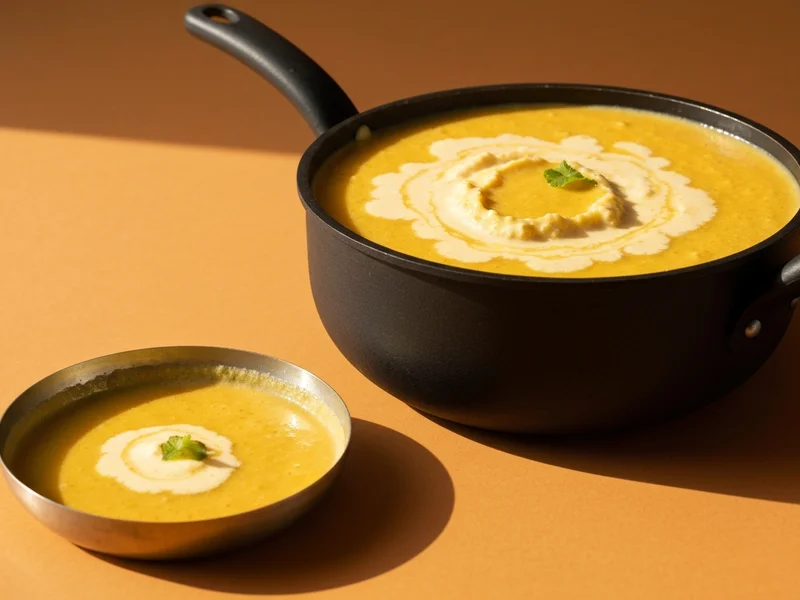
Sheer Khurma
The Eid morning vermicelli pudding — toasted sevaiyan simmered in sweetened milk with dates, pistachios, almonds, and cardamom. No Eid is complete without it.
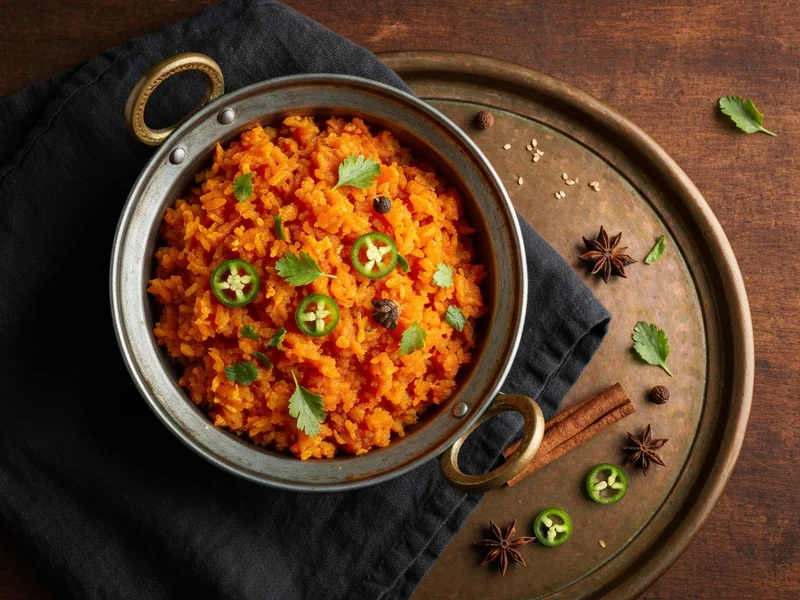
Gajar Ka Halwa — Classic Pakistani Carrot Dessert
Gajar ka halwa is Pakistan's most beloved winter dessert — slow-cooked grated carrots in full-fat milk, sugar, and cardamom, finished with a shower of nuts and a knob of ghee. Rich, aromatic, and impossibly comforting, it turns a humble root vegetable into something genuinely spectacular.
Cite This Recipe
Writing about Pakistani food? Use these ready-made citations.
<a href="https://pakistani.recipes/recipes/gajar-ka-halwa/gajar-ka-halwa/">Gajar Ka Halwa — Classic Pakistani Carrot Dessert</a> — Pakistani Recipes
Zainab Tariq. "Gajar Ka Halwa — Classic Pakistani Carrot Dessert." Pakistani Recipes, 2024. https://pakistani.recipes/recipes/gajar-ka-halwa/gajar-ka-halwa/
Zainab Tariq. (2024). Gajar Ka Halwa — Classic Pakistani Carrot Dessert. Pakistani Recipes. Retrieved 2026-07-20, from https://pakistani.recipes/recipes/gajar-ka-halwa/gajar-ka-halwa/
What Cooks Are Saying
Absolutely delicious! The flavours are spot on — tastes just like what I grew up eating.
This recipe is a keeper. Followed it exactly and it turned out perfect.
My husband said it's the best he's ever had. Coming from him that means everything!