
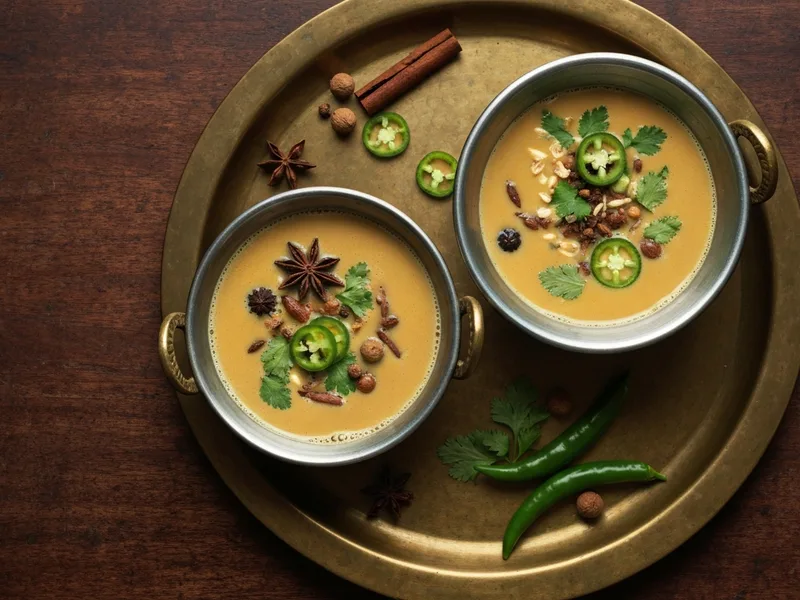
Gilgit-Baltistan cuisine
Hunza Gurgur Chai (Butter Tea)
Hunza Gurgur Chai (Butter Tea) is a traditional Gilgit-Baltistan Pakistani dish. Hunza Valley's ancient salted butter tea — brewed strong, blended with butter and salt until creamy and emulsified, served in a bowl and drunk piping hot. Surprising, nourishing, and one of the most shareable 'unexpected Pakistani food' stories you'll ever tell.
Stop right there. Before you read 'salted tea,' let us be clear: yes, this tea has salt in it. No, there is no sugar. And yes, it is served with butter melted into it. Welcome to Gurgur Chai — the daily drink of the Hunza Valley, 2,500 metres above sea level in the Karakoram mountains of Gilgit-Baltistan, and one of the most unfairly unknown things that Pakistan makes.
Gur-gur-gur. Hunza families drink this 8 to 10 times a day, especially in winter. At altitude, in the cold, the fat and salt provide calories and electrolytes that plain water and sweet tea simply cannot. The same tradition exists in Tibet, Mongolia, and Bhutan — Hunza is the westernmost edge of an ancient Himalayan tea culture that stretches thousands of miles east. The modern home method uses a blender, which replicates the churning action perfectly. The result is creamy, frothy, savoury, warming, and nothing like anything you've had before. Make it once, and you'll understand why people up in those mountains reach for it ten times a day.
Ingredients
Instructions
- BREW VERY STRONG TEA: Bring 2 cups of water to a rolling boil in a small pateela (pot) or kettle. Add the tea leaves (or tea bags). Reduce to medium heat and let the tea steep for a full 5 minutes — you want a deeply dark, almost mahogany-coloured liquid, much stronger than you'd normally drink. WHY: The strength of the tea base is critical. When you add butter and blend, the fat coats the palate and softens the tea's bitterness. If you start with weak tea, the final drink is insipid. FUN FACT: In Hunza, tea is traditionally simmered for 20-30 minutes over a slow fire with the compressed tea brick — a much more intense brew. Our 5-minute steep is the weekday shortcut.
- STRAIN THE TEA: Remove the pot from heat. Strain the brewed tea through a fine mesh strainer or tea strainer into a heat-proof jug or directly into a blender. Remove all tea leaves — stray leaves in the final drink are distracting. HINT: If you used tea bags, simply remove them and squeeze out the last of the liquid. Press the bags firmly — the most concentrated tea is in those last few drops.
- ADD BUTTER AND SALT TO THE BLENDER: Pour the hot tea into a blender. Add the butter cubes and salt. If adding milk, add it now. HINT: Hot liquid in a blender is a lid-launch risk. Fill no more than half full, hold the lid down firmly with a folded kitchen towel, and start on the lowest speed before increasing. WHY: The blending emulsifies the fat into the tea — without blending, the butter would simply float on top in a greasy layer. Emulsification creates a creamy, uniform, frothy drink.
- BLEND UNTIL FROTHY: Blend on high for 30-60 seconds. The mixture will turn from dark and oily-looking to a warm caramel-brown, creamy, and visibly frothy on top. This is the emulsion — the butter is now fully incorporated into the liquid, the same way a latte froths milk. The texture should be silky and uniform, not oily. HINT: If you don't have a blender, use a hand blender (immersion blender) in a deep jug. As a last resort, shake vigorously in a sealed jar, but the result will be less creamy.
- TASTE AND ADJUST: Pour a small amount into a cup or bowl and taste immediately while hot. It should be savoury, slightly bitter from the tea, rich from the butter, with the salt just perceptible. If it tastes oily or the butter seems to be separating, blend for another 20-30 seconds. If too salty, add a tiny splash more hot water. If not salty enough, add a pinch more salt and blend briefly. FUN FACT: The saltiness of Gurgur Chai is calibrated to the environment — at altitude, your body loses salt faster through respiration in the thin, dry air. What tastes 'too salty' at sea level is 'just right' at 2,500 metres.
- SERVE IN A BOWL: Pour the Gurgur Chai into wide, shallow bowls — not mugs or cups. This is the traditional serving vessel throughout the Himalayan butter tea belt. The wide surface allows the tea to cool to a drinkable temperature faster, which matters when you're pouring from a constantly simmering pot. Drink hot. In Hunza custom, a host refills your bowl the moment it is half empty — it is rude to let a guest's bowl run dry. Since you're probably serving yourself, just make enough for several bowls and keep the rest warm in a covered jug.
Chef's Secrets
- The butter quality matters more than you might expect — use good-quality unsalted butter. A low-quality butter with off-notes will be amplified in a simple recipe with only a few ingredients.
- Gurgur Chai is not meant to be sweet. Do not add sugar. If you genuinely cannot drink it without sweetness on the first try, add the smallest possible amount and decrease it each time you make it — your palate adjusts faster than you'd think.
- For the most authentic possible version, seek out pu-erh tea at a Chinese grocery store. It has an earthy, slightly fermented depth that basic black tea doesn't replicate — and once you try it, regular black tea feels flat by comparison.
- Gurgur Chai is an excellent conversation starter — serve it to guests without telling them it's salted and watch the faces. Then explain. It is one of Pakistan's best food stories.
- The drink can be made in large batches in a blender and kept hot in a flask or thermos for several hours — ideal for camping, hiking, or cold winter mornings.
- Traditional technique from some households: add a tiny pinch of meetha soda (baking soda) to the brewing water. It makes the tea liquor darker and slightly more alkaline — changing the emulsification and mouthfeel. Try once you have mastered the basic version.
Common Questions
How long does Hunza Gurgur Chai (Butter Tea) take to make?
Total time is 15m — 5m prep and 10m cooking.
How many servings does this recipe make?
This recipe makes 2 servings, and is rated easy difficulty.
Which region of Pakistan is Hunza Gurgur Chai (Butter Tea) from?
Hunza Gurgur Chai (Butter Tea) is from Gilgit-Baltistan, Pakistan — one of the country's most distinctive culinary traditions.
What do you serve with Hunza Gurgur Chai (Butter Tea)?
Served in wide bowls, piping hot, with dried apricots and walnuts on the side — the Hunza valley's classic accompaniment. In Gilgit-Baltistan, Gurgur Chai is drunk alongside chapshuro (meat-filled flatbread) or simple whole wheat bread. It is not a sweet drink — resist the urge to serve it with biscuits.
Goes Well With
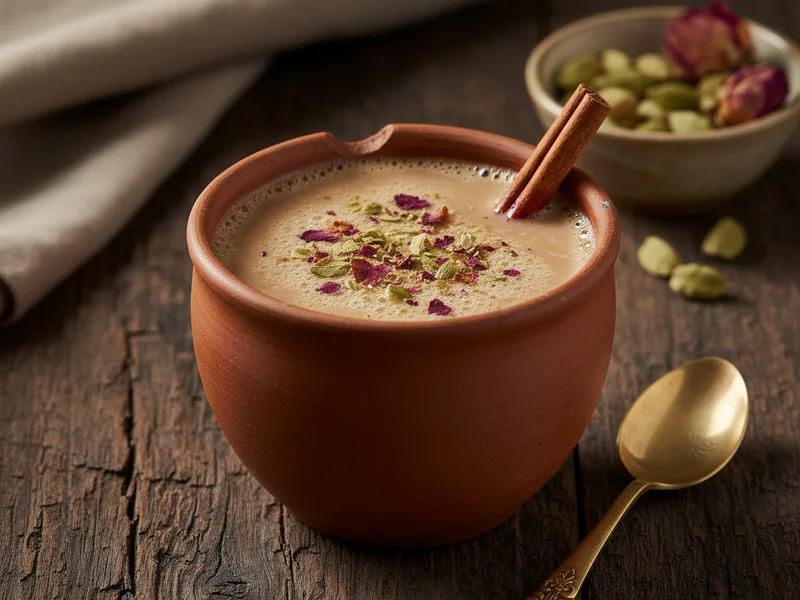
Gurgur Chai — Hunza Butter Tea
The warming, savory butter tea of Hunza and Gilgit-Baltistan — strong tea churned with salt and butter (traditionally yak butter) into a thick, sustaining beverage that has kept mountain communities warm for centuries.
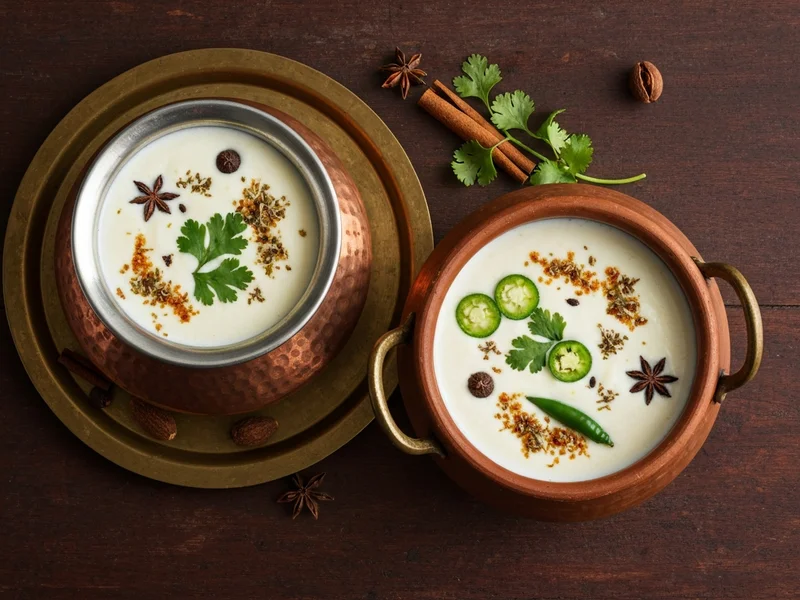
Meethi Lassi — Sweet Punjabi Yoghurt Drink
Meethi lassi is Punjab's legendary sweet yoghurt drink — thick churned dahi (yoghurt) blended with sugar, cardamom, and sometimes rose water, topped with a thick layer of malai (cream). It is Pakistan's most refreshing summer drink and the original desi smoothie.
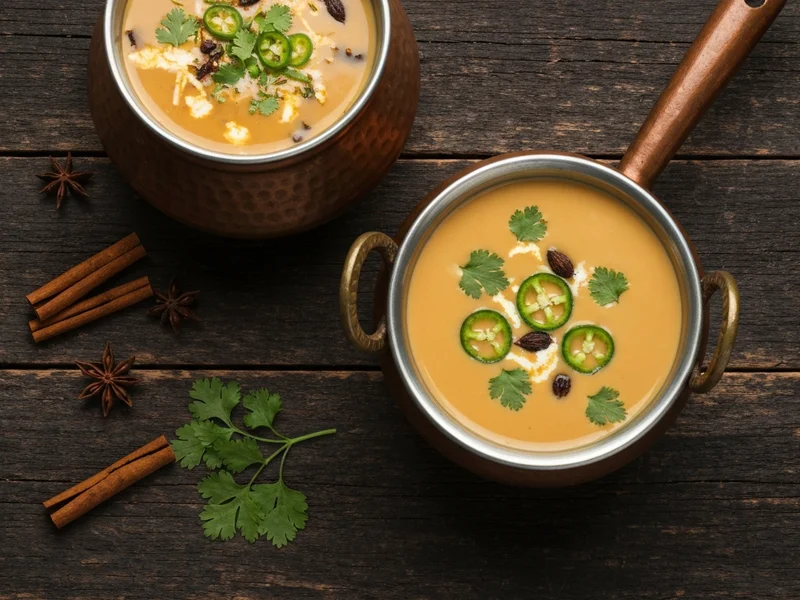
Doodh Pati Chai — Pakistani Milk Tea
Doodh pati chai is Pakistan's national drink — tea brewed entirely in full-fat milk with no water, producing an intensely creamy, deeply rich cup that bears little resemblance to the tea served anywhere else on earth. Strong, sweet, and non-negotiable.
What Cooks Are Saying
This is now my go-to recipe. Made it three times already.
Great flavours, took a little longer than the stated time but worth every minute.
Good recipe, clear instructions. The end result was delicious.
Leave a Review
Tried this recipe? Share your experience — your review helps other cooks.