
Punjab cuisine
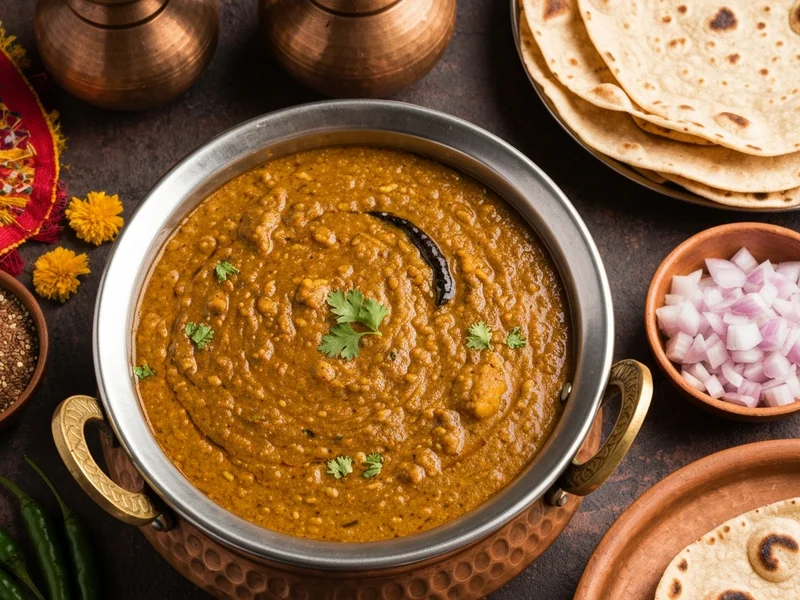
Punjabi Haleem
Punjabi Haleem is a traditional Punjab Pakistani dish. The Ramadan staple — shredded beef slow-cooked with wheat, barley, and lentils into a thick, silky stew, crowned with fried onions, ginger, lemon, and a drizzle of hot oil.
When the Ramadan cannon fires at sunset across Lahore, the first thing thousands of fasting hands reach for is a steaming bowl of haleem.
Haleem stalls pop up across Lahore in Ramadan like seasonal wildflowers — Muhammadi Nihari House on McLeod Road and Hafiz Haleem Wala in Lakshmi Chowk do a roaring trade. The real work is in the shredding and pounding: the gosht (meat) must dissolve into the grain until you genuinely can't tell where one ends and the other begins. If you can identify individual ingredients, you haven't cooked it long enough. This is a project recipe — plan your afternoon around it. But the result is one of the most satisfying dishes you'll ever eat.
Ingredients
Instructions
- BOIL THE GOSHT (MEAT): Place the beef in a large degh (heavy-bottomed pot) with 8 cups of pani (water), half the adrak lehsan paste (ginger-garlic paste), haldi (turmeric), and 1 tsp namak (salt). Bring to a boil on high heat — you'll see scum and foam rise to the surface. Skim this off with a chamcha (spoon) and discard it — it's impurities from the meat and leaving it makes your stock cloudy. Once skimmed, reduce heat to medium-low, cover, and let the gosht simmer for about 1.5 hours until it's completely tender and falls apart when you poke it with a fork. HINT: Don't rush this stage. The meat needs to be fork-tender to shred properly. If it's still resisting after 1.5 hours, give it another 30 minutes.
- SHRED THE GOSHT: Remove the cooked meat from the stock — keep the stock, you'll need every drop! Let the meat cool enough to handle, then shred it finely using two forks, pulling in opposite directions. You want thin, wispy fibres, not chunks. Alternatively, use a hand blender or stand mixer with a paddle attachment to shred it — pulse briefly, don't puree. The goal is shredded texture, not baby food. Set the shredded gosht aside. FUN FACT: In professional haleem shops, dedicated workers called 'koondas' sit with large wooden paddles, pounding the haleem in massive copper deghs for hours. It's both a cooking technique and an arm workout.
- COOK THE GRAINS AND DALS: In the same stock (this is important — the stock has all the meaty flavour), add the soaked and drained dalia (broken wheat), jau (barley), chana dal, masoor dal, and moong dal. Top up with hot water if needed — the liquid should cover the grains by about 2 inches. Bring to a boil, then reduce heat to low. Cover and cook for 2-3 hours, stirring every 30 minutes. You're looking for everything to become completely mushy and indistinguishable — you should not be able to identify individual grains or lentils. They should merge into a thick, porridge-like mass. HINT: If the mixture gets too thick and starts sticking to the bottom before the grains are fully broken down, add half a cup of hot water at a time. Sticking = burning = bitter haleem.
- PREPARE THE TARKA (TEMPERED SPICE BASE): While the grains are cooking, you have time to prepare the tarka. Heat half the desi ghee in a separate pateela (pot). Slice 2 of the pyaz (onions) and fry them on medium heat until deep golden brown — about 12-15 minutes, stirring regularly. Add the remaining adrak lehsan paste and fry for 2 minutes until the raw smell disappears. Add the haleem masala, lal mirch powder (red chilli), and garam masala. Stir for 1 minute until fragrant — the masala should sizzle and darken slightly. HINT: If the masalay stick and start to burn, add a tablespoon of water and stir quickly. Burnt masala tastes acrid and there's no fixing it.
- FRY THE BARISTA PYAZ (GARNISH ONIONS): In a separate small pan, heat 3 tbsp ghee or tel (oil). Slice the remaining 2 pyaz (onions) thinly and fry on medium heat, stirring every minute, until they are deep mahogany brown and crispy — about 15-20 minutes. These should be MUCH darker than the onions in the tarka. Remove with a slotted chamcha and drain on kitchen paper. They'll crisp up further as they cool. HINT: Barista pyaz are the crown of haleem — get them dark enough to be sweet and crunchy. Pale golden onions won't give the right flavour or texture.
- COMBINE EVERYTHING: Add the spiced tarka and the shredded gosht (meat) back into the degh with the cooked grain mixture. Stir vigorously with a wooden chamcha (spoon) — really get in there and mix everything thoroughly. The texture should be thick, smooth, and porridge-like. If it's too thick to stir, add a splash of hot water.
- POUND THE HALEEM: This is what separates haleem from daleem (a simpler, chunkier version). Using a large wooden chamcha, or a hand blender on the lowest pulse setting, pound and work the mixture until it becomes silky and cohesive. You want a unified, smooth mass with some visible shredded meat fibres for texture — not a completely smooth puree and definitely not a chunky stew. The chamcha pounding method is traditional and therapeutic: press, stir, press, stir, for about 10 minutes. HINT: If using a hand blender, use short pulses only. One second too long and you'll have baby food.
- FINAL SLOW COOK: Cook the pounded haleem on the lowest possible flame for another 30 minutes, stirring every 5 minutes to prevent sticking. The haleem should thicken to the point where it coats the back of a chamcha and holds its shape briefly when you push it aside. Taste and adjust namak (salt) and mirch (chilli) levels.
- PREPARE THE FINISHING TARKA: Heat 3 tbsp desi ghee in a tiny pan until smoking. Add a pinch of lal mirch powder (red chilli) — it will sizzle and turn the ghee a gorgeous red-orange. This sizzling, chilli-infused ghee is drizzled over each individual serving bowl. It adds richness, colour, and a final hit of heat. Pour it sizzling — the drama is part of the experience.
- SERVE AND GARNISH: Ladle haleem into deep bowls. Drizzle the sizzling red tarka over the top. Pile on the barista pyaz (crispy fried onions), scatter julienned adrak (raw ginger), slit hari mirch (green chillies), and chopped hara dhaniya and pudina (fresh coriander and mint). Place nimbu (lemon) wedges on the side. Each person squeezes their own nimbu over the bowl — the acid transforms the dish. Serve with fresh naan for scooping.
Chef's Secrets
- Soak the dalia (broken wheat) and jau (barley) overnight — they take MUCH longer to cook than the dals and must be completely broken down. Skipping the soak adds 1-2 hours to your cooking time and risks crunchy bits in the final haleem.
- The pounding/blending step is what separates haleem from daleem. The grains, dals, and gosht (meat) must become one smooth, unified mass with just a few visible meat fibres for texture. If someone can identify individual ingredients, keep pounding.
- Make haleem a day ahead if possible. Like nihari, it tastes significantly better the next day as the flavours meld and the texture tightens up. Reheat gently with a splash of water — it thickens considerably in the fridge.
- The garnish is NOT decoration — barista pyaz (fried onions), raw adrak (ginger), nimbu (lemon), and hari mirch (green chillies) are integral flavour components. Serving haleem without proper garnish is like serving biryani without raita — technically edible but fundamentally incomplete.
- If using a pressure cooker for the grains, give them 8-10 whistles on low heat. Release pressure naturally (don't do a quick release or you'll have dal on your ceiling). Check that everything is completely mushy before proceeding.
- HINT: A dusting of chaat masala on top of the finished haleem adds a tangy, savoury dimension that many Lahori stalls use as their 'secret ingredient'. Try it.
Common Questions
How long does Punjabi Haleem take to make?
Total time is 5h 30m — 30m prep and 5h cooking.
How many servings does this recipe make?
This recipe makes 8 servings, and is rated hard difficulty.
Which region of Pakistan is Punjabi Haleem from?
Punjabi Haleem is from Punjab, Pakistan — one of the country's most distinctive culinary traditions.
What do you serve with Punjabi Haleem?
Serve as the centrepiece of an iftar spread during Ramadan — or any time you want a deeply satisfying, protein-packed meal. Ladle into deep bowls and pile the garnishes high: barista pyaz (crispy fried onions), julienned adrak (raw ginger), slit hari mirch (green chillies), chopped hara dhaniya and pudina (fresh coriander and mint), and a big squeeze of nimbu (lemon). Drizzle the sizzling red tarka on top for drama. Serve with fresh tandoori naan for scooping. A side of chaat masala-dusted pyaz (onion) rings and a glass of rooh afza sharbat (rose syrup drink) completes the Lahori iftar experience.
Goes Well With
Karachi Haleem
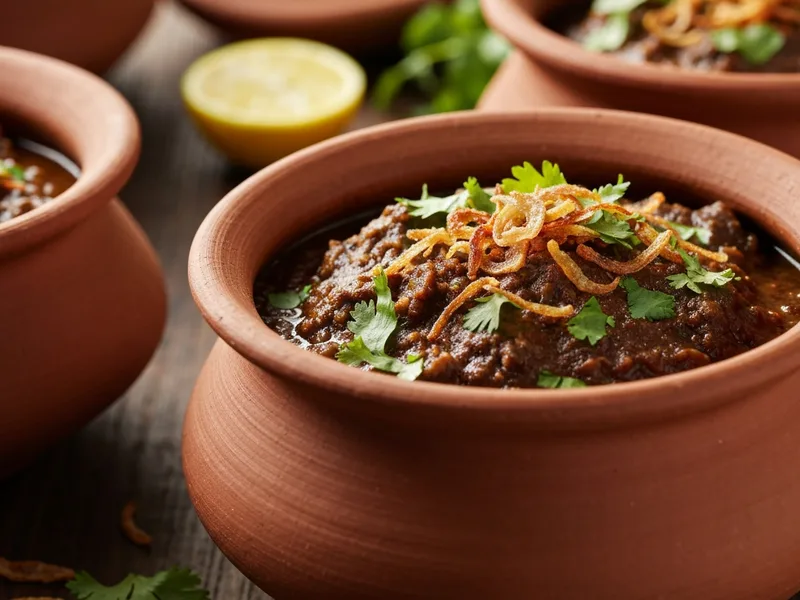
The iconic Karachi haleem — slow-cooked beef with lentils and wheat, pounded to a velvety, fibre-rich stew that feeds the soul and the neighbourhood. This is street food royalty.
Beef Haleem Lahori
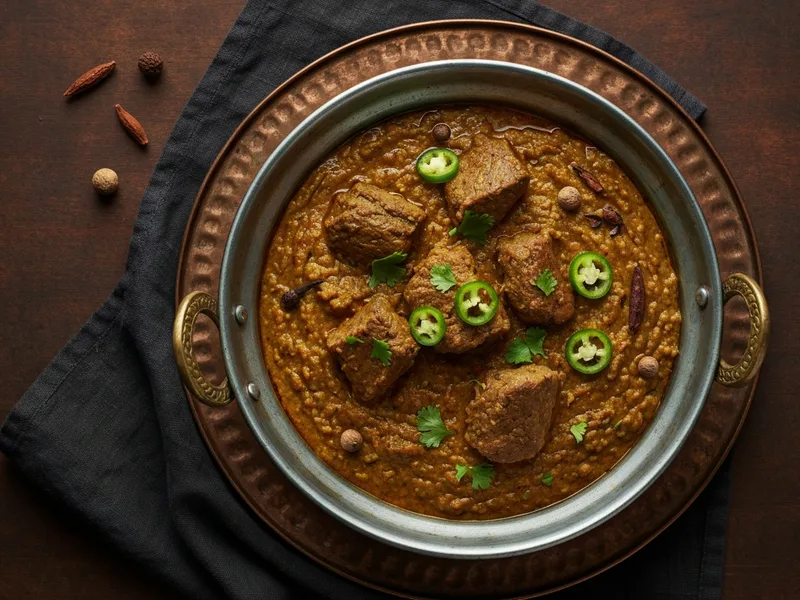
Lahori beef haleem — the Punjab version features a spicier, more assertive masala profile with a distinctly thick, hearty consistency. Classic winter comfort food at its finest.
Beef Haleem South Punjab
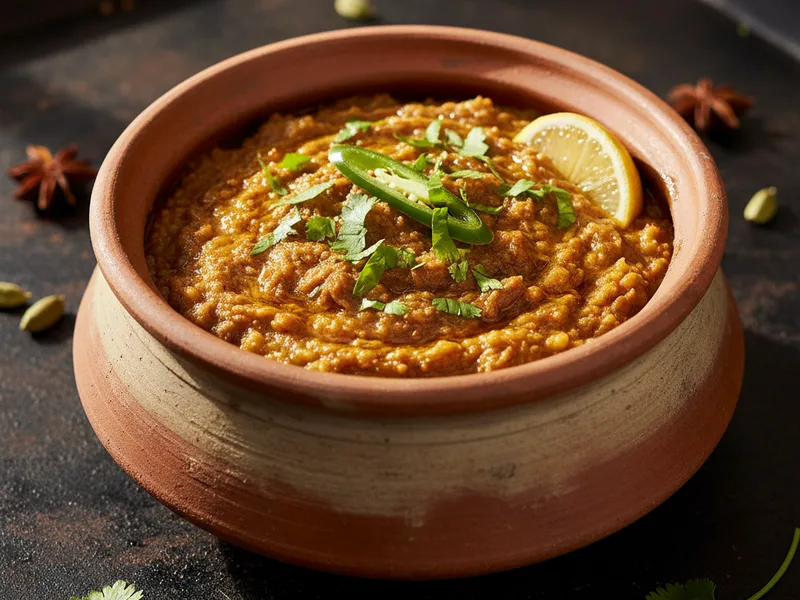
South Punjab's generous, heavily spiced beef haleem — cooked in the daig tradition with extra masala and a more assertive spice profile than northern Punjab. Multan's answer to Karachi and Lahore's versions.
What Cooks Are Saying
Average result for me. The technique is good but the proportions needed tweaking.
I was nervous to try this but the instructions made it so easy. Turned out amazing.
Leave a Review
Tried this recipe? Share your experience — your review helps other cooks.