
KP cuisine
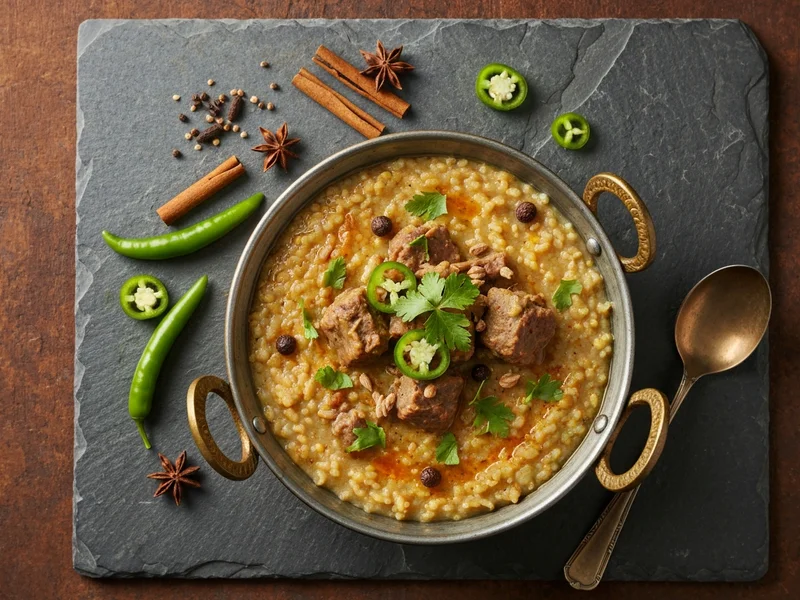
Hareesa — KP Slow-Cooked Wheat and Mutton Porridge
Hareesa — KP Slow-Cooked Wheat and Mutton Porridge is a traditional KP Pakistani dish. Hareesa is haleem's ancient ancestor — whole wheat berries and mutton slow-cooked together for 4-6 hours until they completely dissolve into a thick, silky, porridge-like dish that is simultaneously humble and extraordinary. Finished with a sizzling ghee tarka poured dramatically over the top, this is the dish that sustained armies, fed pilgrims, and defines winter mornings in KP.
Hareesa predates haleem by centuries — it is believed to have originated in Arabia before spreading across Central Asia and arriving in the subcontinent with traders and conquerors. The KP version is perhaps the most austere and pure: no lentils, no dal, just wheat and mutton slowly breaking down together until the two become indistinguishable, a unified mass of deeply savoury, velvety richness. In Peshawar, hareesa is winter food — sold in the early mornings from massive copper deghchis, eaten with Peshawari naan and a cup of sweet chai.
No pressure.
Ingredients
Instructions
- SOAK THE WHEAT (OVERNIGHT): The night before cooking, place the whole wheat berries in a large bowl and cover with at least 3x their volume of cold water. Leave to soak for 8-12 hours or overnight. WHY: Whole wheat grains are extremely hard and dense. Soaking them overnight softens them and dramatically reduces their cooking time. Unsoaked wheat will take 2-3 extra hours to cook. After soaking, drain and rinse the wheat — it will have swelled to about twice its original size and feel slightly soft when you squeeze a grain.
- START THE MEAT: In a large, heavy degh (heavy-bottomed pot), combine the mutton pieces, chopped onion, ginger-garlic paste, black cardamom, cloves, cinnamon, black peppercorns, turmeric, and salt. Pour in 1.5 litres of cold water. Bring to a boil over high heat, skimming off any grey foam that rises to the surface. Once boiling, reduce heat to medium-low and cook the mutton for 1 hour. At the end of 1 hour, the mutton should be partially cooked and tender but not yet falling apart — and there should be a lot of fragrant, meaty broth in the pot.
- ADD THE WHEAT: Add the soaked and drained wheat grains directly to the pot with the mutton and broth. Stir everything together. If needed, add more water to keep everything submerged — you want the level about 2 inches above the wheat and meat mixture. Bring back to a boil, then reduce to the lowest possible heat. Cover the pot with a tight lid. Now begins the long cook. Cook on very low heat for 4-5 hours, stirring every 30-45 minutes with a wooden spoon or heavy chamcha. HINT: The pot needs to be stirred regularly to prevent the wheat from sticking to the bottom and burning. If you see it getting dry, add a cup of hot water each time you stir.
- THE BREAKDOWN STAGE: After 3-4 hours, you'll notice the mixture becoming much thicker. The wheat grains will have bloated significantly and will be starting to break down. The mutton should be falling completely off the bone at this point. Remove and discard any large bones you can see — they've done their job. Now use a heavy wooden spoon or a mathani (wooden masher) to vigorously stir and mash the mixture. WHY: The goal is for the wheat and meat to completely dissolve together — you should not be able to identify individual wheat grains or meat pieces. Keep stirring and mashing. The mixture should have the consistency of very thick porridge.
- ACHIEVE THE FINAL TEXTURE: Continue cooking and stirring for another 30-60 minutes after the mashing stage. The hareesa is ready when it falls off the spoon in slow, heavy ribbons — thick, silky, and completely smooth. It should hold its shape for a second when you drop a spoonful onto the surface, then slowly melt back in. If it's too thick, add a splash of hot water. If too thin, cook uncovered on higher heat for 10-15 minutes, stirring constantly. Taste for salt and adjust. FUN FACT: Traditional hareesa makers use a special long wooden paddle called a 'hareesa stick' to stir the pot continuously — some shops employ a dedicated stirrer whose only job is to keep the pot moving.
- MAKE THE TARKA: Just before serving, heat Raha ghee in a small karahi (wok) or tarka pan over medium-high heat until it shimmers. Add the thinly sliced onions and fry until they are deep golden brown, about 12-15 minutes. Add the green cardamom pods in the last minute of frying — they'll sizzle and pop in the hot ghee. The kitchen will fill with an incredible buttery, aromatic smell. WHY: The hot tarka is poured over the hareesa at the table — the sizzle sound when hot ghee hits the thick porridge is half the experience.
- SERVE DRAMATICALLY: Ladle the hot hareesa into wide serving bowls. Immediately pour the hot tarka (ghee, fried onions, and cardamom) over the top — it will sizzle and bubble dramatically. Garnish with julienned fresh ginger and fresh coriander. Serve immediately — hareesa thickens as it cools and is always eaten piping hot.
Essential for This Recipe
As an Amazon Associate, we earn from qualifying purchases
Green Cardamom Pods (Elaichi)
The fragrant heart of biryanis, pulaos, chai, and desserts — use whole pods for best flavor
Black Cardamom (Badi Elaichi)
Smoky and bold, essential for biryanis and nihari — gives dishes their distinctive deep character
Whole Cloves (Laung)
Warm, sweet, and aromatic — adds depth to rice dishes, biryanis, and meat curries
Cinnamon Sticks (Darchini)
Sweet and warm, essential for pulaos, biryanis, and chai — add one stick per pot
Chef's Secrets
- Whole wheat berries (sabut gehun) are available at any large Pakistani kiryana store or grain market. They look like plump, light-brown oval grains. Do not substitute with cracked wheat (dalia) — the texture will be completely different.
- A pressure cooker can cut the total cooking time to about 2.5-3 hours. Cook wheat and mutton together on high pressure for 90 minutes, then finish on low heat with frequent stirring.
- The stirring is genuinely essential. Every 30-45 minutes, get in there with a heavy spoon and scrape the bottom of the pot. A heavy-bottomed pot is not optional — a thin-bottomed pan will scorch.
- Hareesa freezes extremely well. Make a large batch, portion into zip-lock bags, and freeze for up to 3 months. Reheat with a splash of water, stirring constantly.
- Some families add a small amount of dal mash (white lentils) along with the wheat — this is technically closer to haleem but gives a slightly creamier texture.
- IMPORTANT DISTINCTION: KP Hareesa uses whole wheat grain — no rice, no dal. Kashmiri Harisa (a different dish with a similar name) uses ground rice as its base. Dal/lentils appear in the Lahori variant. The authentic KP version is wheat + bone-in mutton only. Thickness comes from broken-down wheat and bone collagen, not from lentils.
- Bone-in mutton is essential — the collagen from bones creates the silky, thick consistency. Boneless mutton produces a thinner, less satisfying result. Ask for shoulder or shank pieces on the bone.
- Serving: pour a generous ladle of desi ghee on top of each bowl at the table. The ghee pools and is stirred in by the diner — this is standard Peshawari presentation. Fried onions (birista) on top is also traditional. Never serve Hareesa without the ghee drizzle.
- IMPORTANT DISTINCTION: KP Hareesa uses whole wheat grain — no rice, no dal. Kashmiri Harisa (a different dish with a similar name) uses ground rice as its base. Dal/lentils appear in the Lahori variant. The authentic KP version is wheat + bone-in mutton only. Thickness comes from broken-down wheat and bone collagen, not from lentils.
- Bone-in mutton is essential — the collagen from bones creates the silky, thick consistency. Boneless mutton produces a thinner, less satisfying result. Ask for shoulder or shank pieces on the bone.
- Serving: pour a generous ladle of desi ghee on top of each bowl at the table. The ghee pools and is stirred in by the diner — this is standard Peshawari presentation. Fried onions (birista) on top is also traditional. Never serve Hareesa without the ghee drizzle.
Common Questions
How long does Hareesa — KP Slow-Cooked Wheat and Mutton Porridge take to make?
Total time is 6h 20m — 20m prep and 6h cooking.
How many servings does this recipe make?
This recipe makes 6 servings, and is rated hard difficulty.
Which region of Pakistan is Hareesa — KP Slow-Cooked Wheat and Mutton Porridge from?
Hareesa — KP Slow-Cooked Wheat and Mutton Porridge is from KP, Pakistan — one of the country's most distinctive culinary traditions.
What do you serve with Hareesa — KP Slow-Cooked Wheat and Mutton Porridge?
Serve in wide bowls with the ghee tarka poured on top. Accompany with Peshawari naan or any thick bread for scooping. A squeeze of lemon over the top is traditional in some families. Eaten as a complete, hearty meal — especially for breakfast or a cold winter lunch.
Goes Well With
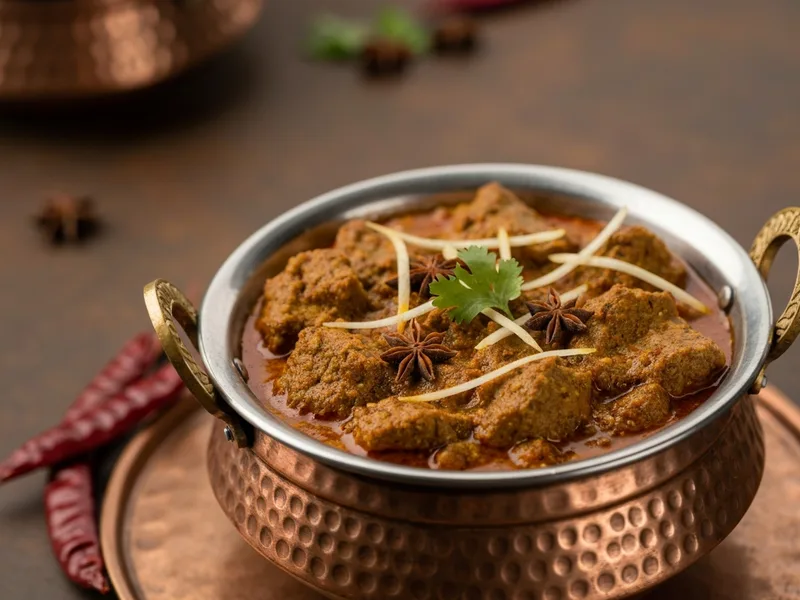
KP Hareesa Gosht
The ancient grain-and-meat porridge of KP — hareesa is simpler than haleem, celebrating wheat and lamb in their most elemental form. Warm, sustaining, and profoundly comforting.
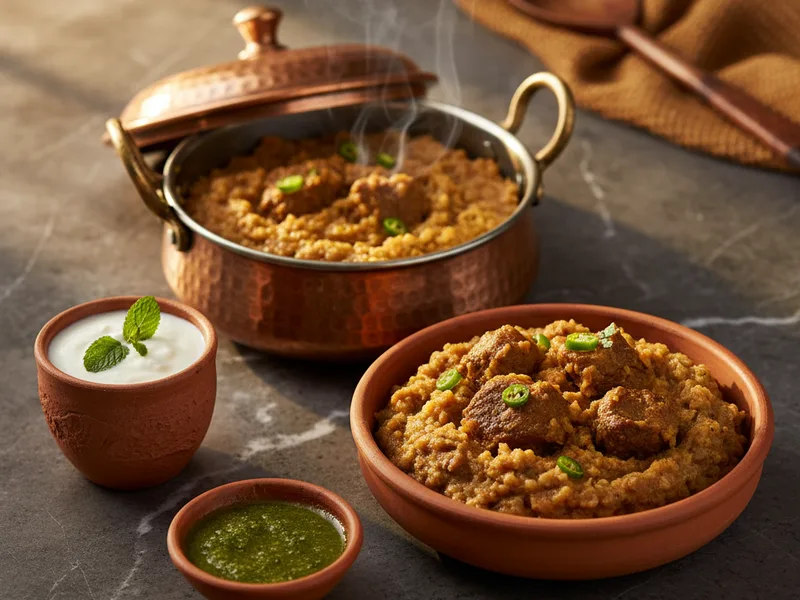
Pashtun Hareesa — Wheat and Mutton Porridge
KP's ancient wheat-and-mutton slow-cooked porridge — an overnight dish that requires patience but delivers extraordinary depth. Hareesa has been a Pashtun winter breakfast and celebration food for over a thousand years.
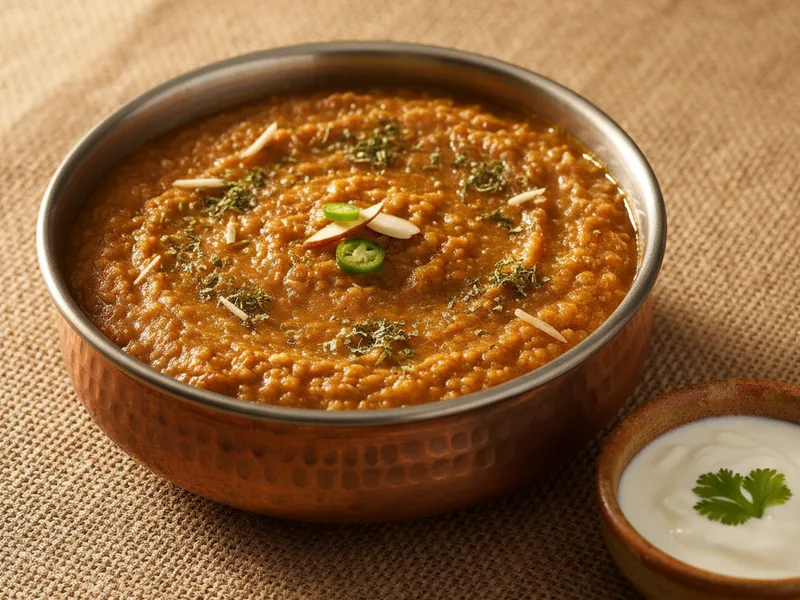
Afghani Hareesa — Cross-Border Style
The Afghan-influenced hareesa popular in Peshawar's Qissa Khwani Bazaar — richer with more ghee, finished with a cinnamon-scented tarka, and reflecting the cross-border culinary exchange that defines this frontier city.
Cite This Recipe
Writing about Pakistani food? Use these ready-made citations.
<a href="https://pakistani.recipes/recipes/hareesa/afghani-hareesa/">Afghani Hareesa — Cross-Border Style</a> — Pakistani Recipes
Farhan Afridi. "Afghani Hareesa — Cross-Border Style." Pakistani Recipes, 2025. https://pakistani.recipes/recipes/hareesa/afghani-hareesa/
Farhan Afridi. (2025). Afghani Hareesa — Cross-Border Style. Pakistani Recipes. Retrieved 2026-06-15, from https://pakistani.recipes/recipes/hareesa/afghani-hareesa/
What Cooks Are Saying
Better than the restaurant version. The tips in the recipe really make a difference.
Authentic taste, clear steps. Exactly what I was looking for.
Good recipe, clear instructions. The end result was delicious.