

Balochistan cuisine
Kaak
Kaak is a traditional Balochistan Pakistani dish. Kaak is the ancient hard bread of Balochistan's shepherds — thick wheat discs baked until iron-hard, deliberately designed to survive weeks in a saddle bag without spoiling. Dip it in tea, soak it in broth, or break off a piece and eat it with Rosh. Once you try it, you'll understand why it has been feeding mountain communities for centuries.
Long before refrigerators and plastic-wrapped sliced bread, the shepherds and nomads of Balochistan needed food that would last.
Kaak — pronounced 'kaak' with a short 'a' — was their solution. Made from just wheat flour, salt, and water, shaped into thick discs and baked over hot stones or live flame until completely hard, Kaak could survive weeks in a shepherd's bag without mould or spoilage. Its hardness is not a flaw — it is the feature. Soften a piece in hot tea and it becomes tender and wheaty; dip it in the fat broth of Balochi Rosh and it is one of the most satisfying things you will eat. This is survival food that happens to taste extraordinary.
Ingredients
Instructions
- MIX THE DOUGH: In a large paraat (wide shallow kneading bowl) or any large bowl, combine the atta (whole wheat flour) and namak (salt). Mix them together with your hand first, so the salt is evenly distributed through the flour. HINT: Mixing salt into flour before water prevents any salty pockets in the final bread.
- ADD WATER SLOWLY: Make a well in the centre of the flour. Begin adding the neem garam pani (lukewarm water) a little at a time, mixing with your fingers in a circular motion from the centre outward. Keep adding and mixing until the flour comes together into a rough, shaggy mass. Do not add all the water at once — you may not need the full cup. WHY: Every batch of atta absorbs water differently. Adding slowly gives you control.
- KNEAD FIRMLY: Once the dough comes together, transfer it to your clean work surface (a flat counter or marble slab). Knead with the heel of your hand — push the dough away from you, fold it back, rotate, and repeat. Knead for 8-10 minutes. The dough should feel firm, smooth, and not sticky. It should be noticeably stiffer than a chapati dough. HINT: If it sticks to your hands, add a tiny sprinkle of dry flour. If it is cracking and not coming together, add a teaspoon of water. FUN FACT: Kaak dough is intentionally stiff because a soft dough would puff up and stay soft when baked. The stiffness ensures a dense, hard final result.
- REST THE DOUGH: Shape the dough into a ball, cover it with a damp cloth or invert a bowl over it, and let it rest for 20 minutes at room temperature. WHY: Resting allows the gluten (the protein network in the flour) to relax, making the dough easier to roll without springing back.
- PREHEAT YOUR OVEN: Turn your oven on to 200°C (390°F). Place an oven rack in the middle position. If you have a baking stone or cast-iron tawa (flat griddle pan), place it in the oven now so it heats up with the oven. WHY: A pre-heated surface gives the bread a more direct, even heat from underneath, helping it dry and harden properly.
- DIVIDE AND SHAPE: Divide the rested dough into 4 equal portions. Roll each portion into a ball. On a lightly floured surface, use a rolling pin (belan) to roll each ball into a disc approximately 1cm thick and 15-18cm wide. HINT: Kaak is not meant to be thin like a chapati — keep it thick. Thin Kaak will crack and crumble rather than baking into a solid, dippable disc.
- PRICK THE SURFACE: Using a fork or the tines of a skewer, prick the entire top surface of each disc all over — about 20-25 pricks per disc. WHY: These holes allow steam to escape evenly during baking. Without them, the bread might puff unevenly, creating hollow sections that don't bake through properly.
- BAKE: Carefully place the discs on your preheated baking stone, cast-iron pan, or a regular baking tray lined with baking paper. Slide into the oven. Bake for 25-30 minutes. At the 15-minute mark, flip each disc over using a spatula — this ensures both sides dry out evenly. The Kaak is done when it looks pale golden-brown, feels completely dry and hard when you tap it, and sounds hollow when knocked. HINT: It should feel like a ceramic tile — genuinely hard. If it still feels soft, give it another 5-10 minutes.
- COOL COMPLETELY: Remove the Kaak from the oven and place on a wire rack. Let them cool completely — at least 30 minutes. FUN FACT: Kaak gets even harder as it cools. Don't try to judge its final texture while it is warm — it will seem soft-ish straight out of the oven and then harden into its iconic consistency as it cools.
- SERVE AND EAT: To eat traditionally, dip a piece into hot chai (tea) or hot Balochi Rosh broth and hold it submerged for 10-15 seconds to soften slightly before eating. Alternatively, break pieces off and eat alongside a meat dish, letting the broth on your plate soften each bite naturally. HINT: Some people enjoy biting Kaak dry with tea — the crunch is addictive once you are used to it.
Chef's Secrets
- Store Kaak at room temperature in a cloth bag or open basket — never in a plastic bag. Plastic traps moisture and will make the hard bread go soft and eventually mouldy. Stored properly, Kaak lasts 2-3 weeks.
- For a more rustic flavour, bake Kaak directly on the rack of the oven (place a tray below to catch any crumbs). The open air circulation dries it faster and gives a slightly more uniform texture.
- Kaak can also be made on a cast-iron tawa on the stovetop over very low heat — place the disc on the dry tawa over low flame, cover with a lid, and cook for 15 minutes per side until completely dry and hard. This is closest to the traditional flat stone method.
- If you want a hint of flavour, add half a teaspoon of zeera (cumin seeds) to the dough. This is not traditional but plays well with the wheat's nuttiness.
- Day-old Kaak that has softened slightly can be re-baked at 180°C for 10 minutes to restore its crunch.
- The yeast matters: authentic Kaak is not unleavened. The yeast causes slight expansion early in baking, then the bread dries out into its characteristic dense-but-slightly-airy hardness over 2-3 hours. Pure flour-water-salt dough produces denser hardtack — edible, but not the real thing.
- The yeast matters: authentic Kaak is not unleavened. The yeast causes slight expansion early in baking, then the bread dries out into its characteristic dense-but-slightly-airy hardness over 2-3 hours. Pure flour-water-salt dough produces denser hardtack — edible, but not the real thing.
Common Questions
How long does Kaak take to make?
Total time is 1h — 30m prep and 30m cooking.
How many servings does this recipe make?
This recipe makes 4 servings, and is rated easy difficulty.
Which region of Pakistan is Kaak from?
Kaak is from Balochistan, Pakistan — one of the country's most distinctive culinary traditions.
What do you serve with Kaak?
Serve alongside Balochi Rosh or Khaddi Kabab for dipping in the broth. Also wonderful with just a cup of strong doodh pati chai (milk tea). For a simple meal, eat with white butter and a sprinkle of salt.
Goes Well With
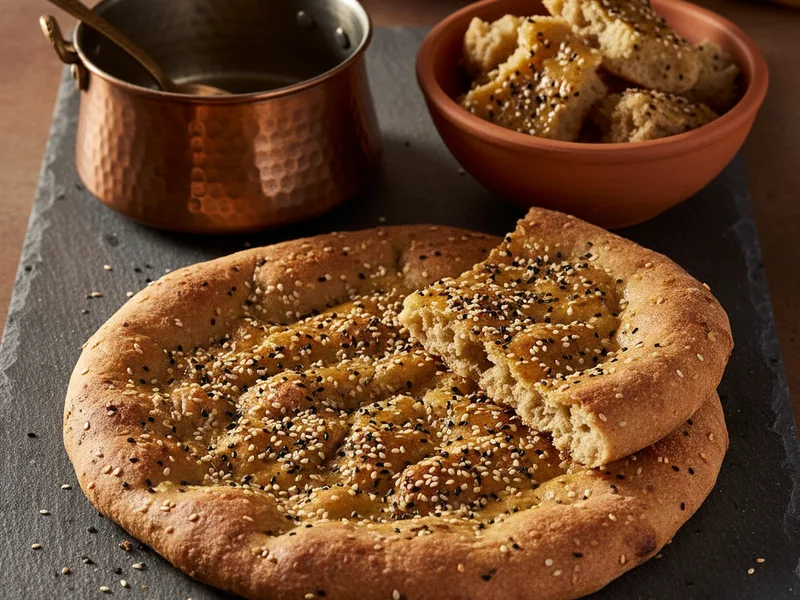
Balochi Kaak — The Desert Dry Bread
Balochistan's ancient hardtack-like dry bread — double-baked until completely moisture-free, it keeps for weeks without refrigeration and was the traditional bread of Baloch nomads, shepherds, and desert travelers.
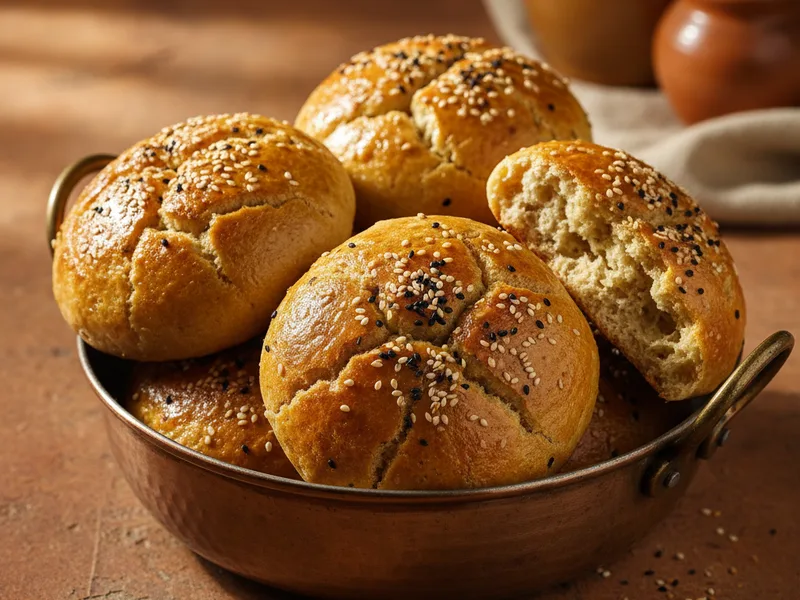
KP Kaak — Mountain Version
The KP mountain version of double-baked kaak — slightly richer with a touch of oil and sesame seeds, reflecting the different ingredients available to mountain communities compared to the desert Balochi version.
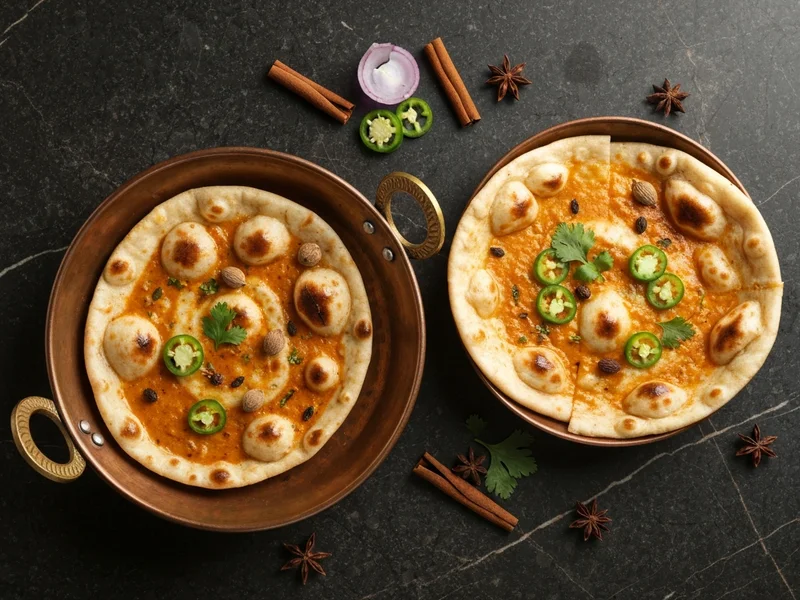
Butter Naan (Home Tawa Method)
Soft, pillowy butter naan made at home on a tawa (flat griddle) — no tandoor required. Brushed with makhan (butter) the moment it comes off the heat, this leavened flatbread is the perfect vehicle for any Pakistani curry.
Cite This Recipe
Writing about Pakistani food? Use these ready-made citations.
<a href="https://pakistani.recipes/recipes/naan/butter-naan/">Butter Naan (Home Tawa Method)</a> — Pakistani Recipes
Zainab Tariq. "Butter Naan (Home Tawa Method)." Pakistani Recipes, 2024. https://pakistani.recipes/recipes/naan/butter-naan/
Zainab Tariq. (2024). Butter Naan (Home Tawa Method). Pakistani Recipes. Retrieved 2026-07-20, from https://pakistani.recipes/recipes/naan/butter-naan/
What Cooks Are Saying
Incredible depth of flavour. The spice balance is just right — not too hot, not too mild.
Came out beautifully. Would have given 5 stars but I found the sauce a bit thin — easy fix though.
This recipe is a keeper. Followed it exactly and it turned out perfect.