

Punjab cuisine
Kadhi Pakora
Kadhi Pakora is a traditional Punjab Pakistani dish. Tangy yoghurt curry made with besan (gram flour) that's so comforting it feels like a hug in a bowl. Crispy besan fritters are floated in the sour gravy and finished with a sizzling red chilli tarka that makes a dramatic entrance. A Punjabi staple that every household makes slightly differently — and everyone claims their version is the best.
Kadhi Pakora is the ultimate Punjab comfort food — a dish so beloved that it has its own dedicated day of the week in most Lahori homes (usually Sunday, if you're asking).
The yogurt-based curry was a staple of the agrarian Punjab long before the Mughal period, when it absorbed Persian spice influences. The word 'kadhi' comes from the Hindi/Punjabi word for cooking in a karahi, and this dish has been simmering on Pakistani stovetops for centuries. Made from fermented dahi (yoghurt) whisked with besan to create a sour, silky gravy, it's the kind of recipe where day-old leftovers actually taste better than the fresh batch. The pakoras floating inside are not an afterthought — they absorb the tangy curry overnight and turn into these glorious, flavour-soaked dumplings that are arguably the best part.
Ingredients
Instructions
- WHISK THE KADHI BASE: In a large bowl, combine 2 cups sour dahi, 4 tablespoons besan, 1 teaspoon haldi, 1 teaspoon lal mirch, and 1 teaspoon namak. Whisk vigorously until completely smooth — no lumps allowed. FUN FACT: The sourness of the dahi is not just flavour, it's chemistry. The acid in sour yoghurt reacts with the besan to give kadhi its signature tangy depth that fresh yoghurt simply cannot replicate. Now add 4 cups of water and whisk again until you have a thin, uniform liquid. WHY: We thin it down because it will thicken significantly as it cooks — if you start thick, you'll end up with concrete.
- COOK THE KADHI: Pour the whisked mixture into a large degh (heavy-bottomed pot) or pateela (saucepan) and place on medium heat. Stir continuously with a chamcha (ladle) as it heats up. HINT: Do NOT walk away during this step. Un-stirred kadhi will stick and burn on the bottom, and it will also curdle unevenly. Keep stirring in large circular motions. After about 8-10 minutes you'll notice the kadhi start to steam and tiny bubbles will form around the edges. The raw besan smell will shift to something more savoury and appetising. Once it reaches a full boil, reduce the heat to low, cover partially with a lid, and let it simmer for 25-30 minutes, stirring every 5 minutes. It should thicken to the consistency of a thin gravy — coats the back of a spoon but still flows easily.
- MAKE THE PAKORA BATTER: While the kadhi simmers, prepare your pakora batter. In a bowl, combine 2 tablespoons besan, 0.5 teaspoon ajwain, a pinch of namak, and enough water (roughly 3-4 tablespoons) to make a thick batter — it should be thicker than pancake batter, more like a stiff paste that coats a spoon heavily. Now add your sliced piyaz, chopped hari mirch, and hara dhania. Mix everything together. HINT: The batter should be thick enough that the vegetables are coated and held together, not swimming in liquid. If it feels too wet, add another pinch of besan.
- FRY THE PAKORAS: Pour enough tel into a separate karahi (wok) or deep pan to reach about 2 inches deep. Heat on medium-high. To test if the oil is ready, drop in a tiny bit of batter — it should sizzle and rise to the surface within 3-4 seconds. If it sinks and stays there, the oil is too cool. If it burns immediately, lower the heat. Using a tablespoon or your fingers, drop rough balls of pakora batter into the oil — they don't need to be perfect spheres, lumpy and uneven is totally fine. Fry in batches, turning occasionally with a chimta (tongs) or slotted spoon, until they are golden brown on all sides — about 3-4 minutes per batch. Remove and drain on paper towels. FUN FACT: Pakoras will soften as they sit in the kadhi — which is a feature, not a bug. They absorb the tangy curry and become these flavour-packed pillows of joy.
- ADD PAKORAS TO KADHI: Once your kadhi has simmered for 25-30 minutes and thickened slightly, gently add the fried pakoras into the pot. Stir very gently — the pakoras are delicate and you don't want to break them apart. Let the kadhi simmer on low heat for another 10 minutes so the pakoras can absorb the curry. Taste and adjust salt. The kadhi should taste noticeably tangy — if it seems bland, your dahi wasn't sour enough. HINT: A small squeeze of lemon juice can rescue a kadhi that lacks tartness.
- THE DRAMATIC TARKA FINALE: This is the moment that elevates kadhi from 'nice' to 'legendary'. Heat 4 tablespoons of tel in a small tawa (flat griddle pan) or a small pan on HIGH heat until you can see wisps of smoke. Add the methi dana first and let them sizzle for just 10-15 seconds — they burn fast and turn bitter if overdone. WHY: Methi dana gives kadhi its essential background note without being identifiable — it's a secret weapon. Now add jeera — they will splutter and pop dramatically. Add sliced lehsun and saabut lal mirch, and let everything sizzle for 30-45 seconds until the garlic turns light golden and the chillies darken. Add kari patta if using — they will crackle and spit loudly. HINT: Have the kadhi pot nearby because you're about to pour this tarka directly into it. The moment the tarka is ready, immediately pour it over the kadhi. It will sizzle and bubble furiously — this is exactly what you want. Cover the pot immediately for 2 minutes to trap the tarka aromas inside.
- REST AND SERVE: Uncover, give a gentle stir to distribute the tarka, and serve immediately over steamed chawal (rice). Garnish with a sprinkle of fresh hara dhania. FUN FACT: Kadhi pakora tastes genuinely better the next day — the pakoras have absorbed more curry overnight and the flavours have deepened. If you can resist eating it all at once, save some and reheat gently the next day. You'll see.
Essential for This Recipe
As an Amazon Associate, we earn from qualifying purchases
Yogurt Culture/Starter
Make fresh yogurt for raitas and marinades at home — authentic and cheaper than store-bought
Tamarind Paste (Imli)
Adds tangy sourness to chaats, Sindhi cooking, and curries — naturally sour without citrus
Chickpea Flour (Besan)
For pakoras, kadhi, and batters — adds protein and authentic texture to fried snacks
Turmeric Powder (Haldi)
The golden spice in every curry, dal, and rice dish — adds color, earthiness, and health benefits
Chef's Secrets
- Sour dahi is non-negotiable — if your yoghurt is fresh and sweet, leave it out on the counter for 6-8 hours or add 1-2 teaspoons of lemon juice as a substitute
- Never stop stirring the kadhi as it heats up — it will curdle or stick if left unattended during this phase
- Add pakoras to the kadhi just before serving if you want them to stay somewhat crispy; add them earlier if you want them fully soft and soaked
- Leftover kadhi thickens dramatically overnight — add a splash of water when reheating and whisk gently
- For extra depth in your tarka, add a pinch of hing (asafoetida) right at the beginning before the methi dana
Common Questions
How long does Kadhi Pakora take to make?
Total time is 1h 20m — 20m prep and 1h cooking.
How many servings does this recipe make?
This recipe makes 4 servings, and is rated medium difficulty.
Which region of Pakistan is Kadhi Pakora from?
Kadhi Pakora is from Punjab, Pakistan — one of the country's most distinctive culinary traditions.
What do you serve with Kadhi Pakora?
Served over plain steamed chawal (rice) — always. Some families serve it with roti but rice is traditional. A side of achar (pickle) and raw sliced onions are classic accompaniments.
Goes Well With

Punjabi Kadhi Pakora
Punjabi Kadhi Pakora is a tangy, yoghurt-based gram flour curry with crispy fried onion fritters floating within — a beloved weekend dish that fills Punjabi homes with the most incredible aroma.

Sindhi Kadhi Pakora
Sindhi Kadhi Pakora takes the traditional gram flour curry in a unique direction — made without yoghurt and with tamarind tang instead, creating a thinner, more vegetable-forward kadhi with crispy fritters.
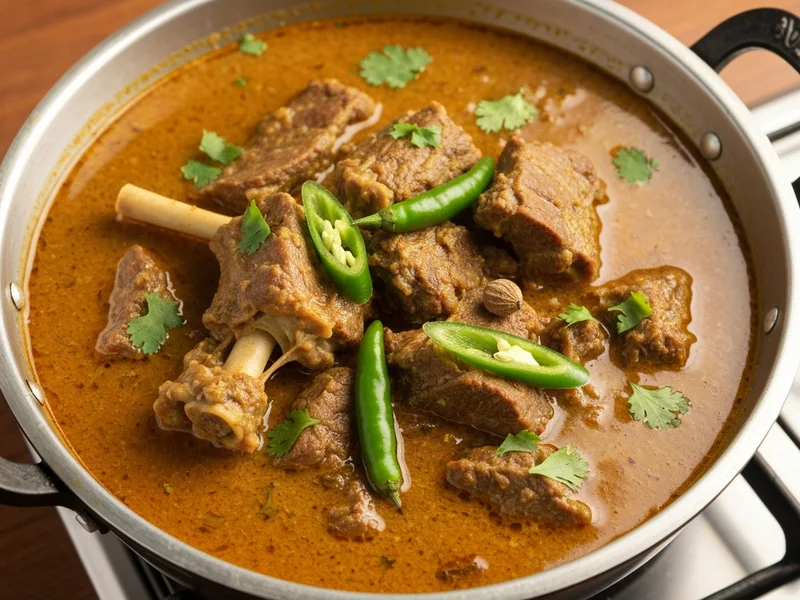
Classic Lahori Nihari
The ultimate slow-cooked breakfast stew — beef shank and bone marrow simmered overnight in a dozen spices. Old Lahore's most legendary dish.
Cite This Recipe
Writing about Pakistani food? Use these ready-made citations.
<a href="https://pakistani.recipes/recipes/nihari/lahori-nihari/">Classic Lahori Nihari</a> — Pakistani Recipes
Zainab Tariq. "Classic Lahori Nihari." Pakistani Recipes, 2024. https://pakistani.recipes/recipes/nihari/lahori-nihari/
Zainab Tariq. (2024). Classic Lahori Nihari. Pakistani Recipes. Retrieved 2026-07-20, from https://pakistani.recipes/recipes/nihari/lahori-nihari/
What Cooks Are Saying
This recipe is a keeper. Followed it exactly and it turned out perfect.
Delicious and fairly straightforward. A few steps took longer than expected but the result was worth it.