
KP cuisine
Peshawari Karahi Gosht
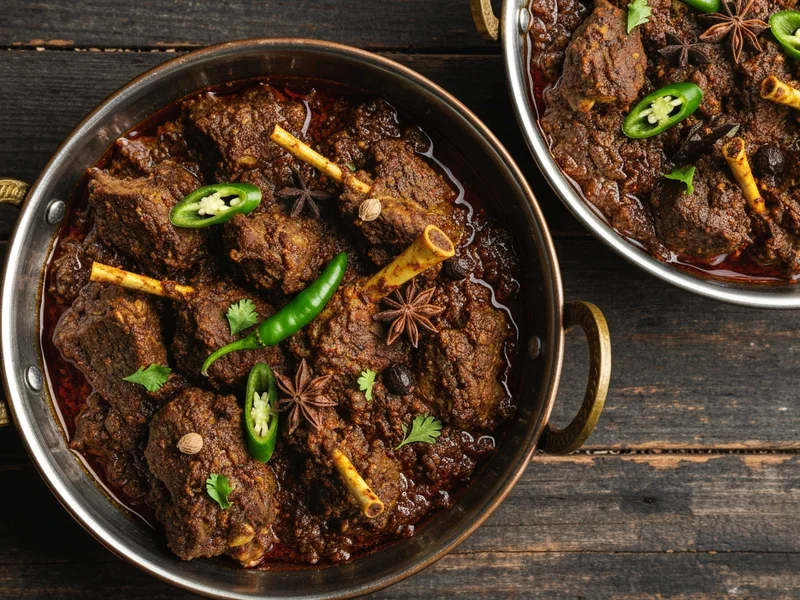
Peshawari Karahi Gosht is a traditional KP Pakistani dish. Peshawari Karahi Gosht is the original Pakistani karahi — bone-in goat cooked blazing hot with tomatoes, ginger, and green chillies, nothing else. No onions, no yoghurt, no shortcuts. This is the purist's karahi, straight from the dhabas of Peshawar's Namak Mandi.
If karahi had a homeland, it would be Peshawar's Namak Mandi — a street so famous for meat that its name (Salt Market) is almost ironic.
What you get is a intensely tomato-forward, ginger-heavy, searingly hot dish that's been cooked the same way for over a century. The wok itself — the karahi (cast-iron or steel wok) — is the hero here. Its high, sloped sides concentrate the heat and let you toss the meat aggressively, building that signature char. Fair warning: once you make this, every other karahi will feel like it's trying too hard.
Ingredients
Instructions
- HEAT THE KARAHI: Place your karahi (wok) or a heavy-bottomed frying pan on the highest flame your stove can produce. Add the tel (oil) or rendered fat and let it get smoking hot — you should see a faint haze rising from the surface. HINT: If your pan isn't hot enough before the meat goes in, the gosht will steam instead of sear. You want a fierce, crackly sizzle the moment meat touches oil, not a sad wet bubble. Peshawari karahi is a dish of high, aggressive heat — do not be gentle with your stove.
- SEAR THE GOSHT: Add the bone-in goat pieces in a single layer — do not crowd the pan. You may need to work in two batches. Sear on high heat for 3-4 minutes per side without moving the meat. WHY: You're building a Maillard crust — those brown, caramelised spots are packed with flavour compounds that no amount of spice can replicate. The gosht should release easily when it's ready to flip; if it sticks, give it another minute. HINT: Resist the urge to stir constantly. Leave it alone and let the sear happen. It should sound like a proper sizzle — almost aggressive.
- ADD GARLIC AND GINGER: Push the meat to the sides of the karahi and drop the pounded lehsan (garlic) and julienned adrak (ginger) into the hot oil in the centre. Stir for 60-90 seconds until the raw smell of garlic disappears and it turns light golden — you'll smell the sweetness kick in. Then fold the gosht back in and toss everything together. HINT: Raw garlic in a finished dish tastes sharp and unpleasant. Make sure you give it time. If it starts browning too fast, add a splash of water.
- COOK DOWN THE TOMATOES: Add all the chopped tamatar (tomatoes) at once. The pan will erupt in steam and sizzle — that's correct. Stir everything together, add the lal mirch powder, dhania powder, kali mirch, and half the namak. Turn heat to medium-high. Cook uncovered for 15-20 minutes, stirring every couple of minutes, until the tomatoes have completely broken down and the oil is clearly separating at the edges of the masala. WHY: This is called bhunna — the deep-frying of the masala. It concentrates the tomato, kills any raw tomato taste, and builds body. The masala is done when you see reddish-orange oil pooling around the edges and the mixture smells fried rather than fresh.
- BHUNNA (DEEP FRY) THE MEAT IN MASALA: Once the tomato masala has bhunned (caramelised), increase heat to maximum again. Toss the meat continuously in the masala for 5-7 minutes — this is the most important step. WHY: You're coating every piece of gosht in concentrated masala and driving out moisture. The karahi should look almost dry at this point, with the meat sticking slightly to the pan before you pull it free. HINT: Don't add water here. If the masala is burning (black, not dark brown), reduce heat slightly and add a tiny splash of water only to rescue it. But in general, the goal is dry and scorched-looking, not saucy.
- ADD GREEN CHILLIES AND FINISH: Add the slit hari mirch (green chillies) and the ginger paste (the second half of the adrak you reserved). Toss on high heat for 2-3 minutes. The chillies will blister and soften slightly — they should still hold their shape but have a little give when you press them. FUN FACT: In Peshawar's Namak Mandi, karahi is served with the chillies piled on top as a garnish — diners pick up a whole roasted chilli and eat it alongside each bite of meat. Taste and adjust salt now.
- REST AND GARNISH: Take the karahi off heat. Scatter the roughly chopped hara dhania (fresh coriander) over the top and lay the julienned ginger strips across. Cover loosely with a lid or plate and let it rest for 5 minutes — the residual heat will wilt the dhania and meld the flavours without turning everything mushy. WHY: Resting lets the meat juices redistribute. Gosht cut into a karahi straight off the flame can feel tight and dry even if it's cooked perfectly. HINT: Serve the dish in the karahi itself if possible — it retains heat and looks spectacular.
- SERVE IMMEDIATELY: Peshawari karahi is non-negotiable about being served hot. Pair it with naan or khameeri roti — the bread is used to scoop up the thick tomato masala from the bottom of the karahi. Have a sliced raw onion and lemon wedges on the side. The entire table should be leaning in toward the karahi before you even put it down. If it's been sitting more than 10 minutes and nobody's eaten, something has gone wrong socially, not culinarily.
Chef's Secrets
- The real Peshawari secret: cook in batches if needed but always finish everything in one karahi for the final bhunna step. Crowded meat steams; uncrowded meat chars.
- Bone-in meat takes longer but tastes dramatically better. If you insist on boneless, reduce the total cook time by 10 minutes and accept that you'll miss the marrow richness.
- Charcoal smoke (dhuan) finish: place a small piece of lit charcoal in a foil bowl in the centre of the karahi, drizzle a few drops of oil on it, cover immediately for 2 minutes. Instant restaurant-level smokiness.
- Never cover the karahi during cooking — steam is the enemy of bhunna. The point is to drive moisture OUT, not trap it in.
- If your tomatoes are out of season and watery, add 1 tbsp tomato paste alongside the fresh tomatoes to boost colour and body without changing the flavour profile.
Common Questions
How long does Peshawari Karahi Gosht take to make?
Total time is 1h — 15m prep and 45m cooking.
How many servings does this recipe make?
This recipe makes 4 servings, and is rated medium difficulty.
Which region of Pakistan is Peshawari Karahi Gosht from?
Peshawari Karahi Gosht is from KP, Pakistan — one of the country's most distinctive culinary traditions.
What do you serve with Peshawari Karahi Gosht?
Serve in the karahi with fresh naan or khameeri roti. Side of raw sliced pyaz (onion), lemon wedges, and fresh green chillies. Raita is optional but not traditional — Pashtuns eat this straight.
Goes Well With
Beef Karahi Karachi Style
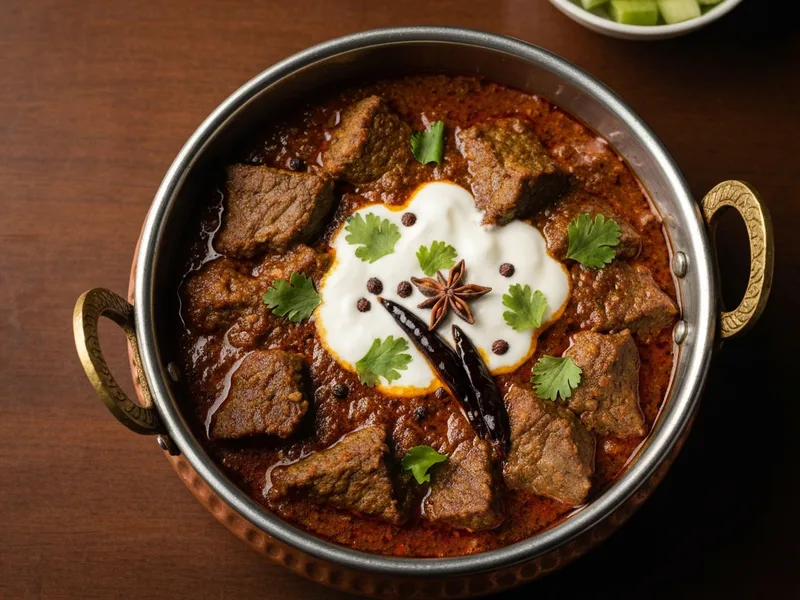
Karachi-style Beef Karahi is a bold, deeply flavoured dish that showcases the city's love for beef — slow-cooked gosht (meat) in a spiced tomato masala that's been bhunoed (stir-fried) to perfection. This is Karachi's beef obsession in one karahi.
Shinwari Karahi — Peshawari Mountain Karahi
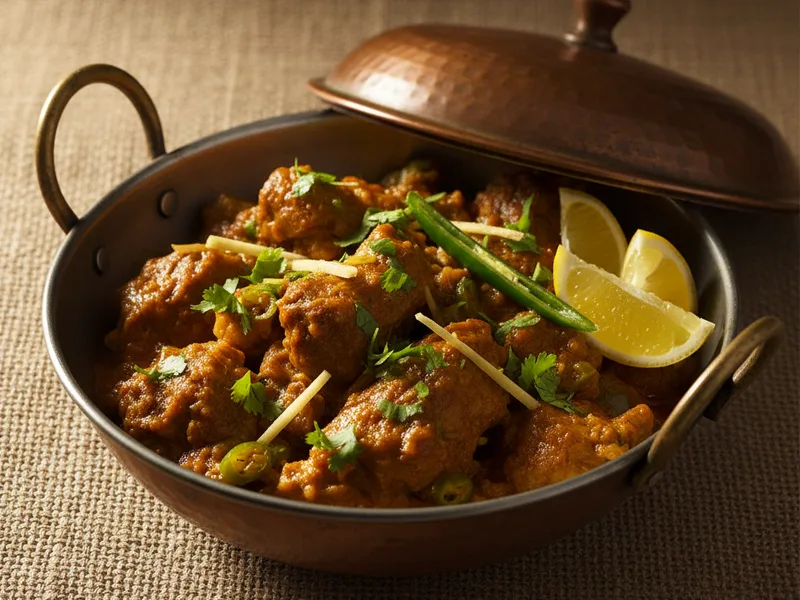
The legendary Shinwari karahi from Peshawar's Bara Road and Landi Kotal — made with fresh lamb in a karahi with only salt, ginger, green chilies, and tomatoes. No onion, no masala powder, no color. The purest karahi in Pakistan.
Pashtun Beef Karahi — Tribal Belt Style
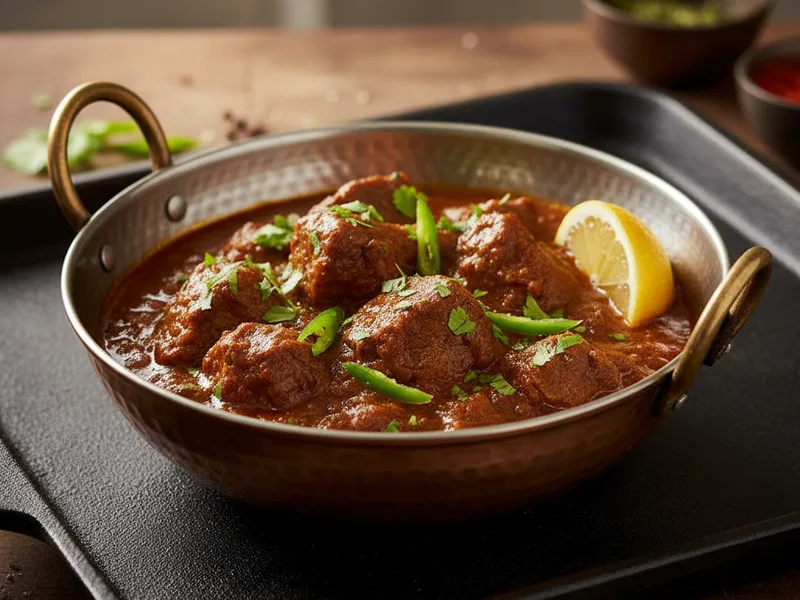
The tribal belt beef karahi — made with fresh beef instead of the more common lamb, cooked over wood fire in a heavy iron karahi with the Pashtun spice philosophy of less-is-more.
What Cooks Are Saying
Came out beautifully. Would have given 5 stars but I found the sauce a bit thin — easy fix though.
The instructions are so clear and easy to follow. Came out perfectly first try.
Leave a Review
Tried this recipe? Share your experience — your review helps other cooks.