
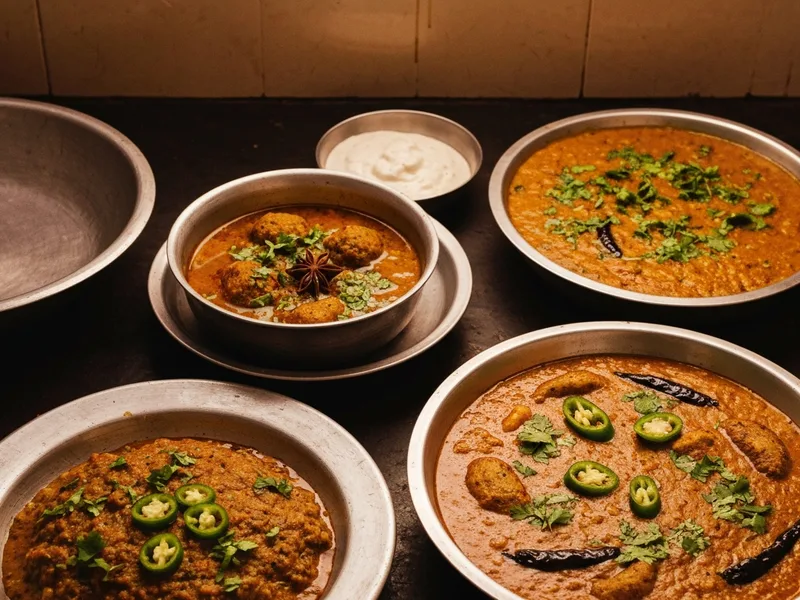
Balochistan cuisine
Landhi
Landhi is a traditional Balochistan Pakistani dish. Landhi is Balochistan's ingenious preserved meat dish — salted, dried mutton slow-cooked with whole spices in a clear, deeply savory broth. The drying process concentrates the meat's flavour to an intensity no fresh cut can match, and the result is a broth and meat combination that tastes like the essence of winter in the mountains.
Landhi is Balochistan's ancient preserved meat — goat or sheep salted, rubbed with hing (asafoetida), and air-dried for 15+ days in the cold December winds.
The drying and salting technique is one of the oldest food preservation methods practiced on the subcontinent. The hide is traditionally kept on the meat during drying (removed before cooking). Asafoetida serves as both flavour and insect repellent. This is wind-drying, not smoking. The resulting hard, concentrated meat is rehydrated overnight, double-boiled (first boil discards excess salt), and served as a rich shorba. A shared Balochi and Pashtun tradition along the entire Balochistan-KP border.
Ingredients
Instructions
- DRY THE MEAT (3 HOURS): Score the mutton pieces deeply with a sharp knife — cuts about 2cm deep all over. Rub the namak (salt) very generously over every surface and into every cut. The meat should look heavily salted — more than feels comfortable. Place the pieces on a wire rack set over a baking tray (to catch any drips). Slide into your oven at 80°C (175°F). Leave for 3 hours. WHY: This low-temperature oven-drying draws moisture out of the meat while the salt penetrates. It creates a concentrated, firm piece of meat that mimics traditional air-dried Landhi. HINT: You will see liquid dripping from the meat onto the tray — this is the moisture being drawn out. This is exactly what should happen.
- CHECK THE DRIED MEAT: After 3 hours, remove the meat from the oven. The pieces should look visibly darker, drier, and shrunken compared to how they started. The surface should feel dry and firm to the touch — not soft and wet. FUN FACT: Traditional Landhi is dried for 2-3 weeks in cold mountain air. Our 3-hour oven version achieves a similar effect in a fraction of the time — you'll be amazed at how different the meat already looks and smells. Let the meat cool to room temperature.
- SOAK OVERNIGHT: Place the dried meat pieces in a large bowl and cover completely with cold pani (water). The meat will absorb water and begin to rehydrate. Cover the bowl and place in the refrigerator overnight (at least 8 hours, ideally 10-12 hours). WHY: The soaking removes excess surface salt (which would make the final dish too salty) and rehydrates the meat fibres enough for them to become tender during cooking. The salt that has penetrated into the meat will remain and season the dish from within.
- DRAIN AND RINSE: Remove the meat from the soaking water and rinse each piece under cold running water. Taste a small bit of the surface if you like — it should taste pleasantly salty but not overwhelming. If it tastes extremely salty, soak for another 2 hours in fresh water and drain again. Discard the soaking water. HINT: The soaking water will be quite salty and may look slightly discoloured — this is normal and expected.
- START COOKING: Place the drained meat pieces into your degh (heavy-bottomed pot) or large saucepan. Add 6 cups of fresh pani (water). Add all the whole spices: badi elaichi (black cardamom), laung (cloves), kali mirch (black peppercorns), darchini (cinnamon), tez patta (bay leaves), and zeera (cumin seeds). Do NOT add salt yet — the meat still has salt inside it, and you will adjust at the end. WHY: Adding salt before tasting the cooked broth risks making the final dish too salty, since the preserved meat releases its salt into the cooking liquid.
- BRING TO A BOIL AND SKIM: Place the pot over high heat and bring to a rolling boil. As the water heats up, a grey-brown foam will form on the surface — this is protein and impurities coming out of the meat. Use a chamcha (ladle) or large spoon to skim this foam off and discard it. HINT: Keep skimming until no more foam forms — usually about 5-7 minutes of active boiling. WHY: Skimming the foam results in a clearer, cleaner-tasting broth. If you don't skim, the foam will disperse and make the broth cloudy and slightly bitter.
- SLOW SIMMER: Once the foam has been skimmed, reduce the heat to low. The liquid should be at a gentle simmer — small lazy bubbles rising, not a vigorous boil. Cover the pot partially (leave a small gap for steam to escape) and cook for 2 to 2.5 hours. HINT: Check occasionally to make sure it is still simmering gently. If the heat is too high, the meat will become tough rather than tender. FUN FACT: This long slow simmer is what draws the collagen from the bones into the broth, giving it a slightly silky, rich body that is the hallmark of proper Landhi.
- TEST FOR TENDERNESS: After 2 hours, test the meat by pressing a thick piece with a spoon. It should yield easily and the meat should be starting to separate from the bone. Pierce it with a thin skewer — it should slide through with little resistance. If the meat is still tough, continue cooking for another 30 minutes and test again. The Landhi broth by this point should smell deeply savoury, meaty, and warmly spiced — nothing sharp, nothing harsh, just depth.
- TASTE AND ADJUST SALT: Taste the broth. Because the meat has released salt during cooking, the broth may already be perfectly seasoned — or it may need a small addition. Adjust carefully with a small pinch at a time. The broth should taste deeply flavourful and naturally salty — not bland, but not sharp. HINT: The identity of Landhi is in this clean, concentrated flavour. Resist the urge to add onion, tomato, or extra spices. The minimalism is the point.
- SERVE: Ladle the meat and plenty of broth into deep bowls. Serve with thick flatbread for dipping. The concentrated, clear broth is as important as the meat itself — every drop should be consumed.
Essential for This Recipe
As an Amazon Associate, we earn from qualifying purchases
Green Cardamom Pods (Elaichi)
The fragrant heart of biryanis, pulaos, chai, and desserts — use whole pods for best flavor
Black Cardamom (Badi Elaichi)
Smoky and bold, essential for biryanis and nihari — gives dishes their distinctive deep character
Whole Cloves (Laung)
Warm, sweet, and aromatic — adds depth to rice dishes, biryanis, and meat curries
Black Peppercorns (Kali Mirch)
Freshly ground adds bite and heat to karahi, meat curries, and marinades
Chef's Secrets
- The drying step is what makes this dish Landhi and not just a simple mutton broth. Do not skip it — the oven-dried meat has a fundamentally different, deeper flavour than fresh meat.
- If you want to plan ahead, you can dry the meat and then freeze it (without soaking). When ready to cook, defrost, soak overnight, and proceed from step 4.
- The broth of Landhi is considered medicinal in Balochistan — it is given to people recovering from illness or cold. It is warming, deeply nutritious, and gentle on the stomach.
- Do not over-spice Landhi. The dish's identity is a clean, concentrated meat flavour with subtle spice. More is not more here.
- If you have access to goat rather than lamb, use it. Goat has a more pronounced flavour that stands up better to the drying and long cooking process.
- Two-boil method is essential: First boil in plain water for 20-30 minutes — discard all this water to remove excess salt and hing. Second boil in fresh water with herbs and onions — this becomes the actual dish. Skipping the first boil makes Landhi far too salty.
- Traditional drying takes 15 days minimum in cold winter conditions. The home oven-drying method (80C/3 hours) is an approximation — the texture and depth of flavour of properly wind-dried Landhi takes weeks, not hours. Manage expectations.
Common Questions
How long does Landhi take to make?
Total time is 3h 30m — 30m prep and 3h cooking.
How many servings does this recipe make?
This recipe makes 4 servings, and is rated medium difficulty.
Which region of Pakistan is Landhi from?
Landhi is from Balochistan, Pakistan — one of the country's most distinctive culinary traditions.
What do you serve with Landhi?
Serve in deep bowls with the clear broth ladled generously over the meat. Eat with thick flatbread, kaak, or chapati. A wedge of lemon on the side brightens the broth beautifully. Raw sliced onion and green chillies on the side are traditional.
Goes Well With
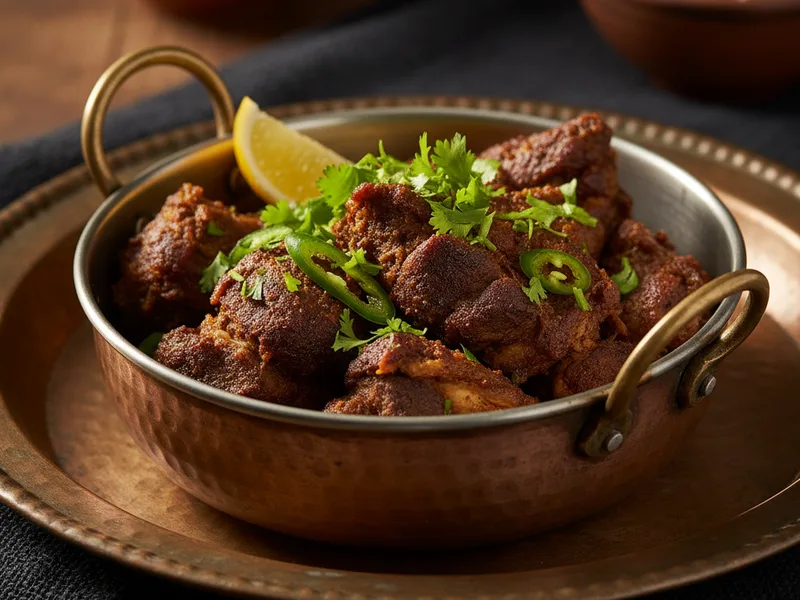
Landhi — Balochi Wind-Dried Mutton
Balochistan's ancient preserved meat tradition — whole cuts of mutton salted and hung to air-dry in winter mountain air for weeks, then cooked in simple curries or eaten as a preserved protein through summer. Pakistan's answer to prosciutto.
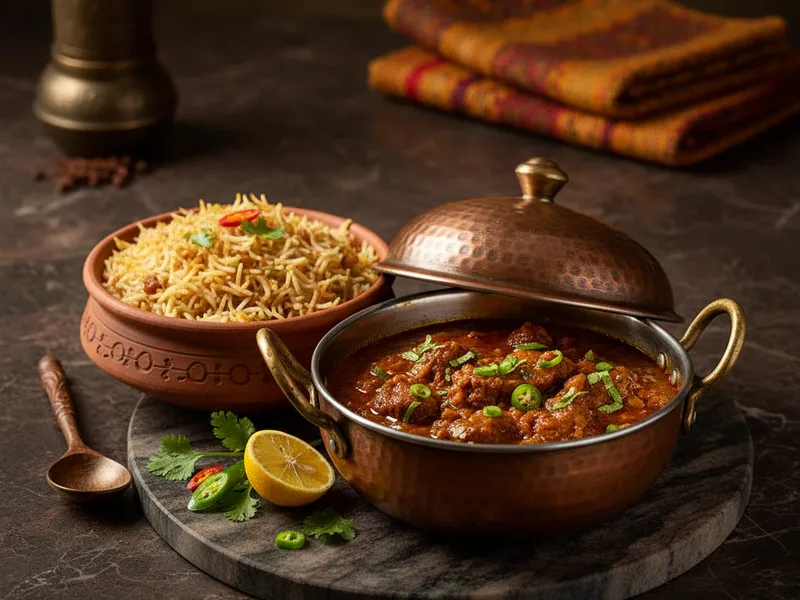
Landhi Karachi Style — Urban Revival
The Karachi urban interpretation of Balochi landhi — using commercially available dried mutton or quick-cure beef, cooked in a rich Sindhi-influenced masala that bridges the Balochi original with Karachi's cosmopolitan palate.
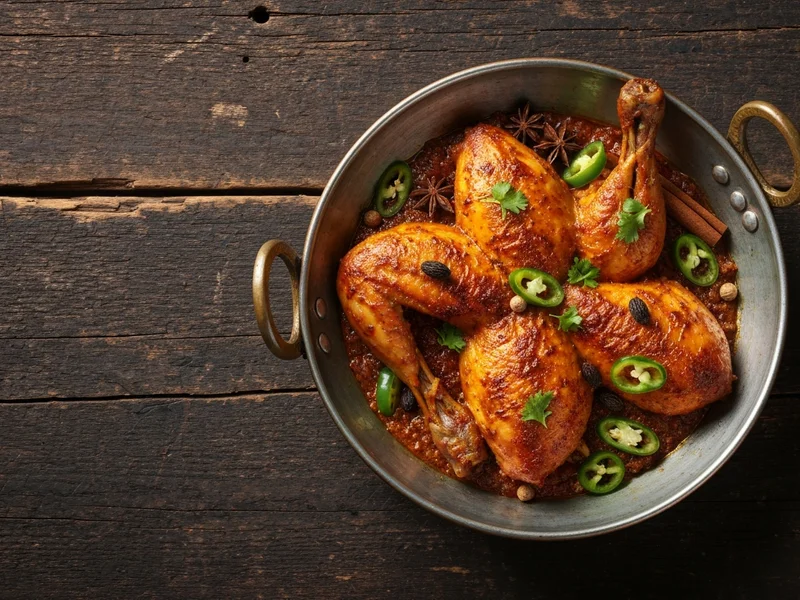
Balochi Sajji — Whole Roasted Chicken
Balochi Sajji is a whole chicken marinated in just salt and basic spices, skewered on a long stick, and slow-roasted vertically over a wood fire until the skin crisps and the meat falls off the bone. This is Balochistan's most iconic dish — minimalist, ancient, and absolutely extraordinary.
Cite This Recipe
Writing about Pakistani food? Use these ready-made citations.
<a href="https://pakistani.recipes/recipes/sajji/balochi-sajji/">Balochi Sajji — Whole Roasted Chicken</a> — Pakistani Recipes
Mir Hassan. "Balochi Sajji — Whole Roasted Chicken." Pakistani Recipes, 2024. https://pakistani.recipes/recipes/sajji/balochi-sajji/
Mir Hassan. (2024). Balochi Sajji — Whole Roasted Chicken. Pakistani Recipes. Retrieved 2026-07-20, from https://pakistani.recipes/recipes/sajji/balochi-sajji/
What Cooks Are Saying
Good recipe, clear instructions. The end result was delicious.
Authentic taste, clear steps. Exactly what I was looking for.
I was nervous to try this but the instructions made it so easy. Turned out amazing.