
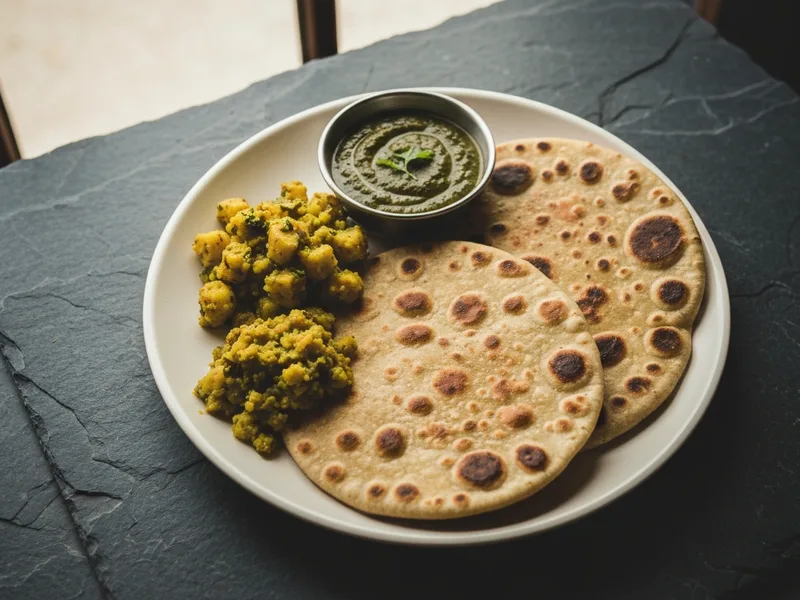
Punjab cuisine
Makki Ki Roti
Makki Ki Roti is a traditional Punjab Pakistani dish. Makki Ki Roti is Punjab's golden corn flatbread — thick, slightly grainy, and impossibly satisfying when eaten hot off the tawa with a mountain of sarson ka saag and a pat of white butter. It is not rolled with a belan; it is shaped with love, patience, and wet hands. Getting your first one right is a rite of passage in every Punjabi kitchen.
Makki Ki Roti is as old as maize cultivation in the subcontinent, and in Punjab it's far more than just bread — it's a seasonal ritual.
Within a few generations it had become so deeply embedded in Punjabi and Sindhi agricultural culture that makki ki roti with sarson da saag is now considered the most Punjabi of all dishes. When winter arrives and sarson (mustard greens) are in the fields, Makki Ki Roti appears on every Punjabi table without question. The corn flour gives it a crumbly, slightly dense texture completely unlike wheat roti, and it must be eaten immediately — it goes hard within minutes of cooking. This is not a bread that waits for anyone. It's made with makki ka atta (stone-ground cornmeal), which is coarser than the cornflour you'd use for custard — don't substitute with that.
Ingredients
Instructions
- UNDERSTAND YOUR FLOUR: Before you start, know this — makki ka atta contains zero gluten. This means it cannot be rolled thin with a belan (rolling pin) the way wheat dough can; it will crack and crumble. We shape it differently, and that's part of its charm. FUN FACT: Gluten is the protein network in wheat that makes dough stretchy. Corn has no such protein, so corn dough is delicate and crumbly — more like wet sand than elastic dough.
- MIX THE DOUGH: In a large bowl, combine the makki ka atta and salt. Add warm water a little at a time, mixing as you go. Use your hand to bring it together into a firm, pliable dough. It will feel grainy and less smooth than wheat dough — this is correct. You want dough that holds its shape when pressed but doesn't crumble. If it's too dry and cracking, add more warm water, a tablespoon at a time. HINT: The dough should feel like thick clay — firm enough to shape but not so wet it sticks to everything.
- HEAT THE TAWA: Place your tawa (flat griddle pan) on the stove over medium-low heat. Let it heat up while you shape the rotis. This bread cooks on lower heat than chapati — lower and slower gives it time to cook through without burning the outside.
- SHAPE THE ROTI — METHOD 1 (WET HANDS): Divide the dough into 4–6 equal balls. Keep a bowl of water nearby. Wet your palms thoroughly. Place a dough ball between your palms and begin patting and pressing, rotating as you go, like you're making a thick clay disc. Keep wetting your palms whenever the dough sticks. Aim for a circle about 6 inches across and 6–8mm thick. WHY: The water on your hands prevents sticking and helps the surface smooth out as you work. This is the traditional method used by every Punjabi daadi (grandmother) worth her saag.
- SHAPE THE ROTI — METHOD 2 (PLASTIC WRAP): Tear two pieces of cling film. Place a dough ball between them on a flat surface. Press with a flat-bottomed plate or your palm, using firm, even pressure, working from the centre outward to form a thick round. Peel the cling film off carefully. HINT: Method 2 gives you more consistent thickness and a neater edge. Method 1 is more traditional and satisfying. Try both and see which works for you.
- TRANSFER TO TAWA: Carefully slide the shaped roti onto the warm tawa. This is the tricky part — corn dough is fragile, so use a wide flat spatula or your palm to support it as you lower it onto the surface. If it cracks slightly at the edge, gently press it back together with a wet finger. HINT: Don't panic if it's not a perfect circle. Rustic and slightly ragged is the authentic look.
- COOK THE FIRST SIDE: Cook on medium-low heat for 3–4 minutes. The bottom should develop a golden crust and the top surface will start to look dry and slightly matte. Press gently with a flat spatula — the edges should feel firm. WHY: Makki roti needs this longer cooking time because it's thick and dense. Rushing it on high heat will burn the outside while the inside stays raw and doughy.
- FLIP CAREFULLY: Using a wide spatula, slide it fully under the roti — all the way to the centre — and flip in one confident motion. Apply a knob of ghee or a slice of white butter to the cooked side immediately. Cook the second side for another 3–4 minutes until golden. FUN FACT: Makki Ki Roti is traditionally made and flipped by hand in the tandoor region of Punjab — it takes years of practice to do it without burning your fingers. The tawa version is a humane adaptation for the rest of us.
- FINAL CHAR (OPTIONAL): For extra flavour, once both sides are golden, hold the roti directly over the open flame with chimta (tongs) for 10–15 seconds per side. You'll get a few black spots and a wonderful smoky aroma. This is optional but deeply traditional.
- SERVE IMMEDIATELY: Transfer to a plate and apply another generous piece of white butter or a spoon of ghee on top. Makki Ki Roti goes hard as it cools — it's a NOW food. The texture right off the tawa is soft, slightly grainy, and deeply flavourful. Five minutes later, it will have started to firm up. Eat it hot.
Essential for This Recipe
As an Amazon Associate, we earn from qualifying purchases
Pure Ghee (Clarified Butter)
The authentic cooking fat for Pakistani dishes — adds rich flavor that oil can't match
Chef's Secrets
- Always use makki ka atta (stone-ground yellow cornmeal), not corn starch or fine white cornflour. The texture will be completely wrong with the latter.
- If your roti keeps falling apart during shaping, your dough is too dry. Add warm water a teaspoon at a time and re-knead.
- Some cooks add a tablespoon of wheat atta to the dough to give it a little more bindability. It's technically not traditional but it helps beginners.
- Make the saag first — it takes much longer to cook than the roti. Always plan your meal so the roti comes last.
Common Questions
How long does Makki Ki Roti take to make?
Total time is 40m — 15m prep and 25m cooking.
How many servings does this recipe make?
This recipe makes 4 servings, and is rated medium difficulty.
Which region of Pakistan is Makki Ki Roti from?
Makki Ki Roti is from Punjab, Pakistan — one of the country's most distinctive culinary traditions.
What do you serve with Makki Ki Roti?
The one and only traditional pairing is sarson ka saag (mustard green curry) with white makhan (unsalted butter). A glass of lassi completes the meal. In Punjab, eating makki ki roti with anything else is technically legal but spiritually questionable.
Goes Well With
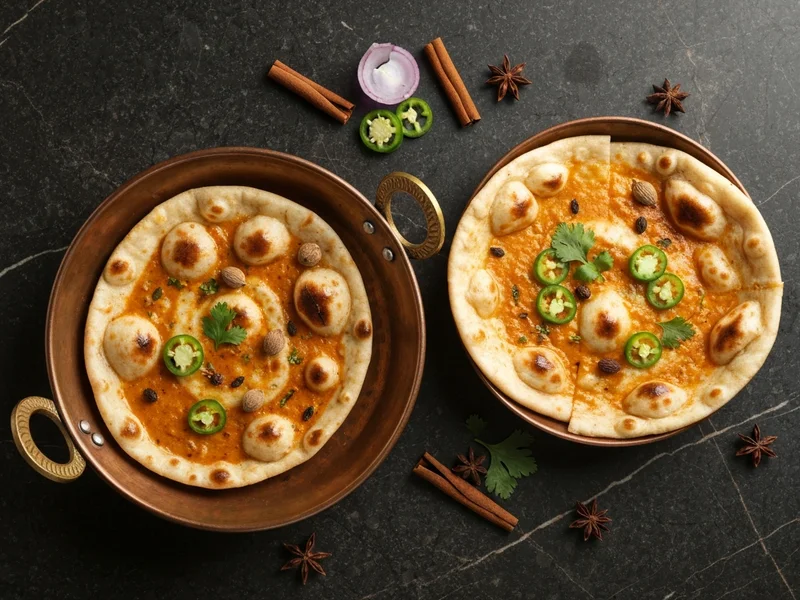
Butter Naan (Home Tawa Method)
Soft, pillowy butter naan made at home on a tawa (flat griddle) — no tandoor required. Brushed with makhan (butter) the moment it comes off the heat, this leavened flatbread is the perfect vehicle for any Pakistani curry.
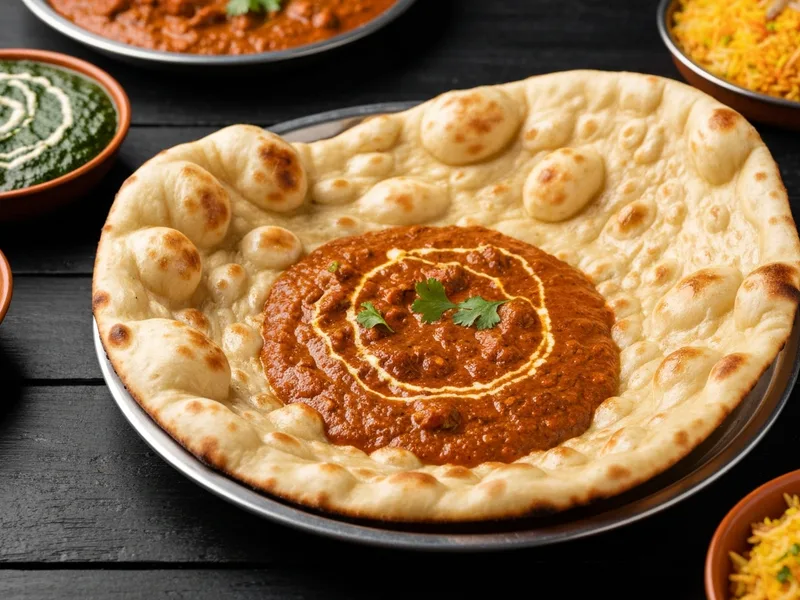
Roghni Naan
Roghni Naan is the Rolls-Royce of Pakistani bread — leavened, egg-enriched, oil-glossed, and studded with sesame and nigella seeds, baked until golden and billowy. It is the bread that makes any meal feel like a celebration, and once you've baked your own, the bakery version will never quite measure up.
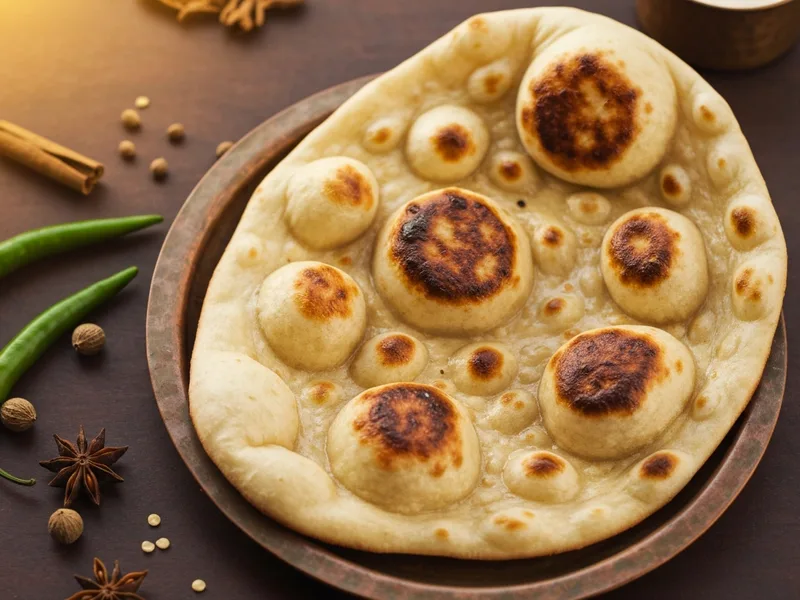
Garlic Naan
Garlic Naan takes everything great about a classic leavened naan and then — at the very last second — hits it with raw garlic butter and fresh coriander that cook against the bread's scorching heat. It is aggressively good, impossible to stop eating, and ready in under 10 minutes of baking.
Cite This Recipe
Writing about Pakistani food? Use these ready-made citations.
<a href="https://pakistani.recipes/recipes/garlic-naan/garlic-naan/">Garlic Naan</a> — Pakistani Recipes
Ahmed Khan. "Garlic Naan." Pakistani Recipes, 2024. https://pakistani.recipes/recipes/garlic-naan/garlic-naan/
Ahmed Khan. (2024). Garlic Naan. Pakistani Recipes. Retrieved 2026-07-20, from https://pakistani.recipes/recipes/garlic-naan/garlic-naan/
What Cooks Are Saying
The instructions are so clear and easy to follow. Came out perfectly first try.