
Punjab cuisine
Methi Paratha
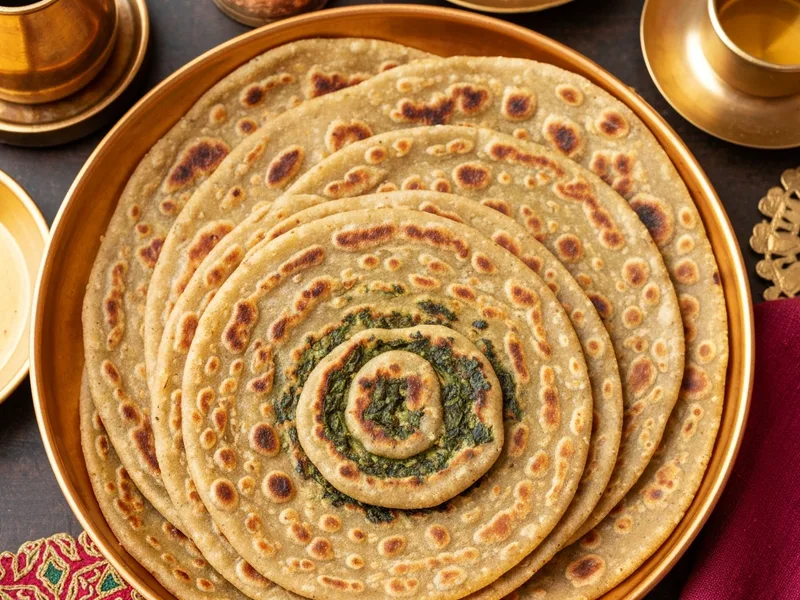
Methi Paratha is a traditional Punjab Pakistani dish. Methi Paratha is a Punjabi winter flatbread where fresh fenugreek leaves are kneaded directly into the whole-wheat dough itself — no separate filling, no stuffing step. The dough turns a beautiful speckled green, and when cooked, the bitter methi mellows into something faintly herbal and deeply aromatic, enhanced by ajwain and red chilli. It is simpler to make than stuffed parathas and arguably more flavourful, available only when fresh methi is in season.
Methi (fenugreek) is one of those ingredients that divides the room — its raw flavour is assertively bitter, but cooked into hot bread with ghee, it transforms into something complex, slightly nutty, and deeply satisfying.
Its use in bread goes back to ancient Egypt and Greece — fenugreek seeds were found in Tutankhamun's tomb. In Punjabi cooking, fresh methi leaves in paratha are considered a winter speciality. Unlike other stuffed parathas, methi paratha takes the unusually elegant approach of incorporating the greens directly into the dough, meaning you skip the stuffing-and-rolling challenge entirely. The technique is standard across Punjab and is beloved by home cooks precisely because it is forgiving: a tear in the dough is impossible when there is no filling trying to escape. Fresh methi appears in Pakistani markets from November through February, and this paratha is one of its highest callings.
Ingredients
Instructions
- PREPARE THE METHI LEAVES: Wash the fresh methi leaves thoroughly — two or three rinses in cold water — and shake dry. Pick or strip the leaves from the thick stems (the thin, flexible stems are fine to keep). Chop the leaves finely. Sprinkle ¼ tsp salt over the chopped methi and mix — this draws out a small amount of moisture and softens the bitterness slightly. Leave for 5 minutes. HINT: Do not squeeze the methi as you would mooli or gobhi. A little moisture from the methi is fine here — it actually replaces some of the water you would otherwise add to the dough. FUN FACT: Fenugreek leaves contain an alkaloid called trigonelline, which is what gives them their distinctive bitter edge. Heat breaks it down, which is why methi tastes much gentler cooked than raw — the dough surrounding it acts like a little oven for each leaf.
- MIX THE DOUGH INGREDIENTS: In a wide paraat (mixing bowl), combine the atta, remaining ¾ tsp salt, lal mirch powder, and ajwain. Mix the dry ingredients together with a fork or your fingers. Add the chopped and salted methi leaves to the bowl and mix them into the flour with your hands until the leaves are distributed throughout. WHY: Mixing the methi into the dry flour before adding water ensures the leaves are evenly distributed in the final dough rather than clumping in one area.
- KNEAD THE DOUGH: Add warm water gradually — start with ½ cup and mix with your fingers. The methi releases a little moisture, so you will likely need less water than for a plain paratha dough. Add more water a tablespoon at a time until the dough comes together into one ball. Knead for 5–6 minutes — push away with the heel of your hand, fold, turn, and repeat. The dough is ready when it is smooth, speckled green throughout, and feels like a firm earlobe. HINT: The methi makes the dough look and smell wonderful at this stage — trust it. Cover with a damp cloth and rest for 20 minutes.
- DIVIDE AND ROLL: Divide the rested dough into 6 equal balls (loi). Take one ball, dust lightly in dry flour, and place on your chakla (rolling board). Roll with your belan (rolling pin) from the centre outward, rotating the paratha quarter-turns as you go, until you have a circle about 18–20 cm across. Because there is no filling, this is significantly easier than a stuffed paratha — roll as thin or thick as you like. HINT: If the dough sticks to the chakla, lift and dust more flour underneath. The methi leaves will occasionally cause the surface to look slightly uneven — this is completely normal and gives the paratha a rustic look.
- COOK ON THE TAWA: Heat your tawa (flat griddle pan) over medium heat for 2 minutes. Place the rolled methi paratha on the dry tawa. Cook for about 60–90 seconds until the surface turns from glossy to matte and small bubbles appear. Flip — the cooked side should show pale golden patches and you can see the specks of green methi leaves set into the bread. Cook the second side for 60–90 seconds. Now add ½ tsp ghee on the top surface, flip, and let it sizzle for 30 seconds. Add ½ tsp ghee to the other side, flip, and press gently with a folded cloth. Cook for 30 seconds until both sides are golden with a few darker spots. The paratha should smell nutty, herbal, and deeply aromatic — that is the methi and ajwain toasting in the ghee. FUN FACT: The slightly bitter, herbal smell that fills the kitchen while methi paratha cooks is why many Pakistanis associate it instantly with winter mornings and their mothers' kitchens.
- SERVE WARM: Stack finished parathas in a roti basket or plate covered with a clean cloth. Repeat with remaining dough balls. Serve with white makhan (unsalted butter), dahi (yoghurt), or a simple salted lassi. The slight bitterness of the methi pairs particularly well with the cool tang of plain yoghurt.
Essential for This Recipe
As an Amazon Associate, we earn from qualifying purchases
Fenugreek Leaves (Kasuri Methi)
Aromatic dried herbs that finish curries and sabzi with authentic Pakistani flavor
Kashmiri Red Chilli Powder
Adds deep red color with mild heat — essential for authentic karahi, biryani, and nihari without overwhelming heat
Carom Seeds (Ajwain)
Thyme-like and peppery — lifts parathas, pakoras, and breads with authentic Pakistani spice
Pure Ghee (Clarified Butter)
The authentic cooking fat for Pakistani dishes — adds rich flavor that oil can't match
Chef's Secrets
- Use only fresh methi — dried kasuri methi gives a completely different flavour and texture in the dough. Fresh is non-negotiable here.
- Add water gradually since the methi releases its own moisture — you will need less water than for plain paratha dough.
- Do not squeeze the methi — a little moisture from the leaves is desirable here, unlike mooli or gobhi.
- The bitter flavour of methi mellows dramatically during cooking — if the raw dough tastes quite bitter, that is normal.
- Methi paratha freezes well — separate layers with baking paper, freeze, and reheat directly on a hot tawa.
Common Questions
How long does Methi Paratha take to make?
Total time is 45m — 20m prep and 25m cooking.
How many servings does this recipe make?
This recipe makes 6 servings, and is rated easy difficulty.
Which region of Pakistan is Methi Paratha from?
Methi Paratha is from Punjab, Pakistan — one of the country's most distinctive culinary traditions.
What do you serve with Methi Paratha?
Serve warm with white makhan (unsalted butter), a bowl of thick plain dahi (yoghurt), or alongside a light saag. The bitterness of methi pairs especially well with cold, tangy dairy. A glass of plain lassi or warm chai completes the winter morning picture perfectly.
Goes Well With
Lahori Halwa Puri with Channay
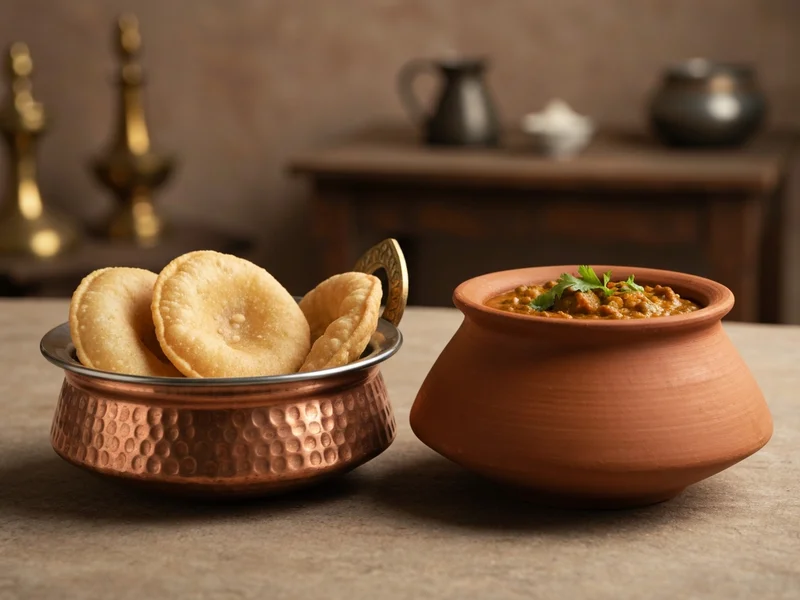
Lahori Halwa Puri is the iconic Pakistani Sunday breakfast — a full spread of suji (semolina) halwa, deep-fried puri bread, and spiced channay (chickpeas), served together as a feast. It is the meal that families plan weekends around, the one that means everything is okay with the world.
Aloo Paratha — Spiced Potato Stuffed Flatbread
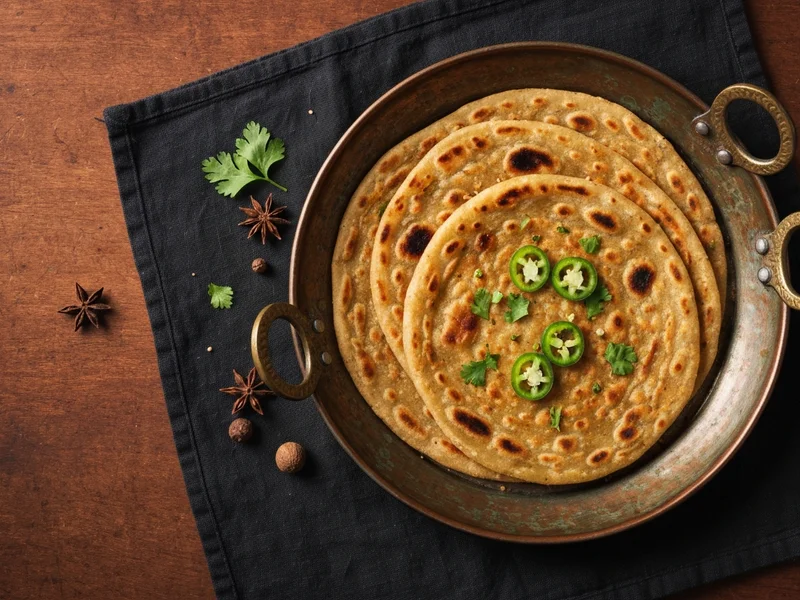
Aloo Paratha is Pakistan's most beloved breakfast bread — whole wheat flatbread stuffed with a spiced potato filling, cooked on a tawa (griddle) with butter or ghee until crisp and golden on the outside, soft within. It is the meal that gets children out of bed without argument.
Mooli Paratha
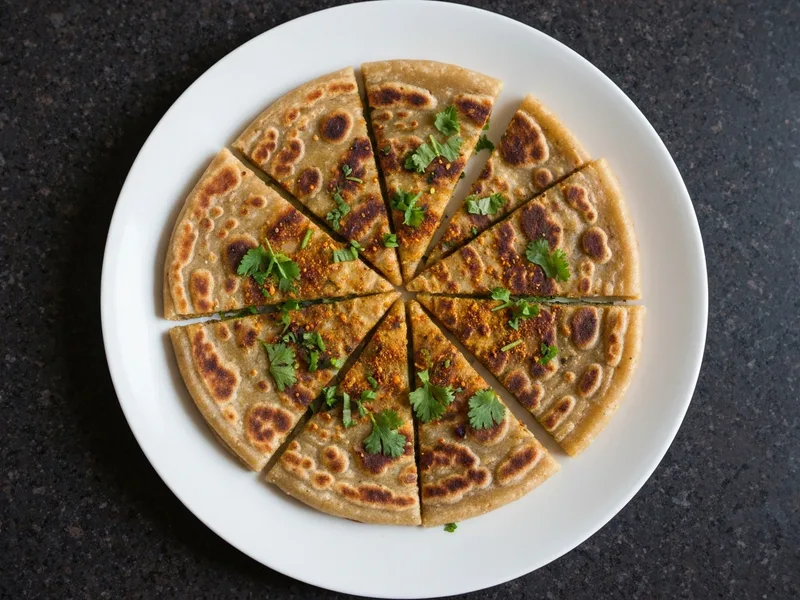
Mooli Paratha is a Punjabi breakfast classic — a flaky whole-wheat flatbread stuffed with spiced grated daikon radish that packs a punchy, slightly peppery flavour. It is polarising in the best possible way: once you love it, you crave it on cold winter mornings with a cold glass of lassi. The secret is squeezing every last drop of water out of the radish, or your paratha will tear like a drama at dhabas.
Cite This Recipe
Writing about Pakistani food? Use these ready-made citations.
<a href="https://pakistani.recipes/recipes/mooli-paratha/mooli-paratha/">Mooli Paratha</a> — Pakistani Recipes
Zainab Tariq. "Mooli Paratha." Pakistani Recipes, 2025. https://pakistani.recipes/recipes/mooli-paratha/mooli-paratha/
Zainab Tariq. (2025). Mooli Paratha. Pakistani Recipes. Retrieved 2026-06-03, from https://pakistani.recipes/recipes/mooli-paratha/mooli-paratha/
What Cooks Are Saying
Really enjoyed this. Leftovers tasted even better the next day.
I've tried many recipes for this dish but this one is the best by far.