
KP cuisine
Peshawari Siri Paye
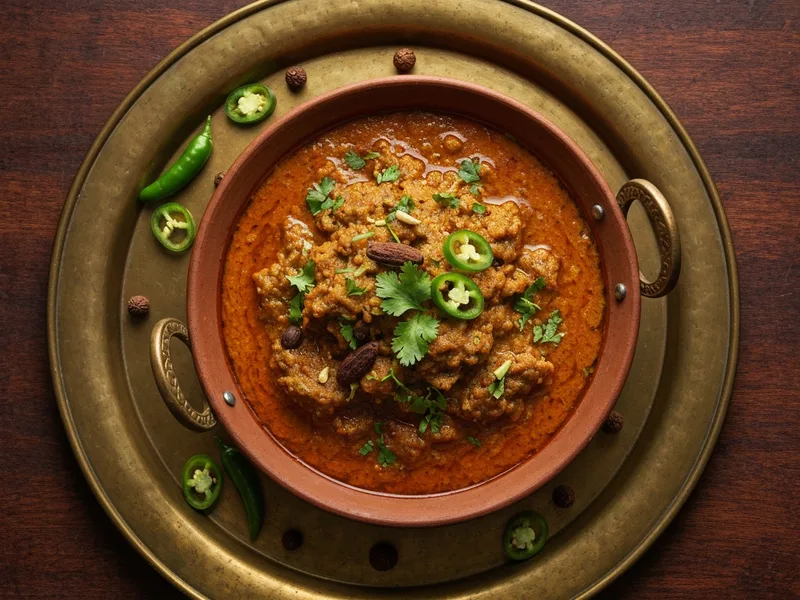
Peshawari Siri Paye is a traditional KP Pakistani dish. Peshawari Siri Paye is the pre-dawn breakfast of champions — beef or goat head and trotters slow-cooked for 6-8 hours in a broth so rich and gelatinous it sets like jelly when cold. In Peshawar, this is the meal that starts the day before fajr prayer, eaten with Peshawari naan in the amber light of old city shops. The broth IS the dish.
Long before protein shakes, the people of Peshawar had siri paye — a dish that has been fortifying labourers, scholars, and early risers for centuries. 'Siri' means head and 'Paye' means trotters (feet), and together they create one of the most collagen-rich, deeply savoury broths in all of South Asian cooking. The KP version leans heavily on whole spices — big, bold, and aromatic — and holds back on ground masalas, letting the natural gelatin of the bones create a broth so thick it barely needs seasoning.
This is a labour of love, and it is absolutely worth every hour.
Ingredients
Instructions
- CLEAN AND BLANCH THE MEAT: Place the siri and paye pieces into a large degh (heavy-bottomed pot). Cover with cold water and bring to a rolling boil over high heat. Let it boil for 10 minutes. You will see a lot of grey and brownish foam rising — this is completely normal and expected. WHY: This first blanching step removes blood, impurities, and the 'gamey' smell that can be off-putting in head and trotter meat. It's the secret to a clean-tasting, clear broth. After 10 minutes, pour off this water entirely and rinse the meat pieces under cold running water.
- BUILD THE BROTH: Return the cleaned siri and paye to the degh. Add 3 litres of fresh cold water. Add the halved onions, ginger, garlic, black cardamom, cloves, cinnamon, black peppercorns, bay leaves, fennel seeds, and turmeric (if using). Bring everything to a boil over high heat. Skim off any new foam that appears — there will be less this time. Once boiling, reduce to the lowest heat setting. HINT: The broth should be at a very gentle simmer — you want lazy bubbles, not a rolling boil. A hard boil makes the broth cloudy and can make the trotters tough.
- THE LONG COOK: Cover the degh and cook on the lowest heat for 6 to 8 hours. Check every 1-2 hours and give it a gentle stir with a chamcha (ladle). If the water level drops below the meat, add hot water to keep everything submerged. At the 4-hour mark, the trotters should be soft and you'll see the skin beginning to come away from the bone. The broth will have turned a deep amber colour and will smell wonderfully fragrant. FUN FACT: The collagen in the trotters and head bones slowly converts to gelatin as it cooks — this is what gives siri paye broth its characteristic thick, lip-coating richness. It's natural and deeply nourishing.
- TEST FOR DONENESS: After 6 hours, test the paye (trotters). The skin should separate easily from the bone when you press it with a spoon. The meat on the siri should be completely tender and falling apart. If not done, continue cooking for another 1-2 hours. WHY: Under-cooked siri paye is chewy and unpleasant. Over-cooked is fine — the meat will simply be even more tender. There's no such thing as too done here.
- SEASON AND FINISH: In the last hour of cooking, add the salt to the broth. Stir and taste — it should be deeply savoury and fragrant. The broth may look quite thick at this point — that's perfect. Remove and discard the large pieces of onion, ginger, garlic, and any whole spices you can fish out with a spoon. HINT: Don't obsess about getting every whole spice out — the flavour is already in the broth. Just remove the obviously large pieces so guests aren't surprised by a mouthful of bay leaf.
- SERVE IN BOWLS: Ladle the siri paye into deep serving bowls, making sure each person gets pieces of both siri (head meat) and paye (trotter with the gelatinous skin). Drizzle a little Raha ghee over the top of each bowl — it will pool and shimmer on the surface beautifully. The broth should be thick enough to coat the back of your spoon.
- GARNISH AND EAT: Top each bowl with julienned fresh ginger, a few whole green chillies, and a generous handful of fresh coriander. The garnishes are not optional — they cut through the richness of the broth and add brightness. Eat immediately with Peshawari naan or any good thick bread, tearing pieces and dipping them into the broth. The traditional method is to eat with your hands, using the naan as a scoop. WHY: The heat of the broth begins to diminish quickly — siri paye should always be eaten as hot as possible.
Essential for This Recipe
As an Amazon Associate, we earn from qualifying purchases
Green Cardamom Pods (Elaichi)
The fragrant heart of biryanis, pulaos, chai, and desserts — use whole pods for best flavor
Black Cardamom (Badi Elaichi)
Smoky and bold, essential for biryanis and nihari — gives dishes their distinctive deep character
Whole Cloves (Laung)
Warm, sweet, and aromatic — adds depth to rice dishes, biryanis, and meat curries
Cinnamon Sticks (Darchini)
Sweet and warm, essential for pulaos, biryanis, and chai — add one stick per pot
Chef's Secrets
- Source from a halal butcher who deals in whole animals — they will have properly cleaned siri and paye. Call ahead the day before to make sure they have it.
- If you have a pressure cooker, you can significantly reduce cooking time: after the blanching step, pressure cook for 2-3 hours on high pressure, then finish on low heat for another hour to develop the broth colour.
- The dish genuinely improves overnight. Cook it the evening before, refrigerate, skim off any solidified fat from the surface (it will set into a white layer — use a spoon to remove), and reheat gently. The flavour deepens dramatically.
- Fennel seeds are the KP signature — they give the broth a subtle sweet anise undertone that differentiates Peshawari siri paye from Lahori or Karachi versions.
- Serve with both a squeeze of lemon and a plate of raw sliced onions — the acidity and sharpness are classic counterpoints to the rich, unctuous broth.
Common Questions
How long does Peshawari Siri Paye take to make?
Total time is 8h 20m — 20m prep and 8h cooking.
How many servings does this recipe make?
This recipe makes 4 servings, and is rated hard difficulty.
Which region of Pakistan is Peshawari Siri Paye from?
Peshawari Siri Paye is from KP, Pakistan — one of the country's most distinctive culinary traditions.
What do you serve with Peshawari Siri Paye?
Serve with Peshawari naan (the thick, round, fluffy kind), sliced raw onions, green chillies, fresh lemon wedges, and extra fresh coriander. A cup of strong chai on the side is traditional. This is a pre-dawn or breakfast dish in Peshawar — if you serve it for dinner, no one will complain.
Goes Well With
Peshawari Halwa Puri
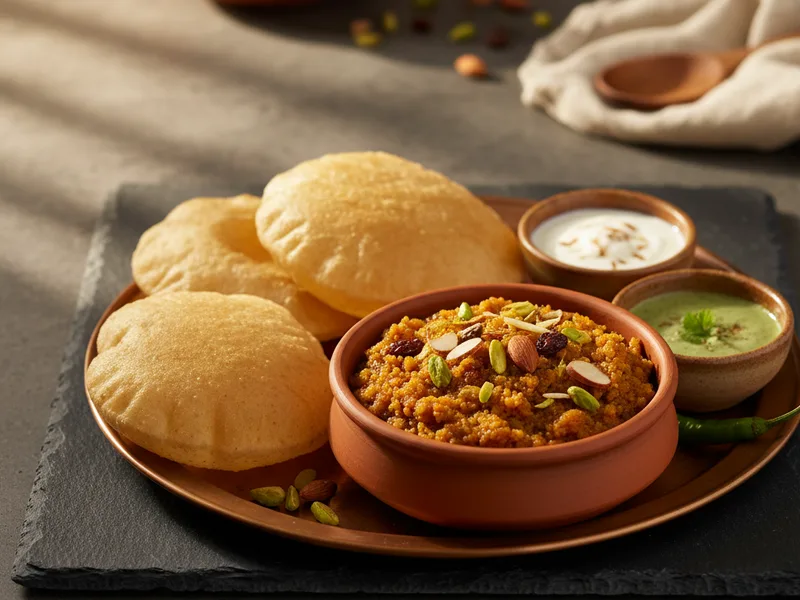
Peshawari Halwa Puri features a thicker, crispier puri and a distinctly spiced, darker halwa enriched with nuts — reflecting KP's love of robust flavours and generous hospitality.
Peshawari Stuffed Chapati
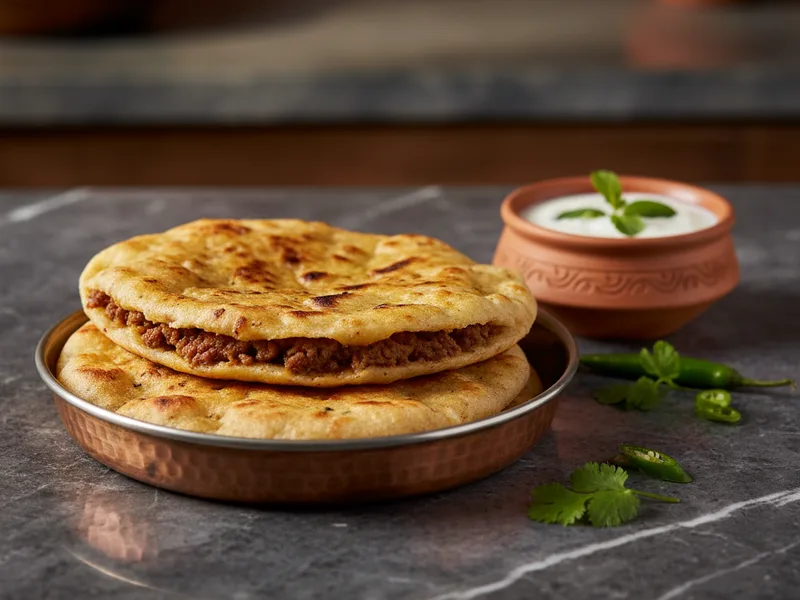
Peshawari Stuffed Chapati is a thick, hearty KP-style flatbread filled with spiced potato and onion — cooked on a tawa with minimal fat for a wholesome, filling breakfast that fuels mountain people.
Pashtun Hareesa — Wheat and Mutton Porridge
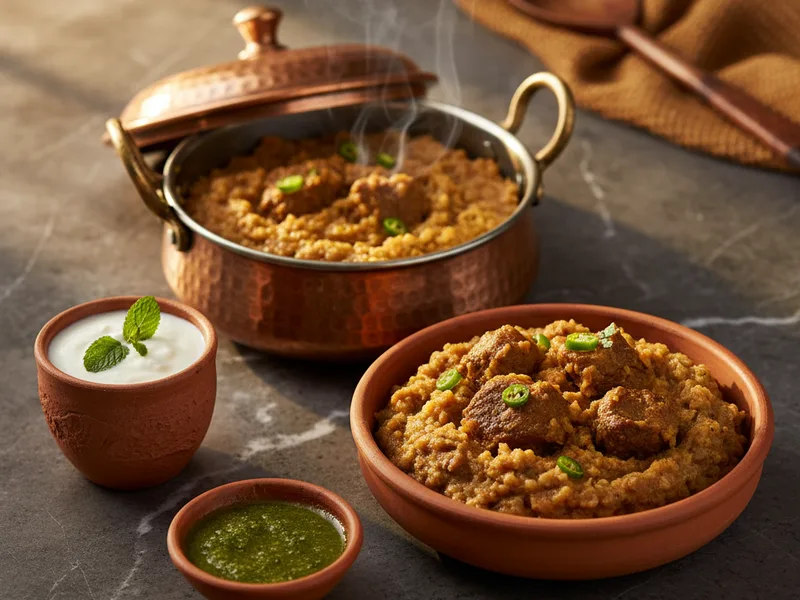
KP's ancient wheat-and-mutton slow-cooked porridge — an overnight dish that requires patience but delivers extraordinary depth. Hareesa has been a Pashtun winter breakfast and celebration food for over a thousand years.
Cite This Recipe
Writing about Pakistani food? Use these ready-made citations.
<a href="https://pakistani.recipes/recipes/hareesa/pashtun-hareesa-wheat/">Pashtun Hareesa — Wheat and Mutton Porridge</a> — Pakistani Recipes
Gulab Bibi. "Pashtun Hareesa — Wheat and Mutton Porridge." Pakistani Recipes, 2025. https://pakistani.recipes/recipes/hareesa/pashtun-hareesa-wheat/
Gulab Bibi. (2025). Pashtun Hareesa — Wheat and Mutton Porridge. Pakistani Recipes. Retrieved 2026-06-03, from https://pakistani.recipes/recipes/hareesa/pashtun-hareesa-wheat/
What Cooks Are Saying
The instructions are so clear and easy to follow. Came out perfectly first try.
My husband said it's the best he's ever had. Coming from him that means everything!