
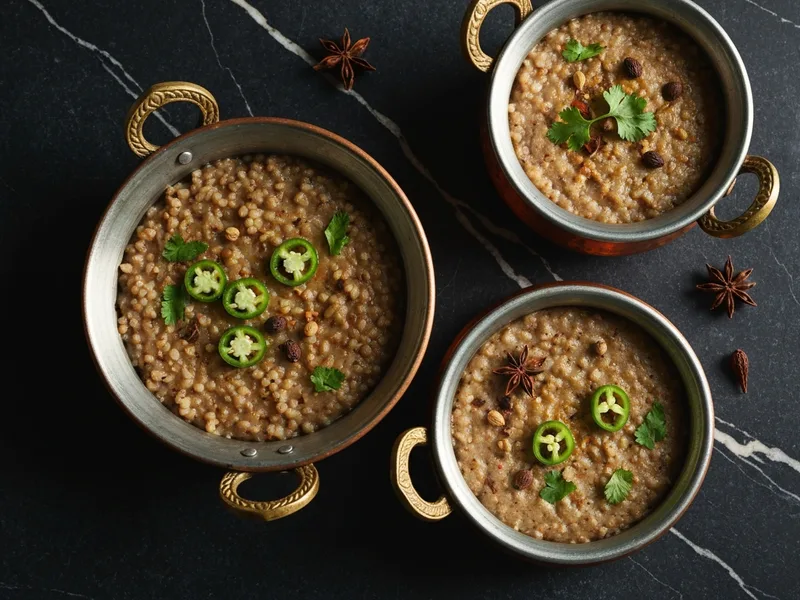
Gilgit-Baltistan cuisine
Phitti — Hunza Buckwheat Breakfast
Phitti — Hunza Buckwheat Breakfast is a traditional Gilgit-Baltistan Pakistani dish. A traditional Hunza buckwheat preparation — dry-roasted flour mixed with apricot oil and salt, served with dried apricots and walnuts. Note: the canonical Phitti is also made as a sourdough wheat bread; this is the buckwheat breakfast variant eaten in Hunza households. Both are authentic to Gilgit-Baltistan.
The Hunzakut people of Gilgit-Baltistan are famous for their extraordinary longevity, and buckwheat is central to their diet.
Ash-baked breads appear in the archaeological record across Mesopotamia, the Indus Valley, and Central Asia going back thousands of years. The name Phitti covers both a wheat-based leavened bread (the more formal version) and this simpler toasted buckwheat preparation eaten as a quick breakfast. Buckwheat (kuttu) is not actually wheat — it is the seed of a flowering plant, naturally gluten-free and rich in protein and rutin. This version — toasted flour mixed with apricot kernel oil and warm water — is a Hunza farmhand's breakfast, eaten before a day of high-altitude farming. No sugar. No fuss. Just the mountain.
Ingredients
Instructions
- DRY-ROAST THE BUCKWHEAT FLOUR: Place a heavy pan (a karahi or any thick-bottomed pan) on medium-low heat. Once warm, add the buckwheat flour directly to the dry pan — no oil yet. Stir continuously with a wooden spoon for 4–6 minutes. WHY: Dry-roasting the flour removes any raw, bitter edge and transforms it into something deeply nutty and fragrant. HINT: You'll know it's ready when the flour turns a shade or two darker (from grey-beige to a warmer brown) and smells powerfully nutty — almost like roasted sesame or hazelnuts. Don't let it burn. FUN FACT: Buckwheat flour, despite the name, contains no wheat at all. It's related to rhubarb and sorrel, not grass grains. This makes phitti naturally gluten-free.
- ADD THE OIL: Remove the pan from heat briefly. Add the apricot kernel oil (or neutral oil) to the toasted flour and stir quickly to combine — it will smell extraordinary. The mixture will look like damp, dark sand. Return to low heat and stir for another 30 seconds. WHY: The oil adds richness, prevents the flour from being too dry and powdery, and is traditional to the Hunza preparation. Apricot kernel oil has a subtle almond-like flavour that is absolutely worth seeking out.
- ADD SALT AND WATER: Add the salt. Then, with the pan on low heat, add warm water slowly — a few tablespoons at a time — stirring constantly. After about 1/2 cup of water, check the consistency. Traditional phitti is thick, like a stiff paste or soft playdough. If you prefer a looser porridge consistency, add more water. HINT: The texture is really a personal preference. Some people like it dry and crumbly, mixed with their fingers like a trail mix. Others prefer a wet porridge. Both are valid and traditional.
- TASTE AND ADJUST: Taste the phitti. It should taste nutty, earthy, slightly savoury, and satisfying. Add more salt if needed. FUN FACT: Phitti traditionally has no sweetener at all. The natural sweetness comes entirely from the dried apricots eaten alongside it. The contrast of savoury porridge and sweet dried fruit is the whole point.
- SERVE WITH APRICOTS AND WALNUTS: Spoon the phitti into a bowl. Arrange the dried apricots and walnuts alongside or on top. The way to eat it is to take a mouthful of phitti and then a bite of apricot — the earthiness of the buckwheat and the intense sweetness of the dried fruit create a contrast that is profoundly satisfying. The walnuts add crunch and richness. WHY: This combination — buckwheat porridge, dried apricot, walnut — is not accidental. It represents the three most abundant ingredients in Hunza: millet/buckwheat grains, their famous apricot orchards, and walnut trees that line every village path.
Chef's Secrets
- Don't skip the toasting step — raw buckwheat flour has a slightly bitter, unpleasant taste. Toasting is what makes phitti delicious.
- If you can find Hunza dried apricots (available from speciality Pakistani dry fruit sellers), use them — they are tangier and more intense than supermarket dried apricots.
- Phitti can also be shaped into small balls (like laddoo) once the oiled, salted flour is mixed. Roll them with your palms and eat them like energy balls — a traditional mountain snack for long treks.
- Store leftover dry-toasted buckwheat flour (before adding water) in an airtight container for up to 2 weeks. You can make fresh phitti in 2 minutes whenever you want.
Common Questions
How long does Phitti — Hunza Buckwheat Breakfast take to make?
Total time is 15m — 5m prep and 10m cooking.
How many servings does this recipe make?
This recipe makes 2 servings, and is rated easy difficulty.
Which region of Pakistan is Phitti — Hunza Buckwheat Breakfast from?
Phitti — Hunza Buckwheat Breakfast is from Gilgit-Baltistan, Pakistan — one of the country's most distinctive culinary traditions.
What do you serve with Phitti — Hunza Buckwheat Breakfast?
Eaten for breakfast in Hunza, traditionally with dried apricots, walnuts, and a cup of salted butter tea (sheer chai). Also excellent with a drizzle of local honey if you prefer a touch of sweetness. Can be served as an energy snack on hikes — shape into balls and pack them.
Goes Well With
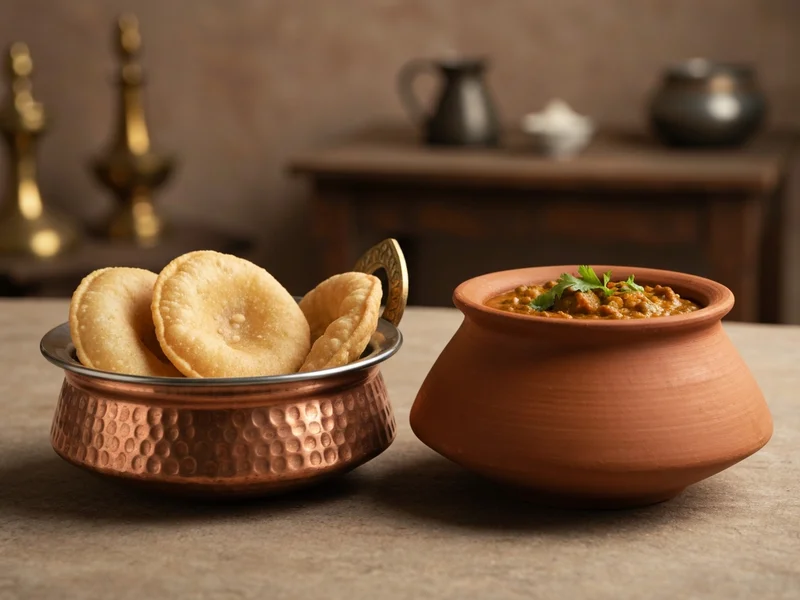
Lahori Halwa Puri with Channay
Lahori Halwa Puri is the iconic Pakistani Sunday breakfast — a full spread of suji (semolina) halwa, deep-fried puri bread, and spiced channay (chickpeas), served together as a feast. It is the meal that families plan weekends around, the one that means everything is okay with the world.
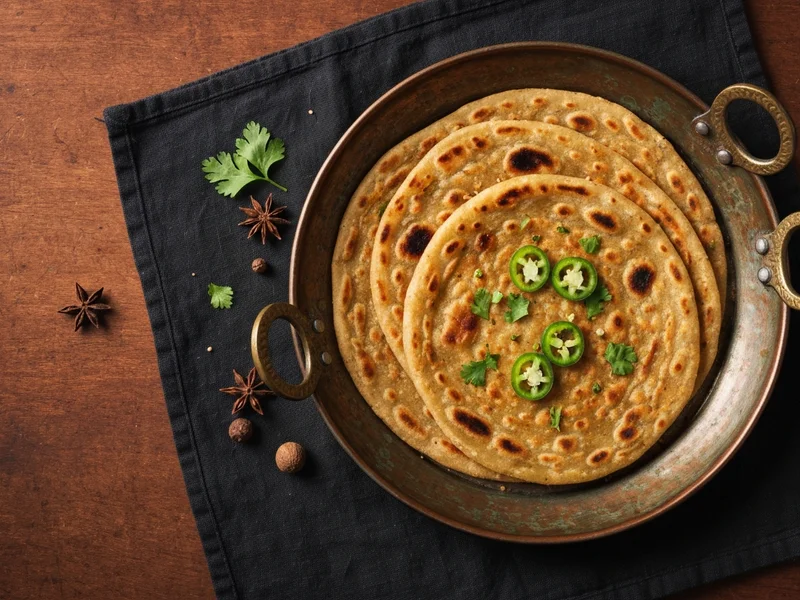
Aloo Paratha — Spiced Potato Stuffed Flatbread
Aloo Paratha is Pakistan's most beloved breakfast bread — whole wheat flatbread stuffed with a spiced potato filling, cooked on a tawa (griddle) with butter or ghee until crisp and golden on the outside, soft within. It is the meal that gets children out of bed without argument.
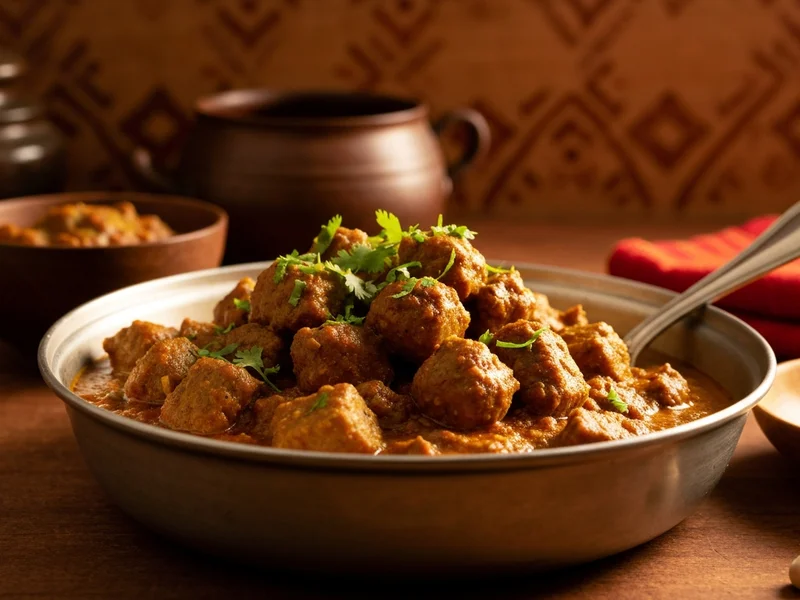
Sindhi Koki
Sindh's thick, crispy, flavour-packed breakfast flatbread — whole wheat dough loaded with onion, green chilli, fresh coriander, and carom seeds, pressed thick, scored in a crosshatch pattern, and cooked on a tawa with generous ghee until crackling and golden.
Cite This Recipe
Writing about Pakistani food? Use these ready-made citations.
<a href="https://pakistani.recipes/recipes/koki/sindhi-koki/">Sindhi Koki</a> — Pakistani Recipes
Bilal Soomro. "Sindhi Koki." Pakistani Recipes, 2024. https://pakistani.recipes/recipes/koki/sindhi-koki/
Bilal Soomro. (2024). Sindhi Koki. Pakistani Recipes. Retrieved 2026-06-03, from https://pakistani.recipes/recipes/koki/sindhi-koki/
What Cooks Are Saying
Made this last weekend and the whole family loved it. Will definitely make again.
This recipe is a keeper. Followed it exactly and it turned out perfect.