
Azad Kashmir cuisine
Kashmiri Rogan Josh
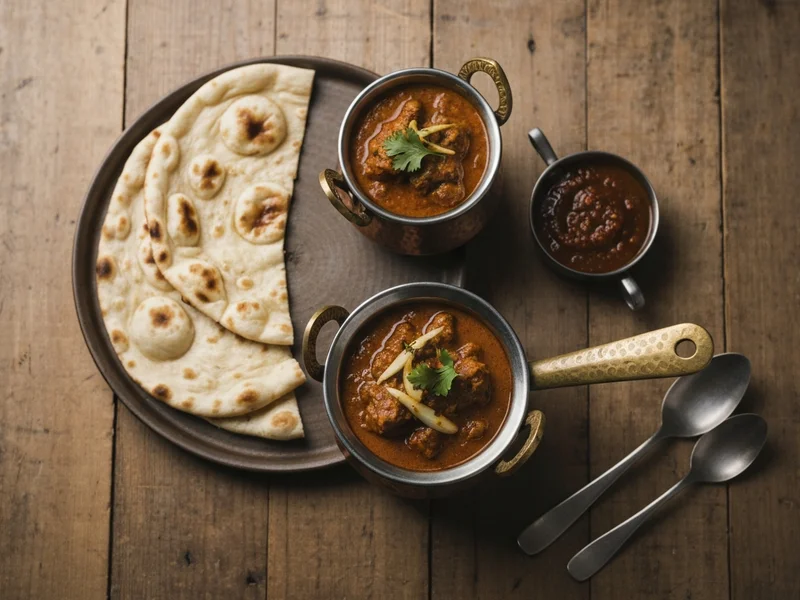
Kashmiri Rogan Josh is a traditional Azad Kashmir Pakistani dish. The crown jewel of Kashmiri cooking — a slow-braised lamb curry in a gorgeous mahogany-red gravy that gets its colour from Kashmiri chillies and alkanet root, not from heat. Aromatic, rich, and unlike any curry you've made before.
If you've only ever seen Rogan Josh on a restaurant menu, you've been missing the real story.
Real Kashmiri Rogan Josh is actually quite mild. The fire-engine colour fools everyone. That deep red comes from two things: Kashmiri lal mirch (big, wrinkly red chillies that give colour like paprika but don't burn your face off) and Ratan jot — alkanet root, a dried bark you soak in warm ghee that bleeds out the most extraordinary ruby hue. No tomatoes. No onions in the traditional version. Just lamb, yoghurt, and an orchestra of whole spices doing their best work together. This is the dish that put Kashmir on the world culinary map, and once you make it properly, you'll understand why.
Ingredients
Instructions
- INFUSE THE GHEE: Place your ratan jot (alkanet root pieces) in a small bowl with 3 tbsp warm ghee. Let them soak for 10 full minutes — you'll see the ghee turn a stunning deep burgundy red. Strain out the bark pieces and set aside this crimson ghee. This is your colour bomb. FUN FACT: Alkanet root (ratan jot) has been used as a natural dye and food colourant in Central Asia for centuries. It has almost no flavour — its entire job is that gorgeous colour.
- BLOOM THE WHOLE SPICES: In a large karahi (wok) or heavy-bottomed pateela (pot), heat the remaining 1 tbsp ghee plus your ratan jot-infused ghee over medium-high heat until it shimmers. Add the badi elaichi (black cardamom), elaichi (green cardamom), laung (cloves), and dalchini (cinnamon). WHY: These whole spices need direct contact with hot fat to release their essential oils — if you added them to water or cold oil they'd just sit there doing nothing. Listen for the sizzle — within 30 seconds they'll smell incredible. Let them fry for 45 seconds, stirring with a chamcha.
- SEAR THE LAMB: Turn heat to high. Add the lamb pieces in a single layer — don't crowd them. HINT: Crowding the pot traps steam and you'll end up boiling the meat instead of browning it. Work in two batches if needed. Sear each piece for 2-3 minutes per side until you get a proper brown crust forming. It will look alarming, but trust the process — this browning (called the Maillard reaction) creates flavour compounds you cannot get any other way. Once browned, push all the meat to the sides.
- ADD THE DRY SPICES: Reduce heat to medium. Add the Kashmiri lal mirch, saunf (fennel powder), and sonth (dry ginger powder) directly to the oil in the centre of the karahi. Fry these dry spices for 60-90 seconds, stirring constantly. WHY: Raw spice powder tastes harsh and bitter — frying it in fat 'blooms' the spices, transforming them into something rounded and deep. The colour will deepen dramatically. HINT: If the pan looks dry or spices start sticking, add 1-2 tbsp of water — this deglazes and prevents burning while still allowing the spices to cook.
- WHISK IN THE YOGHURT: Here is the most important moment. Remove the pan from heat for 30 seconds to let it cool slightly. Whisk your room-temperature dahi (yoghurt) vigorously in its bowl until completely smooth. Add it to the pan in three additions, stirring well between each. HINT: Cold yoghurt + hot oil = curdled gravy. Room temp yoghurt + slightly cooled pan = smooth, silky sauce. Return pan to medium-low heat and cook the yoghurt-spice mixture for 5-6 minutes, stirring constantly, until the oil begins to separate and float on top — this is called 'tarka chootna' and tells you the masala is cooked through.
- SLOW BRAISE: Add the browned lamb back into the masala and stir to coat every piece. Add 1 cup of warm water. Season with salt. Bring to a boil, then reduce heat to the lowest setting. Cover the karahi tightly with a lid — if your lid doesn't fit tightly, place a piece of damp kitchen towel under it to seal. Cook for 50-60 minutes. WHY: Slow cooking at low heat allows the collagen in the bones to melt into the gravy, creating that thick, glossy texture. Fast cooking at high heat produces tough, dry meat.
- CHECK FOR MAKHANI CONSISTENCY: After 50 minutes, lift the lid. The meat should be fall-off-the-bone tender — test with a fork. The gravy should be thick, clinging to the meat, and the red oil should have risen visibly to the top. HINT: If the gravy is still thin, cook uncovered for 10 more minutes to reduce. If it has dried out, add a splash more hot water. The finished Rogan Josh should look like a rich, glistening, deep red stew with pools of fragrant crimson ghee floating on top. That oil on top is success — it's called 'tarka' and it is the sign of a perfectly cooked curry.
- REST AND SERVE: Turn off the heat and let the Rogan Josh sit uncovered for 5 minutes before serving. WHY: Resting allows the juices to redistribute through the meat fibres and the flavours to settle and deepen. Taste and adjust salt. Serve in the karahi itself for drama, ladled over plain white steamed chawal (rice) or alongside fresh naan. FUN FACT: In Kashmir, Rogan Josh is traditionally served as part of the Wazwan — a formal feast of 36+ courses served at weddings and celebrations, where it arrives early as one of the meat dishes in a big copper degh (cauldron).
Chef's Secrets
- Never use regular red chilli powder as a substitute for Kashmiri lal mirch — you will end up with an orange, fiery curry that has nothing to do with Rogan Josh. Order Kashmiri mirch online if your local store doesn't stock it.
- The ratan jot (alkanet root) step is optional if completely unavailable, but your colour will be less dramatic. Add an extra tbsp of Kashmiri mirch to compensate.
- Traditional Kashmiri Rogan Josh contains no onions and no tomatoes. If you're tempted to add them 'for flavour', you'll make a very good generic lamb curry — just not Rogan Josh.
- Bone-in lamb is essential for the gelatin-rich gravy. If you can only find boneless, add a couple of lamb marrow bones to the pot and remove before serving.
- This dish tastes significantly better the next day once the spices have had time to meld overnight. Make it a day ahead for guests and reheat gently.
- For a restaurant-grade gloss, stir in 1 tsp of cold butter right before serving — it emulsifies into the gravy and gives it a luxurious sheen.
Common Questions
How long does Kashmiri Rogan Josh take to make?
Total time is 1h 35m — 20m prep and 1h 15m cooking.
How many servings does this recipe make?
This recipe makes 4 servings, and is rated medium difficulty.
Which region of Pakistan is Kashmiri Rogan Josh from?
Kashmiri Rogan Josh is from Azad Kashmir, Pakistan — one of the country's most distinctive culinary traditions.
What do you serve with Kashmiri Rogan Josh?
Serve with plain steamed basmati rice or warm naan. A side of sliced raw onion sprinkled with lemon juice and chaat masala cuts through the richness. A bowl of plain dahi (yoghurt) on the side is traditional.
Goes Well With
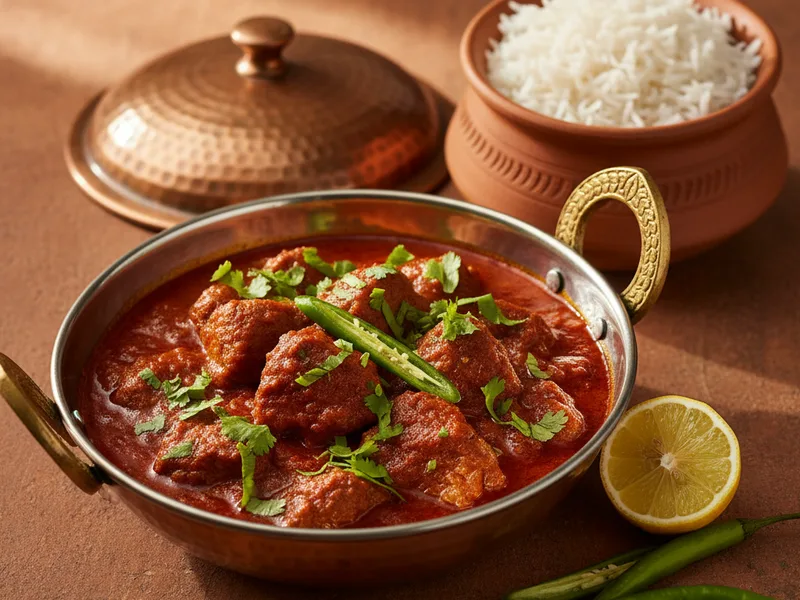
Kashmiri Rogan Josh — The Real Red Curry
Authentic Kashmiri rogan josh — its brilliant red color comes not from chili powder but from Kashmiri dried chilies (Kashmiri laal mirch) and dried cockscomb flowers (mawal), with no yogurt, no cream, and no tomatoes. This is the real thing.
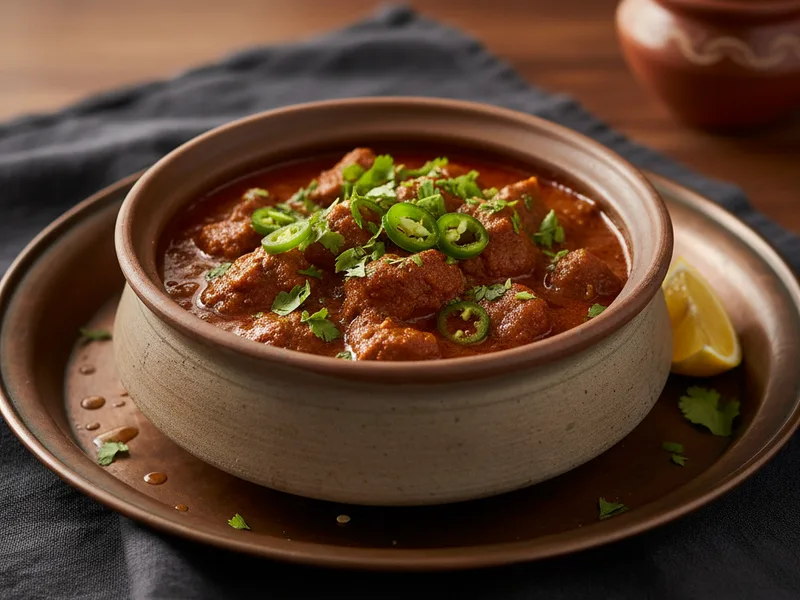
Lamb Rogan Josh — Home Cook Version
A home-friendly rogan josh that retains the authentic Kashmiri soul — Kashmiri chili paste, fennel, and dried ginger — while making a concession to accessibility with a small amount of yogurt for a richer, more forgiving gravy.
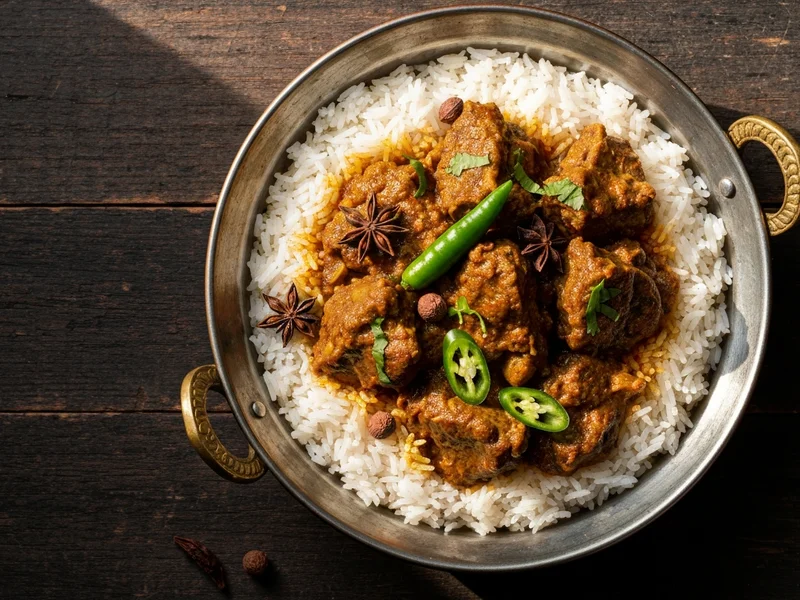
Kashmiri Gushtaba
The grand finale of the Kashmiri Wazwan — hand-pounded mutton meatballs (with fat pounded in) in a pale cream yoghurt-fennel gravy. No onion. No tomato. No red chilli. The ivory colour is the mark of authenticity — orange or red means it has been modified.
What Cooks Are Saying
Better than the restaurant version. The tips in the recipe really make a difference.
I was nervous to try this but the instructions made it so easy. Turned out amazing.
This recipe is a keeper. Followed it exactly and it turned out perfect.
Leave a Review
Tried this recipe? Share your experience — your review helps other cooks.