
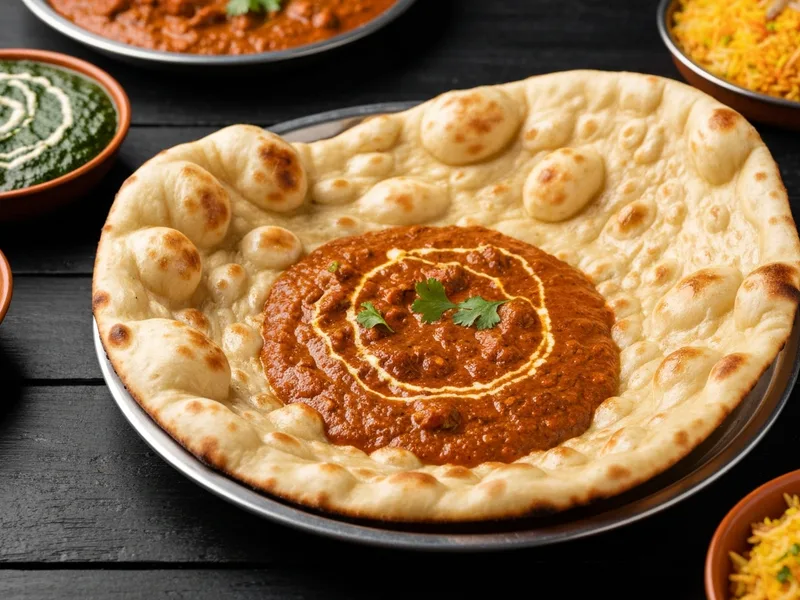
Punjab cuisine
Roghni Naan
Roghni Naan is a traditional Punjab Pakistani dish. Roghni Naan is the Rolls-Royce of Pakistani bread — leavened, egg-enriched, oil-glossed, and studded with sesame and nigella seeds, baked until golden and billowy. It is the bread that makes any meal feel like a celebration, and once you've baked your own, the bakery version will never quite measure up.
The word 'roghan' in Urdu and Persian means 'fat' or 'oil' — and Roghni Naan's name tells you everything about its character.
Roghni naan is enriched with egg and oil, making it softer and richer than plain naan — it was a bread of the Mughal court, where enriched breads signified abundance. This is bread that does not apologise for its richness. Originating in the royal kitchens of the Mughal era, Roghni Naan was a bread of celebration and hospitality, enriched with egg and oil to give it a soft, tender interior and a burnished, glossy crust. Today it is the bread of choice at Pakistani weddings, dastarkhwans (communal dining spreads), and any occasion where plain chapati simply wouldn't do. The til (sesame) and kalonji (nigella) seeds pressed into the surface add texture, aroma, and that signature bakery-style look.
Ingredients
Instructions
- ACTIVATE THE YEAST: In a small bowl, combine the khameer (instant dry yeast), cheeni (sugar), and 1/4 cup of the neem garam pani (lukewarm water). Stir briefly and leave for 5-10 minutes. After this time, the mixture should look foamy and smell pleasantly yeasty — like fresh bread dough. HINT: 'Lukewarm' means you can hold your wrist against the bowl comfortably. If it feels hot, it will kill the yeast. If it feels cold, the yeast won't activate. WHY: The sugar feeds the yeast, which then produces the gas (carbon dioxide) that makes your naan rise and become fluffy. If this mixture doesn't foam, your yeast is dead — buy fresh yeast and start over. FUN FACT: Yeast is a living organism — a single teaspoon contains millions of microscopic fungi. You are essentially waking them up and feeding them.
- MIX THE DOUGH: In a large bowl or paraat (wide kneading bowl), combine the maida (refined white flour), namak (salt). Make a well in the centre. Add 1 egg, tel (oil), dahi (yoghurt), and the foamy yeast mixture. Use your fingers or a fork to bring everything together into a rough, shaggy dough. Add the remaining lukewarm water, a little at a time, until the dough comes together in a soft, slightly sticky ball. HINT: Naan dough should be softer than chapati dough — it should feel smooth and slightly tacky (a tiny bit sticky), not firm and dry. If it is too stiff, add a tablespoon more water.
- KNEAD THE DOUGH: Turn the dough out onto a lightly oiled surface (use a few drops of oil, not flour). Knead for 8-10 minutes using the heel of your hand — push, fold, turn, repeat. The dough is ready when it is smooth, elastic, and springs back when you poke it. HINT: Knead with determination — this develops the gluten network that gives naan its chewy, stretchy texture. WHY: Gluten development is what makes bread chewy and gives it structure to hold the gas produced by the yeast.
- FIRST PROOF: Lightly oil the inside of a large clean bowl. Place the kneaded dough ball inside and turn it once so the entire surface is lightly oiled (this prevents a dry skin from forming). Cover the bowl with a damp kitchen cloth or plastic wrap. Place in a warm spot — near a warm oven, in a sunny spot, or in an oven turned off with just the light on. Leave for 1 to 1.5 hours, until the dough has doubled in size. HINT: If your kitchen is cold, dough rises slowly. Be patient — it will get there. FUN FACT: The dough doubling in size is called 'proving' — it is proof that your yeast is alive and working.
- PREPARE THE EGG WASH: In a small bowl, beat the remaining egg with 1 tablespoon of tel (oil) until combined. This egg wash is what gives Roghni Naan its signature glossy, golden crust. Set aside. Prepare a small plate with the til (sesame seeds) and kalonji (nigella seeds) mixed together.
- PREHEAT YOUR OVEN AND SURFACE: Turn your oven to its absolute maximum heat — 250°C (480°F) or as high as it goes. Place a cast-iron tawa (flat griddle pan) or baking stone on the highest rack. Let the oven preheat for at least 30 minutes with the pan inside. WHY: Naan needs extreme heat to cook quickly and puff up. A properly hot oven gives you bread with a golden crust and a soft, pillowy interior. A lukewarm oven gives you pale, dense bread. HINT: If you don't have a cast-iron pan, a heavy baking tray works but a cast-iron pan gives the best results.
- DIVIDE AND SHAPE: Punch the risen dough down gently with your fist to release the gas. Divide into 6 equal portions. On a lightly floured surface, roll each portion into an oval shape about 25cm long and 12cm wide and about 5mm thick — think a rounded teardrop or tongue shape. HINT: Naan does not need to be perfect. Rustic, slightly uneven edges are beautiful and traditional.
- APPLY THE EGG WASH AND SEEDS: Brush each shaped naan very generously with the egg-oil mixture. Immediately sprinkle a pinch of the til-kalonji (sesame-nigella) seed mixture evenly over the top. Use the flat of your hand to press the seeds gently but firmly into the surface — they should be embedded, not just sitting on top. WHY: If the seeds are not pressed in, they fall off the moment the naan is picked up. They need to be anchored.
- BAKE IN BATCHES: Very carefully slide 1-2 naans at a time (however many fit without touching) onto your preheated cast-iron pan or baking stone. Bake for 4-6 minutes. Watch carefully — at this high heat things happen fast. The naan should puff up in spots, develop dark golden patches (the charred marks are traditional and good), and the egg wash should be a deep, glossy brown. HINT: Don't open the oven repeatedly — each time you do, heat escapes and the naan won't puff as well.
- FINISH WITH OIL AND SERVE: As soon as each naan comes out of the oven, brush immediately with a little extra tel (oil) or ghee — this keeps the crust soft and adds a beautiful sheen. Serve immediately. Naan is at its absolute best in the first 10 minutes. FUN FACT: The smell of freshly baked Roghni Naan is widely credited with causing otherwise reasonable people to eat three pieces when they intended to eat one.
Essential for This Recipe
As an Amazon Associate, we earn from qualifying purchases
Yogurt Culture/Starter
Make fresh yogurt for raitas and marinades at home — authentic and cheaper than store-bought
Nigella Seeds (Kalonji)
Tiny black seeds with a bitter edge — essential for naans, pickles, and tempering
Chef's Secrets
- The oven temperature is everything. If your oven does not reach 250°C, preheat it for longer and use the highest rack. A broiler/grill function for the last 2 minutes can help achieve the dark spots.
- A cast-iron tawa or cast-iron skillet preheated in the oven is the closest home approximation of a tandoor — the mass of the iron retains heat and delivers it directly to the bread.
- For extra softness, brush the hot naan with ghee (clarified butter) instead of oil immediately after baking.
- If you have any leftover naan, wrap in foil and reheat at 180°C for 8 minutes — it refreshes beautifully and is much better than microwaving.
- The dough can be made a day ahead and left to proof slowly in the fridge overnight (cold-proof). Remove from the fridge 1 hour before baking to come to room temperature.
Common Questions
How long does Roghni Naan take to make?
Total time is 50m — 20m prep and 30m cooking.
How many servings does this recipe make?
This recipe makes 6 servings, and is rated medium difficulty.
Which region of Pakistan is Roghni Naan from?
Roghni Naan is from Punjab, Pakistan — one of the country's most distinctive culinary traditions.
What do you serve with Roghni Naan?
Perfect with any rich curry — nihari, karahi, or dal makhani. Also wonderful on its own with white butter. Serve immediately after baking for the full experience.
Goes Well With
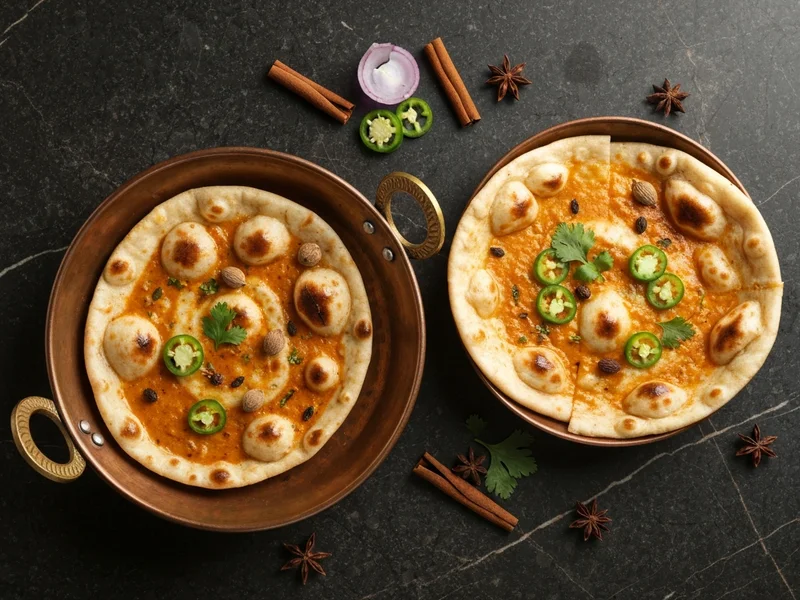
Butter Naan (Home Tawa Method)
Soft, pillowy butter naan made at home on a tawa (flat griddle) — no tandoor required. Brushed with makhan (butter) the moment it comes off the heat, this leavened flatbread is the perfect vehicle for any Pakistani curry.
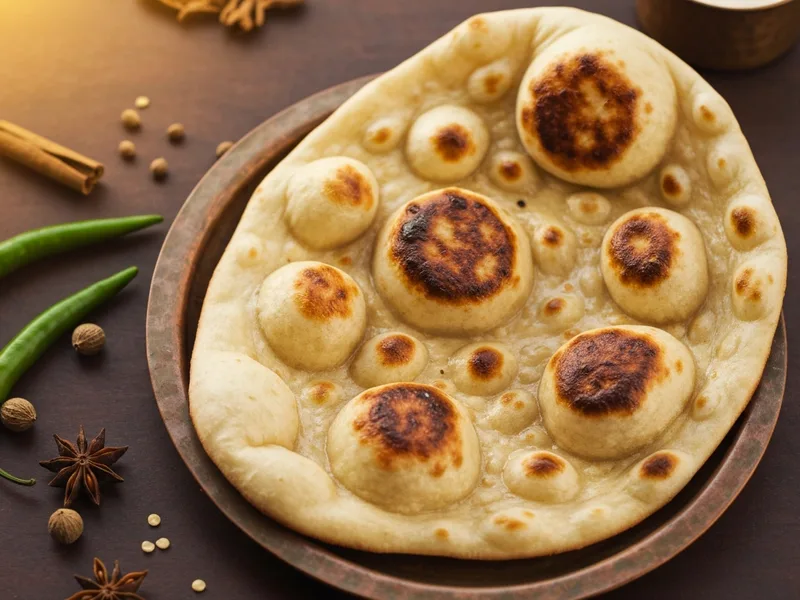
Garlic Naan
Garlic Naan takes everything great about a classic leavened naan and then — at the very last second — hits it with raw garlic butter and fresh coriander that cook against the bread's scorching heat. It is aggressively good, impossible to stop eating, and ready in under 10 minutes of baking.
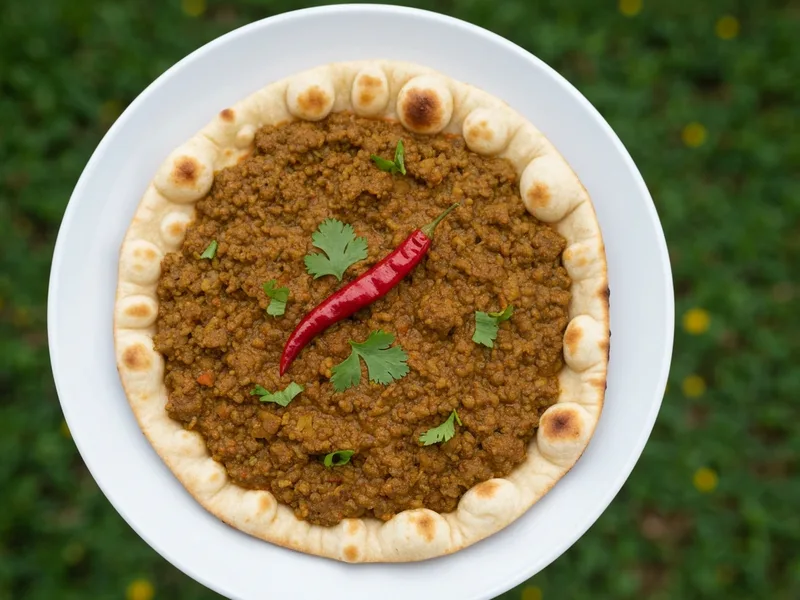
Keema Naan
Keema Naan is the ultimate Pakistani stuffed bread — spiced minced meat cooked dry and packed inside leavened naan dough, sealed, and baked until the crust is golden and the filling is fragrant and juicy. Served with cold yoghurt and mint chutney, it is a complete meal that happens to look like bread.
Cite This Recipe
Writing about Pakistani food? Use these ready-made citations.
<a href="https://pakistani.recipes/recipes/keema-naan/keema-naan/">Keema Naan</a> — Pakistani Recipes
Ahmed Khan. "Keema Naan." Pakistani Recipes, 2025. https://pakistani.recipes/recipes/keema-naan/keema-naan/
Ahmed Khan. (2025). Keema Naan. Pakistani Recipes. Retrieved 2026-07-20, from https://pakistani.recipes/recipes/keema-naan/keema-naan/
What Cooks Are Saying
My husband said it's the best he's ever had. Coming from him that means everything!
Made this last weekend and the whole family loved it. Will definitely make again.