
Punjab cuisine
Rumali Roti
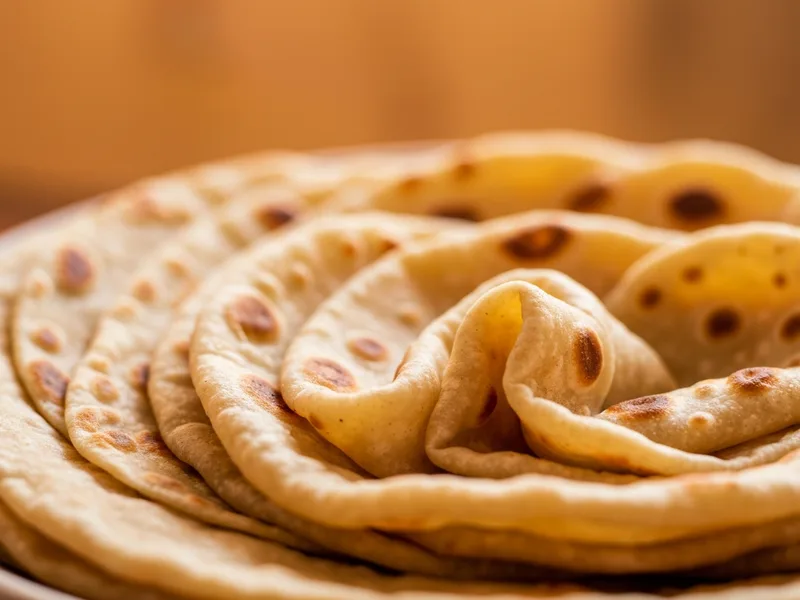
Rumali Roti is a traditional Punjab Pakistani dish. Rumali Roti is a paper-thin, silky flatbread folded like a handkerchief — 'rumal' literally means handkerchief in Urdu. It's the bread of grand restaurants, wedding banquets, and show-offs, because watching a skilled cook stretch it paper-thin and slap it onto an inverted karahi is genuinely theatrical. At home, it's more achievable than it looks and absolutely worth the effort.
Rumali Roti has roots in Mughal court cuisine, where thin, elegant breads were considered refined and sophisticated — a contrast to the sturdy rotis of everyday folk.
The bread is traditionally cooked on an inverted wok held over a flame — a technique that limits the cooking to a few seconds per side. The bread is cooked on the convex underside of a karahi (wok) or tawa, which allows it to drape and cook without wrinkling. The technique of stretching the dough by hand — flipping it in the air like a pizza chef — is how it gets its almost translucent thinness. At home, rolling it extremely thin with a belan works just as well and produces no less delicious results. The key is a very soft, well-rested dough.
Ingredients
Instructions
- MIX AND KNEAD THE DOUGH: In a large bowl, combine maida, atta, and salt. Add the oil and rub it into the flour with your fingertips until the flour looks like damp sand — this coats the flour proteins and makes the dough extensible rather than elastic. Then add warm milk (or water) gradually, bringing the dough together and kneading for 8–10 minutes. WHY: This is the most important step. The dough must be very soft — softer than naan dough, much softer than chapati dough. It should feel like earlobe-soft when you press it. If it springs back sharply, it needs more kneading. FUN FACT: The oil in the dough is what makes it stretchable without tearing. It shortens the gluten strands slightly, allowing them to extend without snapping.
- REST THE DOUGH — PROPERLY: This is non-negotiable. Divide the dough into 4 balls, brush with a tiny bit of oil, cover with a damp cloth, and rest for AT LEAST 30 minutes. 45–60 minutes is better. WHY: Gluten is elastic when you first knead it — the dough wants to spring back. Resting lets the gluten strands relax and makes the dough pliable enough to stretch paper-thin without tearing. Skip this step and you'll be fighting your dough the entire time.
- PREPARE THE COOKING SURFACE: Place a heavy karahi (wok) or large tawa upside down on the stove over medium-high heat. Let it heat for 3–4 minutes until very hot. The roti will be draped over the convex underside of the karahi to cook. WHY: The inverted surface allows the extremely thin roti to cook flat and evenly without wrinkling or bunching, which would happen if it were placed concave-side down. HINT: If you don't have a karahi large enough, a large inverted tawa or the flat underside of a heavy frying pan works.
- ROLL THE ROTI THIN: On a very lightly floured chakla (rolling board), take one rested dough ball and begin rolling with your belan (rolling pin). Roll, rotate, roll, rotate — working from the centre outward. You are aiming for a very large, very thin circle — around 10–12 inches in diameter, and thin enough that you can almost see your hand through it when you hold it up. HINT: Dust the board with flour sparingly — too much flour will make the roti slide around and prevent you from getting it thin enough. HINT: If it tears, pinch the tear closed with wet fingers and roll gently over the patched area.
- TRANSFER TO THE INVERTED KARAHI: This is the nerve-wracking part. Loosely roll the thin roti around your belan (like a scroll), then carry it over to the inverted karahi and unroll it over the convex surface. Work quickly — the roti shouldn't sit uncooked on the hot surface for long. Alternatively, pick it up carefully with both hands and drape it over. FUN FACT: Professional rumali roti makers stretch the dough by spinning it above their head like a pizza — the centrifugal force does the thinning work. It takes years to learn but is absolutely spectacular to watch at a wedding.
- COOK: The roti cooks fast — 30 to 45 seconds per side on a properly preheated surface. The top side will look dry and slightly blistered. Lift an edge with chimta (tongs) to check the underside — it should have golden-tan patches. Flip by grabbing an edge with the chimta and folding it back over. Cook another 20–30 seconds on this side. WHY: Because the roti is so thin, it needs almost no cooking time. Overcooking will make it brittle and dry.
- FOLD AND SERVE: Remove from the surface and fold into quarters — like a handkerchief. This is where the roti gets its name: rumal (handkerchief). The folded square is the traditional way to serve it. Brush lightly with ghee if desired, though it's also beautiful plain.
Essential for This Recipe
As an Amazon Associate, we earn from qualifying purchases
Pure Ghee (Clarified Butter)
The authentic cooking fat for Pakistani dishes — adds rich flavor that oil can't match
Chef's Secrets
- The longer you rest the dough, the thinner you can roll it. If you're struggling to get it thin, rest it another 15 minutes and try again.
- Brush the roti stack with ghee and wrap in foil to keep them soft and pliable for up to 30 minutes.
- For a restaurant-style finish, sprinkle a pinch of kalonji (nigella seeds) on the dough before the final roll.
- If your roti is tearing constantly, your dough is too firm (not enough rest) or you're rolling too aggressively. Gentle, patient rolling is the key.
Common Questions
How long does Rumali Roti take to make?
Total time is 1h 15m — 1h prep and 15m cooking.
How many servings does this recipe make?
This recipe makes 4 servings, and is rated hard difficulty.
Which region of Pakistan is Rumali Roti from?
Rumali Roti is from Punjab, Pakistan — one of the country's most distinctive culinary traditions.
What do you serve with Rumali Roti?
Classically paired with rich Mughal-style gravies: butter chicken, nihari, shahi korma, or dal makhani. The thin, pliable bread is perfect for scooping and wrapping. Also wonderful as a wrap with seekh kebab, sliced onion, and green chutney — roll it up and eat it standing over the plate like nature intended.
Goes Well With
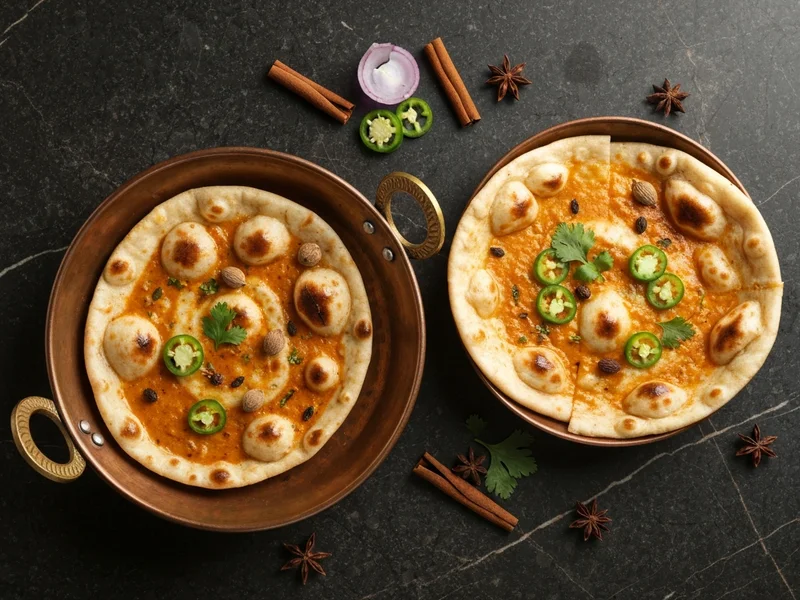
Butter Naan (Home Tawa Method)
Soft, pillowy butter naan made at home on a tawa (flat griddle) — no tandoor required. Brushed with makhan (butter) the moment it comes off the heat, this leavened flatbread is the perfect vehicle for any Pakistani curry.
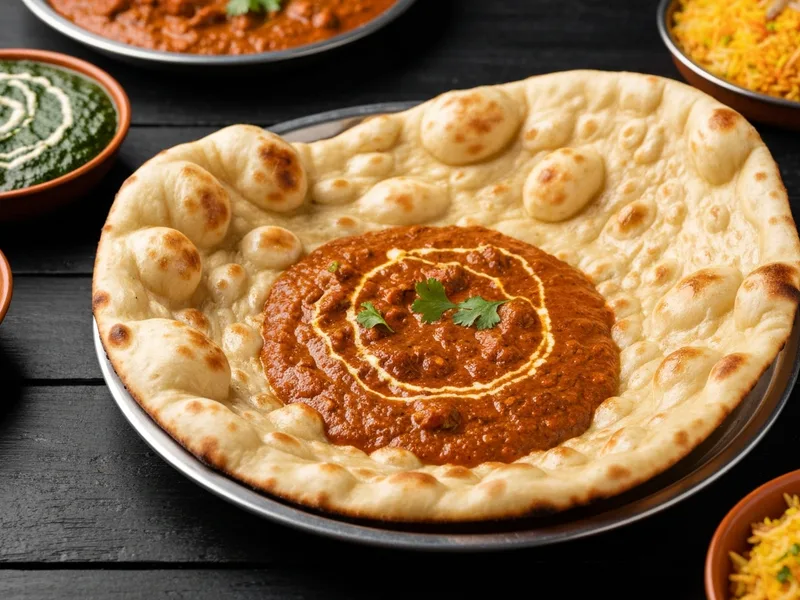
Roghni Naan
Roghni Naan is the Rolls-Royce of Pakistani bread — leavened, egg-enriched, oil-glossed, and studded with sesame and nigella seeds, baked until golden and billowy. It is the bread that makes any meal feel like a celebration, and once you've baked your own, the bakery version will never quite measure up.
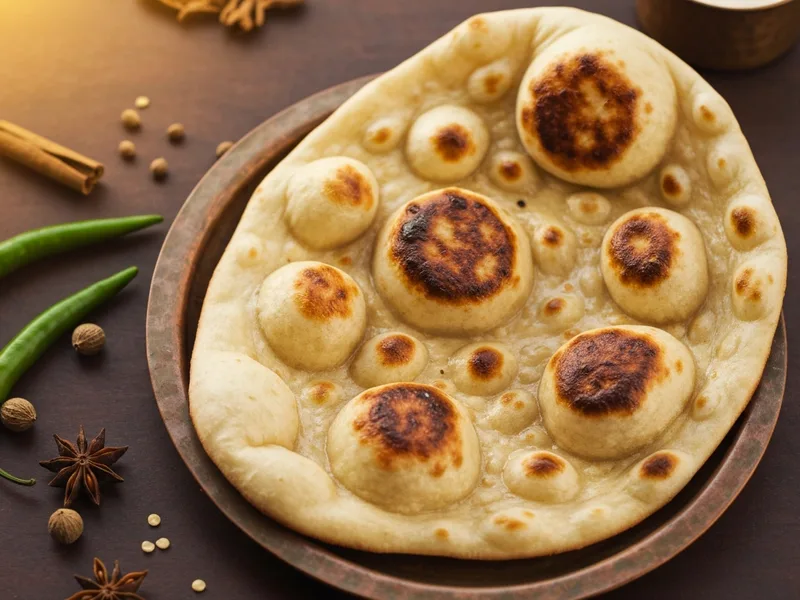
Garlic Naan
Garlic Naan takes everything great about a classic leavened naan and then — at the very last second — hits it with raw garlic butter and fresh coriander that cook against the bread's scorching heat. It is aggressively good, impossible to stop eating, and ready in under 10 minutes of baking.
Cite This Recipe
Writing about Pakistani food? Use these ready-made citations.
<a href="https://pakistani.recipes/recipes/garlic-naan/garlic-naan/">Garlic Naan</a> — Pakistani Recipes
Ahmed Khan. "Garlic Naan." Pakistani Recipes, 2024. https://pakistani.recipes/recipes/garlic-naan/garlic-naan/
Ahmed Khan. (2024). Garlic Naan. Pakistani Recipes. Retrieved 2026-07-20, from https://pakistani.recipes/recipes/garlic-naan/garlic-naan/
What Cooks Are Saying
The instructions are so clear and easy to follow. Came out perfectly first try.