
Punjab cuisine
Sarson Ka Saag
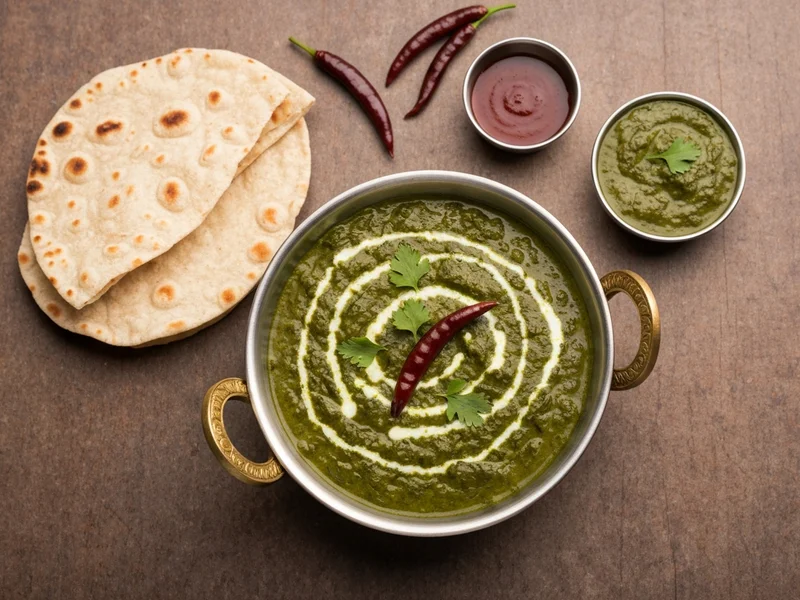
Sarson Ka Saag is a traditional Punjab Pakistani dish. Sarson Ka Saag is Punjab's winter soul food — slow-cooked mustard greens with spinach and spices, finished with ghee-fried garlic and served with makki ki roti (cornbread). A dish so tied to Punjabi identity that it's practically a passport.
In Punjab, when sarson (mustard greens) start appearing in the bazaars, something shifts. Wood fires get lit, daigs (large pots) come out, and saag starts simmering.
The mustard gave the saag, the corn gave the roti, and ghee from the family buffalo made it a meal. Today it's an aspirational comfort food for the diaspora and a seasonal ritual at home. The secret is that the greens must be slow-cooked — not quick-wilted. You want them to lose their rawness completely, develop a slight earthiness, and surrender their bitterness to something mellow and deeply savoury. This takes time. That's the point.
Ingredients
Instructions
- PREP THE GREENS: Wash the sarson (mustard greens), palak (spinach), and methi (fenugreek) thoroughly in several changes of water — leafy greens carry a lot of grit. Roughly chop everything, removing any thick stems from the sarson (stems take too long to cook). Chop the onions, tomatoes, and green chillies. WHY: The prep work here determines the final texture of your saag. Too-thick stems will remain chewy even after an hour of cooking. Roughly chopped leaves cook more evenly than thinly sliced ones and maintain more green colour.
- SLOW COOK THE GREENS: In a large degh (heavy-bottomed pot), add all the washed greens, one chopped onion, the tomatoes, green chillies, adrak-lehsan paste, lal mirch powder, haldi (turmeric), and namak (salt). Add 1 cup of water and stir everything together. Bring to a boil over high heat, then reduce to low heat. Cover and cook for 45-60 minutes, stirring every 10-15 minutes. FUN FACT: Traditional Punjabi saag is cooked in a sealed clay pot (matka) over a wood fire for 2-3 hours — the earthen flavour is irreplaceable but impractical. The covered pot on low heat is the closest home approximation. As the greens cook, they'll release water and shrink dramatically — this is correct.
- BLEND AND THICKEN: Once the greens have cooked down and the mixture smells deep and earthy (not raw), use a hand blender directly in the pot or a potato masher to partially blend the saag. WHY: You want a rough, textured consistency — not a smooth puree and not chunky leaves. Think 'rustic porridge' texture. Blend about 70% and leave the rest chunky. Now mix the makki ka atta (cornmeal) with 4 tbsp water into a lump-free paste and stir it into the saag. Cook on medium heat, stirring continuously, for 5-7 minutes until the saag thickens. HINT: If the cornmeal paste has lumps, strain it through a small sieve before adding — lumpy saag is not a vibe.
- BHUNNA (COOK THE MASALA): In a separate karahi (wok), heat 2 tablespoons of ghee over medium-high heat. Add the remaining finely chopped onion and fry for 10-12 minutes until deep golden brown — not pale yellow, not black, but a rich amber. Add 1 tbsp adrak-lehsan paste and fry for 2 minutes until the raw smell is gone. Pour this bhunned masala (fried spice paste) into the saag pot and stir through. HINT: This step is what separates great saag from good saag — the fried onion-garlic paste adds a caramelised sweetness and body that raw-cooked onions in the pot cannot provide. Don't skip it to save time.
- FINAL TARKA (TEMPERING): This is the finishing flourish. Heat the remaining 2 tablespoons of ghee in a small pan until shimmering hot. Add the thinly sliced lehsan (garlic) — they will sizzle and turn golden in about 60-90 seconds. The moment they turn faintly golden (not brown), add the whole lal mirch (dried red chillies). They will blister and crackle — a wonderful sound. Immediately pour this entire sizzling tarka over the saag in the serving bowl. Do not stir it in — let it pool on top. WHY: The dramatic sizzle of hot ghee hitting the saag releases volatile aromatics from both the ghee and the greens simultaneously. This is both flavour and theatre. The crispy garlic on top adds textural contrast to the soft saag.
- SERVE HOT: Place the saag in a wide clay or metal serving bowl with the ghee tarka pooled on top. Serve immediately with freshly made makki ki roti (cornbread), a pat of white butter (makhan) on the side, and sliced raw onions with lemon. The correct way to eat saag: tear off a piece of hot makki ki roti, press it against the saag to scoop up a thick amount including some of the ghee from the surface, eat in one unhurried bite. A glass of lassi (buttermilk) is the perfect accompaniment. Winter in Punjab, distilled into a meal.
Chef's Secrets
- The longer saag cooks, the better it tastes — 45 minutes is the minimum, 90 minutes is ideal. If you have the time and patience, the bitterness of mustard greens completely transforms into mellow earthiness.
- Frozen mustard greens (available at Indian and Pakistani grocery stores year-round) are a legitimate substitute in the diaspora. Defrost and drain well before using — excess water will make the saag too thin.
- For the most authentic flavour: finish with a large spoonful of white makhan (unsalted homemade butter) stirred into the saag right at serving. This is how it's done in Punjabi homes, not in restaurants.
- Saag freezes beautifully — make a large batch and freeze in portions. Reheat from frozen with a splash of water. The flavour actually improves after freezing, as with most long-cooked dishes.
- If you don't have makki ka atta (cornmeal) for thickening, substitute with a heaped tablespoon of besan (gram flour) mixed with water — it gives slightly different flavour but achieves the same body.
Common Questions
How long does Sarson Ka Saag take to make?
Total time is 1h 35m — 20m prep and 1h 15m cooking.
How many servings does this recipe make?
This recipe makes 6 servings, and is rated medium difficulty.
Which region of Pakistan is Sarson Ka Saag from?
Sarson Ka Saag is from Punjab, Pakistan — one of the country's most distinctive culinary traditions.
What do you serve with Sarson Ka Saag?
Serve hot with makki ki roti (cornbread) and white makhan (butter). Side of raw sliced onions, green chillies, and lemon. Lassi on the side. Traditionally a winter lunch dish but served year-round in Punjabi restaurants.
Goes Well With
Paalak Gosht
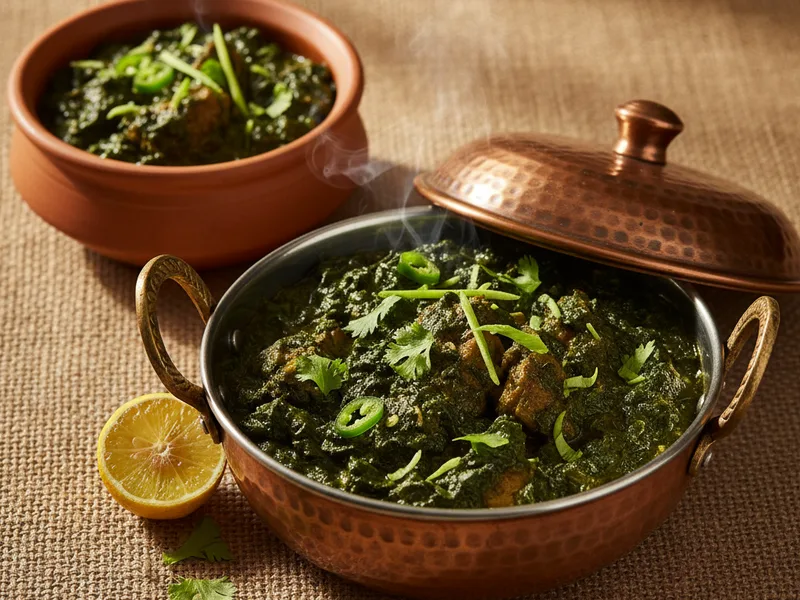
Paalak Gosht is a luxurious Punjabi curry of tender mutton slow-cooked in a vibrant spinach gravy, fragrant with whole spices and enriched with cream. Nutritious never tasted this indulgent.
Methi Gosht
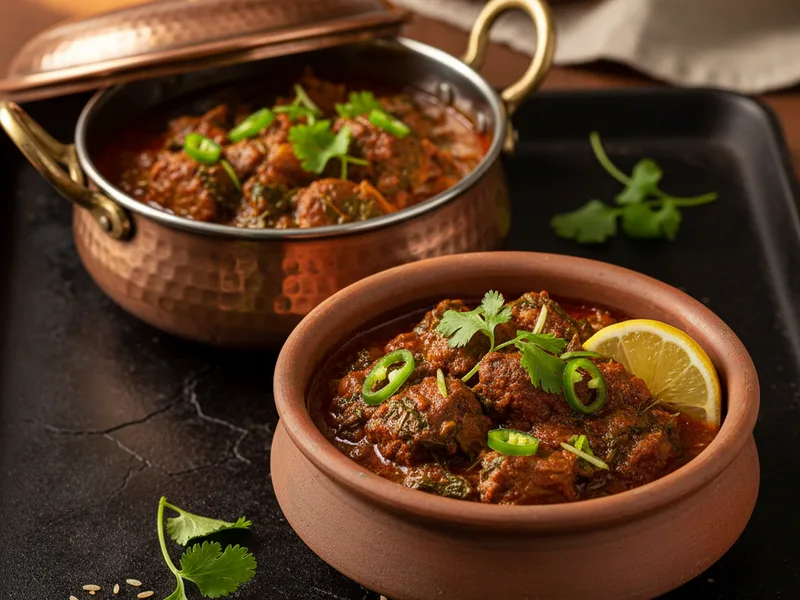
Methi Gosht is a distinctive Punjabi curry where the pleasantly bitter fenugreek leaves transform tender mutton into an aromatic, complex dish unlike any other. An acquired taste that becomes an obsession.
Bathua Saag
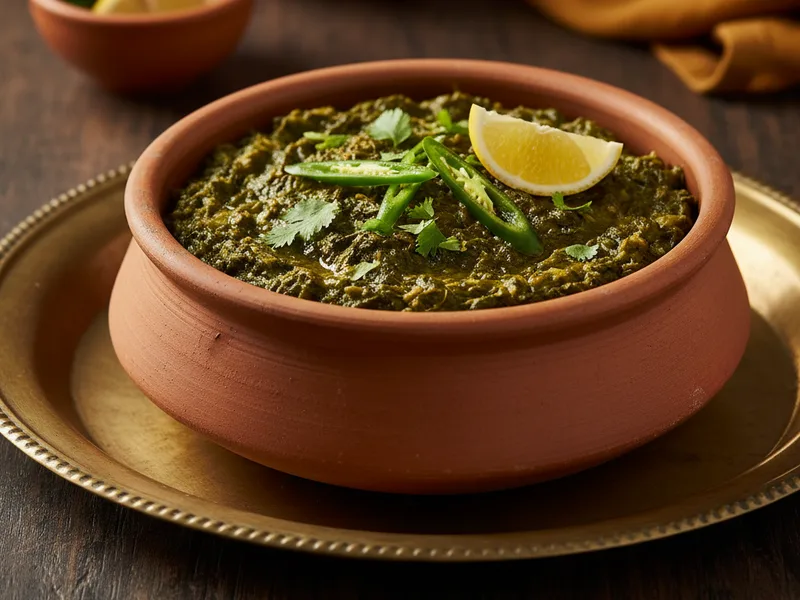
Bathua Saag is a rustic, seasonal Punjabi green made from lamb's quarters — a wild leafy green with an earthy, slightly tangy flavour that makes it one of winter's most beloved vegetables.
What Cooks Are Saying
This recipe is a keeper. Followed it exactly and it turned out perfect.
Made this last weekend and the whole family loved it. Will definitely make again.
Leave a Review
Tried this recipe? Share your experience — your review helps other cooks.