
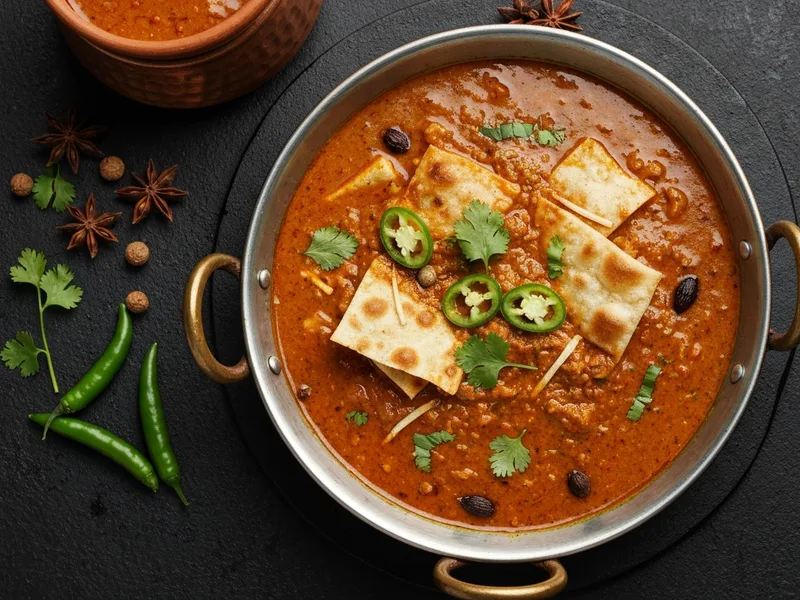
Sindh cuisine
Seyal Maani (Sindhi Leftover Roti in Spiced Gravy)
Seyal Maani (Sindhi Leftover Roti in Spiced Gravy) is a traditional Sindh Pakistani dish. Torn pieces of day-old roti slow-cooked in a rich tomato-onion gravy until they absorb every drop of spiced masala and transform into a unified, comforting dish with soft centres and slightly crispy edges. This is Sindhi genius: turning yesterday's bread into today's showstopper. Once you try it, you'll deliberately make extra roti just to have seyal maani the next morning.
Seyal Maani is a testament to Sindhi culinary wisdom — the principle that nothing goes to waste and everything has potential.
It reflects the Sindhi farming culture's absolute prohibition on wasting bread, which was considered sacred as a staple food. 'Seyal' means to cook with water or liquid, and 'maani' is the Sindhi word for bread or roti. This is one of the oldest dishes in the Sindhi canon, born of necessity in households where bread was made fresh every day and yesterday's batch needed to be used up. What makes it remarkable is the transformation — the torn roti pieces swell with the tomato-onion gravy, absorb the whole spice aromas, and become something completely new. The dish exists on a spectrum: add more liquid and you get a soft, almost pilaf-like texture; add less and the edges of the roti crisp up in the pan, giving you contrasting textures. Both versions have their devoted fans.
Ingredients
Instructions
- TEAR THE ROTI: Take your day-old rotis and tear them by hand into rough, irregular pieces — aim for pieces that are about 2–3 inches in size. Don't use scissors or a knife; the rough torn edges help the roti absorb the gravy better than clean-cut edges. Set the torn pieces aside. HINT: Rotis that are 1–2 days old are ideal. If your roti is still fresh and soft, spread the pieces on a tray and leave uncovered for a few hours, or dry in a low oven (100°C) for 15 minutes until slightly stiff. Completely fresh, soft roti will go mushy and lose all texture.
- FRY THE ONIONS: Heat 4 tbsp of oil in a wide karahi (wok) or handi (pot) over medium-high heat. Add the zeera (cumin seeds) — they should crackle immediately. Add the thinly sliced pyaz (onions) and spread them out in the pan. Cook, stirring every minute or two, for 12–15 minutes until the onions are deeply golden brown, almost the colour of caramel. WHY: Deeply caramelised onions are the flavour backbone of the gravy. Under-cooked, pale onions give a sweet, raw taste. You want them mahogany brown and slightly sticky. This takes patience — don't rush it by turning the heat up, or they'll burn.
- ADD AROMATICS AND SPICES: Add the crushed lehsun (garlic) and adrak (ginger) to the golden onions. Stir-fry for 1–2 minutes until the raw garlic smell disappears and you can smell a toasty, sweet aroma. Add the chopped tamatar (tomatoes) and slit hari mirch (green chillies). Stir everything together. Add haldi, lal mirch powder, dhania powder, and namak. Stir the masala well. Cook on medium heat for 8–10 minutes, stirring regularly, until the tomatoes have completely broken down, the masala has darkened, and you can see oil beginning to separate and rise around the edges of the masala. FUN FACT: The moment when oil separates from the masala is called 'bhuno' — it means the masala is properly cooked and the raw flavour of the spices is gone. This is one of the most important signs in Pakistani cooking.
- ADD WATER: Pour 1 to 1.5 cups of water into the masala (use 1 cup for crispier maani, 1.5 cups for softer maani). Stir and bring to a boil. Taste the gravy — it should be well-seasoned and slightly tangy from the tomatoes. Adjust salt if needed.
- ADD THE ROTI: Add all the torn roti pieces to the bubbling gravy. Using a chamcha (ladle) or a spatula, gently press and fold the roti pieces into the gravy — you want every piece to be coated and to start absorbing the liquid. Don't stir too aggressively or the roti will completely disintegrate. Reduce heat to medium-low. Cover with a lid and cook for 8–10 minutes.
- THE FINISHING STAGE: Remove the lid and check the maani. The roti should have absorbed most of the liquid and be swollen, soft, and deeply flavoured. If you want crispy edges (highly recommended), increase the heat to medium-high, spread the maani in an even layer in the pan, and let it cook undisturbed for 3–4 minutes. You'll hear a sizzling sound. The bottom layer will develop crispy, slightly charred edges — these are the best bites. HINT: Some people cover the karahi with a tight lid and put it on a tawa (flat griddle) over the lowest heat for 10 minutes as a final dum (steam) — this gives an incredibly aromatic, unified texture. Both methods work beautifully.
- SERVE: Scatter fresh hara dhania (coriander) generously over the top and add a few slit green chillies for colour. Serve directly from the karahi at the table. Put lemon wedges on the side for squeezing. Eat hot — seyal maani does not wait gracefully. WHY: The lemon squeeze at the table is important — it adds brightness and cuts through the richness of the oil and spices, making each bite feel fresh.
Chef's Secrets
- The type of roti matters. Thick, whole-wheat rotis or parathas hold up better than thin, delicate ones which can turn to mush.
- If you don't have leftover roti, make fresh roti and leave it uncovered overnight. It dries out perfectly by morning.
- A splash of yoghurt stirred into the masala before adding the roti adds a lovely tanginess and creamy depth — try it.
- Seyal maani is equally delicious made with leftover pita bread or even stale naan in a pinch.
- The dish reheats beautifully — add a splash of water, cover, and heat on low. The second day version is arguably even better.
- Sindhi tempering technique: add mustard seeds and curry leaves to the hot oil BEFORE the onions or garlic. They should crackle and pop within 30 seconds. This is what distinguishes Seyal Maani from a generic leftover-roti curry — the Sindhi tadka base.
- Methi variation: the green masala version is equally authentic — blend coriander, methi (fenugreek) leaves, green chillies, and garlic into a coarse paste, spread on the rotis, tear, and cook. This is the version many Karachi Sindhis know as Seyal Maani with Methi, documented on multiple Sindhi food sites.
- Sindhi tempering technique: add mustard seeds and curry leaves to the hot oil BEFORE the onions or garlic. They should crackle and pop within 30 seconds. This is what distinguishes Seyal Maani from a generic leftover-roti curry — the Sindhi tadka base.
- Methi variation: the green masala version is equally authentic — blend coriander, methi (fenugreek) leaves, green chillies, and garlic into a coarse paste, spread on the rotis, tear, and cook. This is the version many Karachi Sindhis know as Seyal Maani with Methi, documented on multiple Sindhi food sites.
Common Questions
How long does Seyal Maani (Sindhi Leftover Roti in Spiced Gravy) take to make?
Total time is 45m — 10m prep and 35m cooking.
How many servings does this recipe make?
This recipe makes 4 servings, and is rated easy difficulty.
Which region of Pakistan is Seyal Maani (Sindhi Leftover Roti in Spiced Gravy) from?
Seyal Maani (Sindhi Leftover Roti in Spiced Gravy) is from Sindh, Pakistan — one of the country's most distinctive culinary traditions.
What do you serve with Seyal Maani (Sindhi Leftover Roti in Spiced Gravy)?
Serve as a hearty breakfast or light dinner. A fried egg on top turns it into a complete meal. A glass of cold lassi on the side is the perfect companion.
Goes Well With
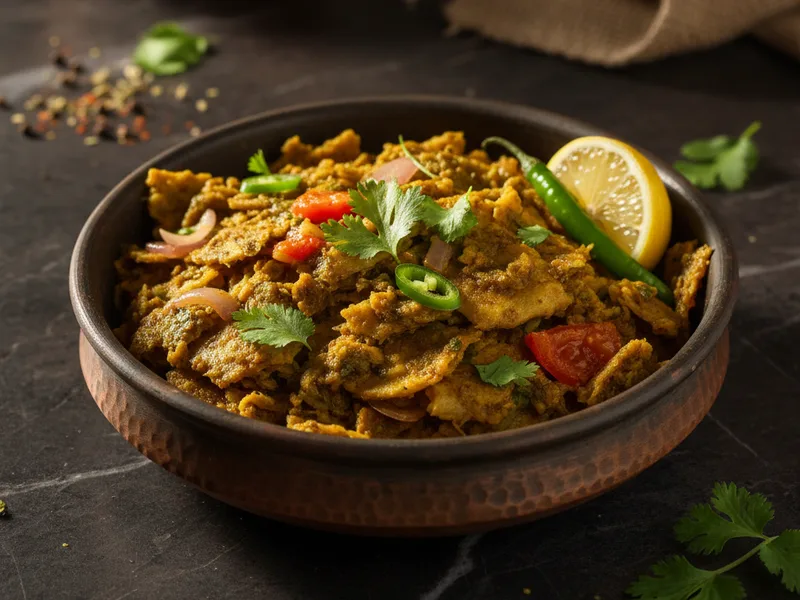
Seyal Maani Lahori
Seyal Maani is Sindh's brilliant solution to leftover bread — day-old roti or chapati braised in a richly spiced onion-tomato masala until it transforms into a deeply savoury, comforting one-pan meal.
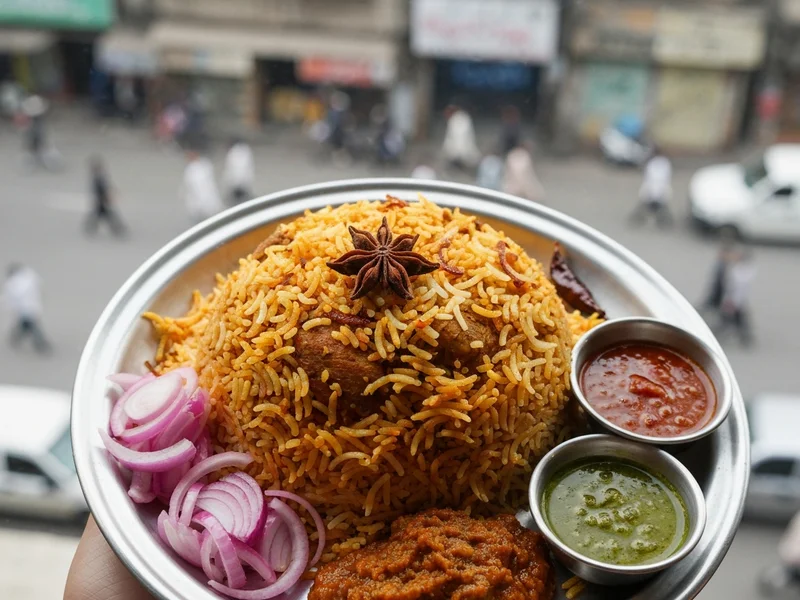
Authentic Karachi Biryani
The iconic Karachi-style biryani — fiery, tangy, loaded with potatoes and prunes. Born in the streets of Karachi, perfected by generations of Muhajir cooks.
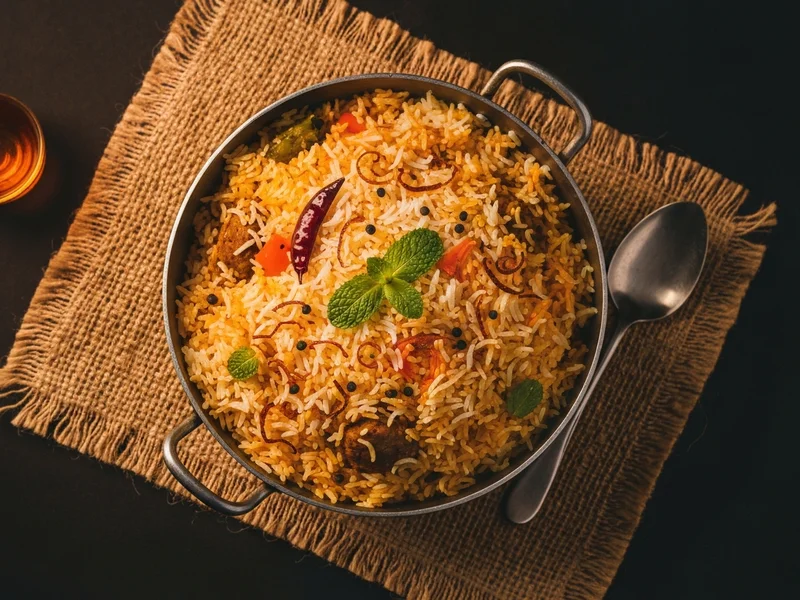
Hyderabadi Biryani
The kacchi biryani of Hyderabad, Sindh — raw marinated meat layered with parboiled rice, sealed, and slow-cooked until every grain absorbs the masala. No pre-cooking the meat.
What Cooks Are Saying
This recipe is a keeper. Followed it exactly and it turned out perfect.
Really enjoyed this. Leftovers tasted even better the next day.
Turned out well. I used boneless meat which changed the cook time slightly but flavour was great.
Leave a Review
Tried this recipe? Share your experience — your review helps other cooks.