
Punjab cuisine
Sheermal
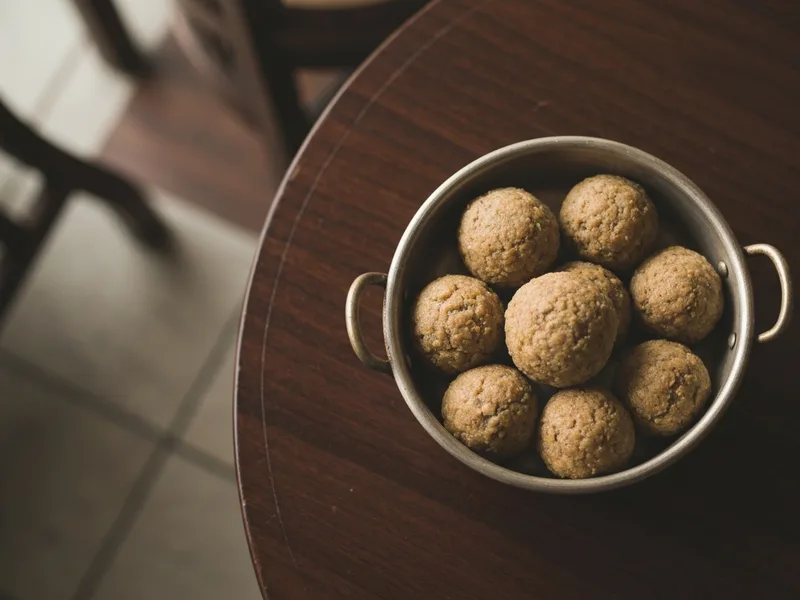
Sheermal is a traditional Punjab Pakistani dish. Sheermal is a royal saffron flatbread from Mughal kitchens — slightly sweet, impossibly fragrant, and golden enough to look like it was baked by the sun itself. The dough is enriched with milk, ghee, and saffron, then pricked all over before baking so it stays flat and tender rather than puffing up.
The name sheermal comes from the Persian 'sheer' meaning milk and 'maal' meaning rubbed — literally, milk-rubbed bread.
It was a bread of the Mughal and Nawabi courts of Lucknow, brought to Lahore and adopted as a festive bread for Eid and weddings. This bread travelled from Lucknow's Mughal-era kitchens into Lahore and the cities of undivided Punjab, where it became a staple at weddings and Eid celebrations. In old Lahore, sheermal shops would open only during Ramadan and festive seasons, when demand was high enough to justify the expense of saffron. Today it is made year-round, but it still carries that air of occasion — something about its golden colour and delicate sweetness signals that this is not ordinary bread. Sheermal pairs beautifully with rich nihari or rogan josh, where its slight sweetness contrasts the deep spiced gravies.
Ingredients
Instructions
- BLOOM THE SAFFRON: Take 3 tablespoons of the warm milk and place in a tiny bowl. Add all the saffron strands. Leave to steep for at least 15 minutes — ideally 30. Watch the milk turn from white to a vivid orange-gold colour. WHY: Saffron releases its colour and flavour compounds slowly into warm liquid — this is called 'blooming'. Using the saffron milk both in the dough and for brushing after baking gives you a double dose of colour and aroma. FUN FACT: Saffron is the world's most expensive spice by weight — it takes roughly 150,000 flowers to produce just 1 kilogram. The good news: you only need a tiny amount.
- ACTIVATE YEAST: In a small katori, mix 2 tablespoons of the warm milk (not the saffron milk — keep that separate), 1 teaspoon of the sugar, and the yeast. Leave 8 minutes until foamy. HINT: If the milk is too hot (you cannot hold your finger in it comfortably), wait for it to cool — otherwise you will scramble the yeast proteins and it won't activate.
- MAKE THE DOUGH: In a large paraat, mix the flour, remaining sugar, salt, and cardamom powder (if using). Add the activated yeast mixture, the remaining warm milk (not the saffron milk), and half the saffron milk. Add the ghee. Mix and knead for 8–10 minutes. The dough should be medium-soft — softer than bread dough but not as slack as batter. It will be slightly sticky. HINT: Sheermal dough is enriched and a bit stickier than plain naan dough — do not panic and add excessive flour. A slightly sticky dough makes a more tender bread.
- FIRST RISE: Shape into a ball, place in an oiled bowl, cover with a damp cloth, and leave 1–1.5 hours in a warm place until doubled. The dough will smell faintly sweet and milky when it is ready. FUN FACT: The enriched dough (with milk, fat, and sugar) rises slightly more slowly than a lean dough because fat and sugar can slow yeast activity. Patience is a key ingredient in sheermal.
- PREHEAT: Set your oven to 200°C (390°F) — note this is slightly lower than for naan because sheermal's sugar content means it colours faster. Place a baking tray in the oven to preheat for 20 minutes. WHY: Sheermal does not need extreme heat like naan — it should bake slowly to an even golden colour, not char on the outside while raw inside.
- DIVIDE AND SHAPE: Punch down the risen dough. Divide into 6 balls. On a lightly floured chakla, roll each ball out into a thick oval or round about 18–20cm across and 8mm thick. Sheermal is on the thicker side — it should not be thin like a roomali roti. HINT: Try to make the thickness even all over — if it's thin in spots and thick in others, it will bake unevenly.
- PRICK THE SURFACE: Now — and this is the move that makes sheermal sheermal — take a fork and prick the entire surface of each shaped oval all over, in a regular pattern. Make the holes about 1–1.5cm apart. WHY: This prevents the bread from puffing up into a balloon. Sheermal should bake flat and even, with a uniform texture throughout. Without pricking, you would get a bread that puffs randomly and bakes unevenly.
- BRUSH WITH SAFFRON MILK: Before putting the sheermal in the oven, brush the top surface with the remaining saffron milk. The golden colour it gives is the signature look of sheermal. Watch the surface shimmer gold. FUN FACT: Before food colouring was invented, saffron was the only way to achieve this golden colour in breads and sweets. It was used in Mughal court kitchens specifically for its visual impact on dishes presented to the emperor.
- BAKE: Slide the sheermal onto the hot baking tray. Bake at 200°C for 8–12 minutes until golden and cooked through. The surface should look matte-golden with slight variation in colour from the saffron brushing. It should feel firm and dry to the touch, not doughy. Remove from the oven — if you want more colour on top, turn the grill on for 1–2 minutes, watching carefully.
- FINAL SAFFRON BRUSH: As soon as the sheermal comes out of the oven, brush once more with any remaining saffron milk, or with a little ghee if you prefer. This second brush adds depth to the colour and keeps the surface soft. Serve warm — sheermal is also excellent at room temperature, making it ideal for packed lunches or dastarkhwan (dining cloth) spreads.
Essential for This Recipe
As an Amazon Associate, we earn from qualifying purchases
Pure Ghee (Clarified Butter)
The authentic cooking fat for Pakistani dishes — adds rich flavor that oil can't match
Saffron Threads (Zafran)
The luxury spice for biryanis, zarda, kheer, and special occasions — adds golden color and floral elegance
Green Cardamom Pods (Elaichi)
The fragrant heart of biryanis, pulaos, chai, and desserts — use whole pods for best flavor
Chef's Secrets
- If saffron is not available, use a tiny pinch of turmeric (haldi) dissolved in warm milk for colour — the flavour will be different but the colour will be similar.
- Sheermal keeps for up to 2 days wrapped in foil. Reheat by wrapping in damp cloth and warming in the oven at 150°C for 5 minutes.
- For an extra-aromatic version, add 1 tablespoon of kewra water (screwpine extract) along with the saffron milk — it is used in some Lahori shops.
- Do not skip the pricking step — sheermal without fork-holes will puff unevenly and you will end up with sheer frustration, not sheermal.
Common Questions
How long does Sheermal take to make?
Total time is 1h — 30m prep and 30m cooking.
How many servings does this recipe make?
This recipe makes 6 servings, and is rated medium difficulty.
Which region of Pakistan is Sheermal from?
Sheermal is from Punjab, Pakistan — one of the country's most distinctive culinary traditions.
What do you serve with Sheermal?
Serve with nihari, rogan josh, or any rich, deeply spiced meat curry. Also excellent with just a cup of masala chai and a swipe of white butter. Sheermal appears on every proper Lahori wedding dastarkhwan.
Goes Well With
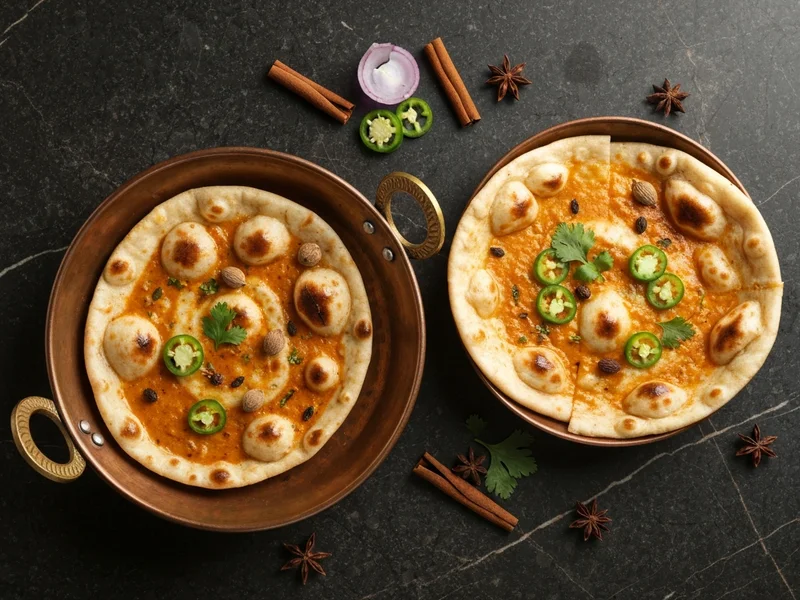
Butter Naan (Home Tawa Method)
Soft, pillowy butter naan made at home on a tawa (flat griddle) — no tandoor required. Brushed with makhan (butter) the moment it comes off the heat, this leavened flatbread is the perfect vehicle for any Pakistani curry.
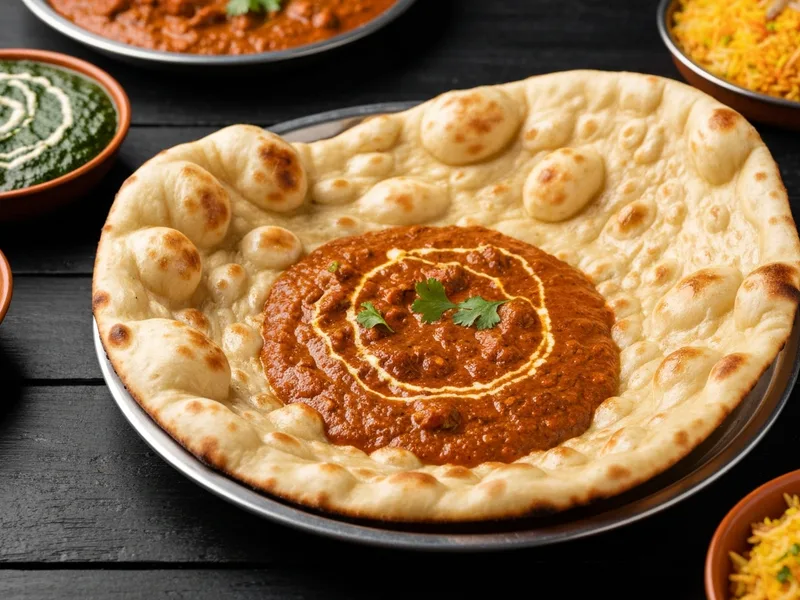
Roghni Naan
Roghni Naan is the Rolls-Royce of Pakistani bread — leavened, egg-enriched, oil-glossed, and studded with sesame and nigella seeds, baked until golden and billowy. It is the bread that makes any meal feel like a celebration, and once you've baked your own, the bakery version will never quite measure up.
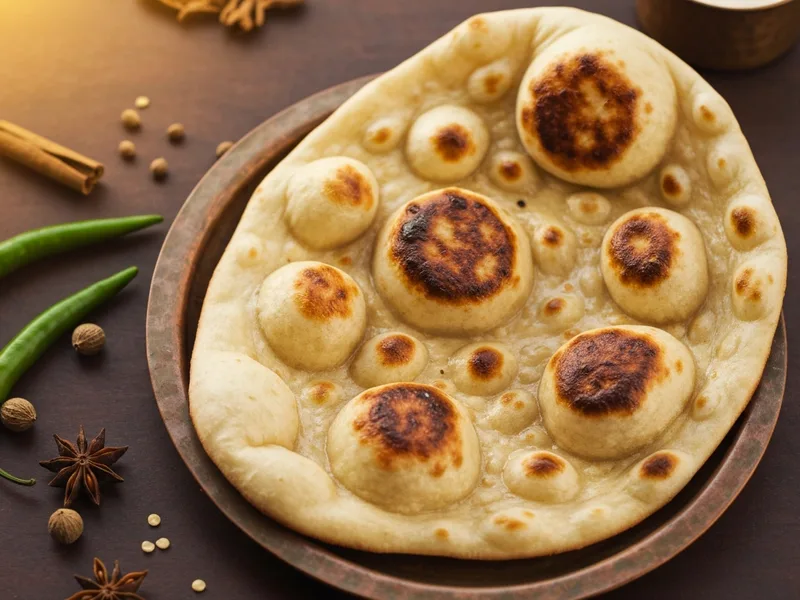
Garlic Naan
Garlic Naan takes everything great about a classic leavened naan and then — at the very last second — hits it with raw garlic butter and fresh coriander that cook against the bread's scorching heat. It is aggressively good, impossible to stop eating, and ready in under 10 minutes of baking.
Cite This Recipe
Writing about Pakistani food? Use these ready-made citations.
<a href="https://pakistani.recipes/recipes/garlic-naan/garlic-naan/">Garlic Naan</a> — Pakistani Recipes
Ahmed Khan. "Garlic Naan." Pakistani Recipes, 2024. https://pakistani.recipes/recipes/garlic-naan/garlic-naan/
Ahmed Khan. (2024). Garlic Naan. Pakistani Recipes. Retrieved 2026-07-20, from https://pakistani.recipes/recipes/garlic-naan/garlic-naan/
What Cooks Are Saying
The instructions are so clear and easy to follow. Came out perfectly first try.