
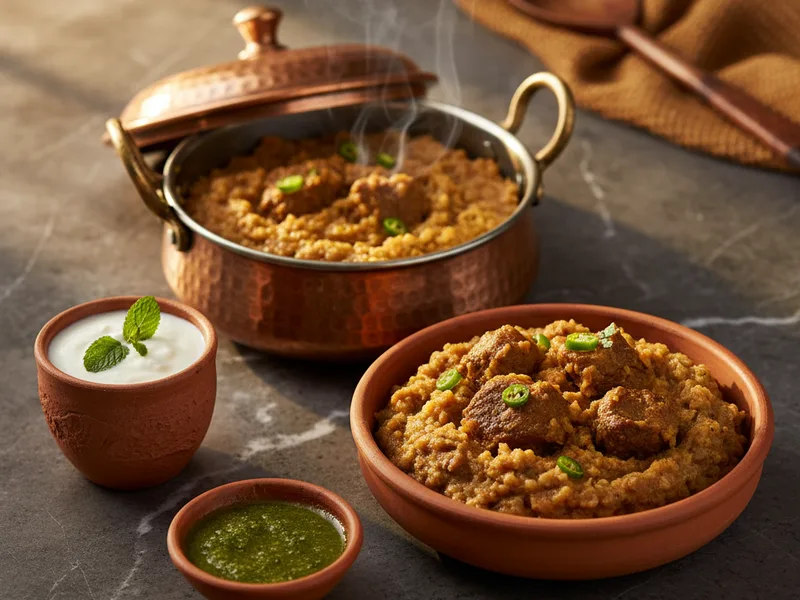
KP cuisine
Pashtun Hareesa — Wheat and Mutton Porridge
Pashtun Hareesa — Wheat and Mutton Porridge is a traditional KP Pakistani dish. KP's ancient wheat-and-mutton slow-cooked porridge — an overnight dish that requires patience but delivers extraordinary depth. Hareesa has been a Pashtun winter breakfast and celebration food for over a thousand years.
Hareesa is the dish that every Pashtun grandmother knows and every food blogger neglects.
It is specifically mentioned in the hadiths as a dish recommended for recovery from illness, and recipes for it appear in the earliest surviving Arabic and Persian cookbooks. It is, at its heart, coarsely ground wheat (gehu dana or gehun) slow-cooked with bone-in mutton for 6-8 hours until both have completely broken down into a thick, porridge-like consistency. The result is greater than the sum of its parts — the wheat and meat proteins fuse into something approaching a savory béchamel infused with deep meat flavor. Served with a tarka (tempering) of caramelized onions and ghee poured tableside, hareesa is the ultimate cold-weather comfort food. Fun fact: Hareesa is believed to have arrived in the Indian subcontinent with Arab and Persian traders over a thousand years ago — the dish appears in records from the Abbasid Caliphate, where it was considered a dish of kings. KP's version is more rustic and robust than the Lebanese harisseh or the Arab hareesa, reflecting the frontier character of the region.
Ingredients
Instructions
- SOAK THE WHEAT: Soak gehu dana in cold water overnight (8-12 hours). Drain before using. This significantly reduces cooking time and ensures even cooking.
- COOK THE MUTTON FIRST: In a large, heavy pot, heat 3 tbsp ghee. Add 2 sliced onions and fry golden. Add ginger-garlic paste and fry 2 minutes. Add mutton with salt, cardamom, cinnamon, and black pepper. Add 4 cups water and cook covered for 60 minutes until meat is completely tender and falling off the bone.
- SHRED THE MEAT: Remove all meat from the pot with a slotted spoon. Remove and discard bones. Shred the meat finely — traditionally mashed with a wooden spoon, not minced. Return shredded meat to the broth.
- ADD THE WHEAT: Add drained soaked wheat to the mutton broth. Add another 4 cups of water. Stir well. Bring to a boil, then reduce to the lowest possible heat.
- SLOW COOK AND STIR: Cook on low heat for 4-6 hours, stirring every 20-30 minutes with a wooden spoon. HINT: The stirring is essential — hareesa will stick and burn without it. As it thickens, stir more frequently. Add water as needed to maintain a thick porridge consistency.
- MASH AND BLEND: When the wheat has completely broken down and the consistency is like thick porridge, use the back of a wooden spoon or a potato masher to mash any remaining wheat grains. The final texture should be smooth but not perfectly uniform — some texture is good.
- MAKE THE TARKA: In a separate pan, heat remaining ghee until hot. Add 1 thinly sliced onion and fry until deep golden-brown. Pour the hot tarka directly over the hareesa at the table for maximum drama.
- SERVE: Ladle into deep bowls. Top with tarka, fresh coriander, and slit green chilies. Serve with naan on the side.
Chef's Secrets
- Hareesa is traditionally a 'fire-and-forget' overnight dish — start it in the evening, stir occasionally, sleep, and wake to a finished breakfast. Reduce heat to minimum and stir before bed.
- A slow cooker/crockpot is excellent for hareesa — cook on low for 8-10 hours. Check and stir every 2 hours.
- The consistency should be thick enough that a spoon stood in it doesn't immediately fall over. If too thin, cook uncovered to evaporate.
- Hareesa vs Haleem: Haleem uses multiple lentils and is heavily spiced. Hareesa is just wheat and meat — purer, less complex in spice but deeper in wheat flavor.
- Leftover hareesa thickens considerably when cold. Reheat with a splash of water and stir well.
Common Questions
How long does Pashtun Hareesa — Wheat and Mutton Porridge take to make?
Total time is 8h 30m — 30m prep and 8h cooking.
How many servings does this recipe make?
This recipe makes 6 servings, and is rated hard difficulty.
Which region of Pakistan is Pashtun Hareesa — Wheat and Mutton Porridge from?
Pashtun Hareesa — Wheat and Mutton Porridge is from KP, Pakistan — one of the country's most distinctive culinary traditions.
What do you serve with Pashtun Hareesa — Wheat and Mutton Porridge?
Serve in deep bowls with ghee tarka poured tableside, fresh coriander, green chilies, and naan. Traditionally eaten for breakfast at weddings — sometimes served for Eid breakfast.
Goes Well With
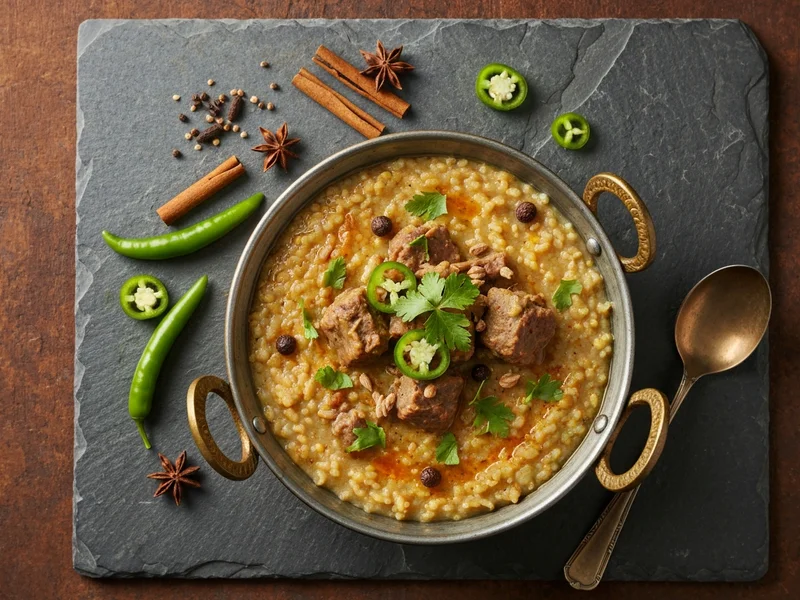
Hareesa — KP Slow-Cooked Wheat and Mutton Porridge
Hareesa is haleem's ancient ancestor — whole wheat berries and mutton slow-cooked together for 4-6 hours until they completely dissolve into a thick, silky, porridge-like dish that is simultaneously humble and extraordinary. Finished with a sizzling ghee tarka poured dramatically over the top, this is the dish that sustained armies, fed pilgrims, and defines winter mornings in KP.
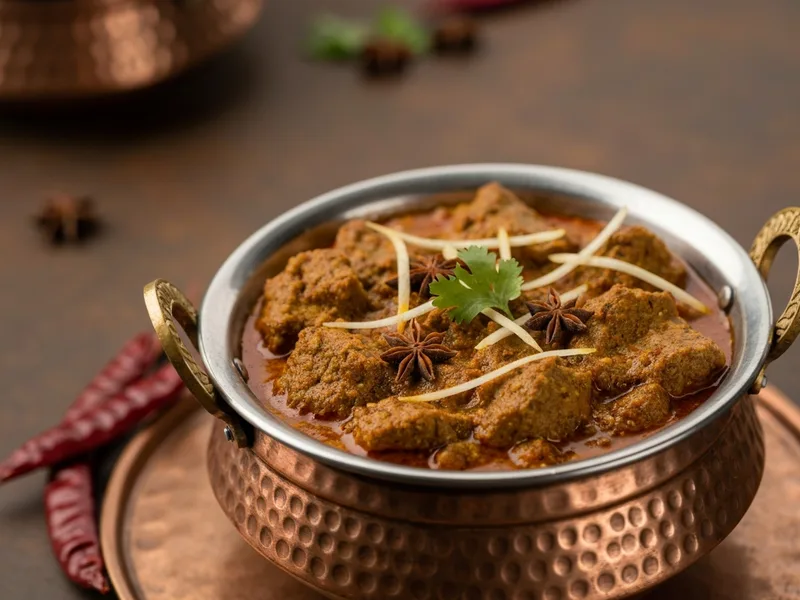
KP Hareesa Gosht
The ancient grain-and-meat porridge of KP — hareesa is simpler than haleem, celebrating wheat and lamb in their most elemental form. Warm, sustaining, and profoundly comforting.
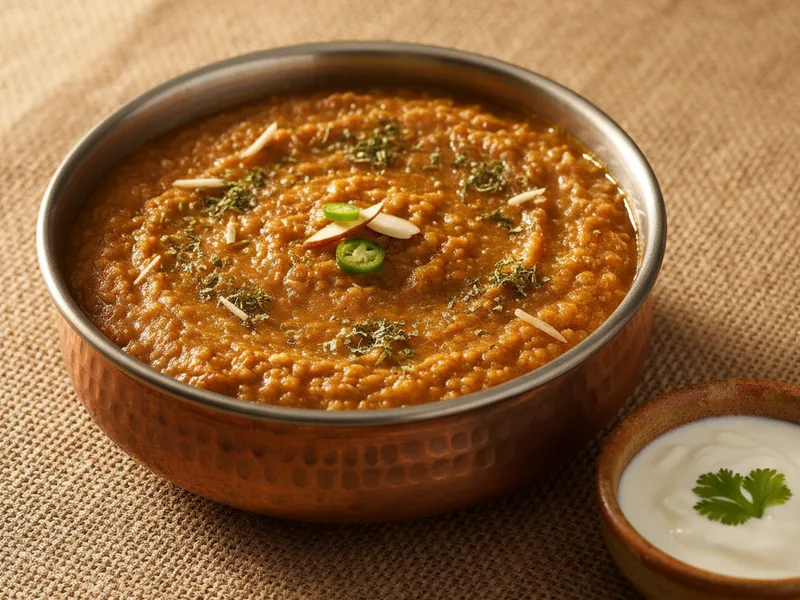
Afghani Hareesa — Cross-Border Style
The Afghan-influenced hareesa popular in Peshawar's Qissa Khwani Bazaar — richer with more ghee, finished with a cinnamon-scented tarka, and reflecting the cross-border culinary exchange that defines this frontier city.
What Cooks Are Saying
Better than the restaurant version. The tips in the recipe really make a difference.
Authentic taste, clear steps. Exactly what I was looking for.
Good recipe, clear instructions. The end result was delicious.
Leave a Review
Tried this recipe? Share your experience — your review helps other cooks.