
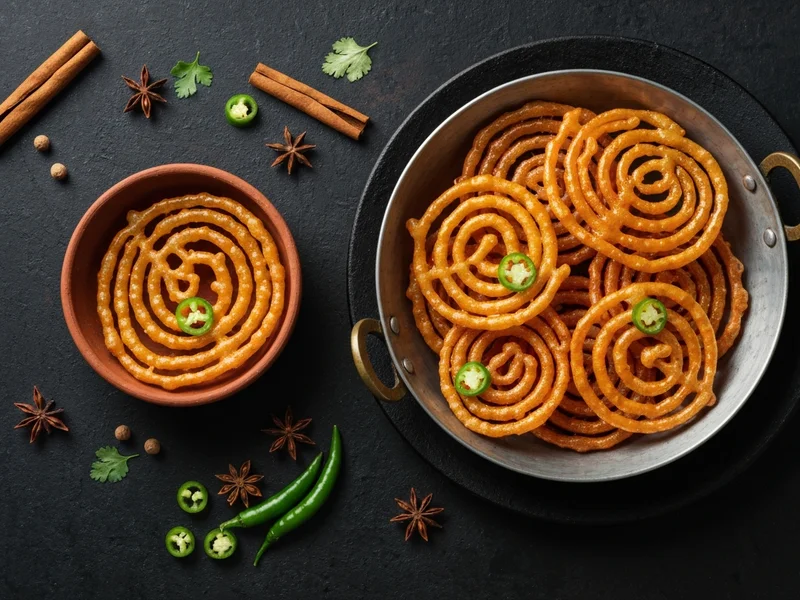
Punjab cuisine
Homemade Jalebi — Crispy Saffron Syrup Spirals
Homemade Jalebi — Crispy Saffron Syrup Spirals is a traditional Punjab Pakistani dish. Jalebi are Pakistan's most theatrical street sweet — crispy, pretzel-shaped rings of fermented batter deep-fried until crackling and immediately dipped into hot saffron-scented sugar syrup. Best eaten scorching hot, sticky fingers and all.
Watching a jalebi halwai (sweet maker) at work is a performance. The batter flows from a cloth piping bag in perfect spirals into hot oil, creating an abstract painting that crackles and crisps in seconds before being swirled straight into a pan of hot syrup.
In Pakistan, jalebi is street food at its finest: sold from giant karahis (woks) at railway stations, bazaars, and outside mosques after Friday prayers. The magic is in eating them immediately — the crispy exterior softens within minutes as the syrup penetrates. This recipe uses a 30-minute yeast ferment instead of the traditional overnight sour ferment, making it doable on the same day.
Ingredients
Instructions
- MAKE THE SYRUP: In a pateela (saucepan), dissolve cheeni (sugar) in pani (water) over medium heat, stirring until completely clear. Add crushed elaichi (cardamom). Bring to a boil, reduce heat, and cook for 8-10 minutes until you reach a one-string consistency. HINT: To test one-string, dip a clean spoon, let it cool slightly, then press a drop between your thumb and index finger and pull apart slowly — it should form a single thread before breaking. Stir in saffron water. Keep the syrup warm on the lowest flame throughout — jalebi must go into hot syrup immediately from the oil.
- MAKE THE BATTER: Sift maida (flour) and cornflour into a bartan (bowl). Add dahi (yoghurt), haldi (turmeric), and instant khameer (yeast). Add warm pani (water) gradually, whisking constantly to eliminate lumps, until you have a smooth batter the consistency of thin pancake batter — it should flow freely from a spoon. HINT: The batter should not be thick like cake batter (jalebi will be too fat and doughy) or thin like water (they won't hold shape). Cover the bowl with a cloth and leave in a warm spot for 30 minutes. After resting, the batter will have tiny bubbles on the surface — that's the yeast working.
- PREPARE YOUR PIPING BAG: Transfer the batter to a piping bag with a small round nozzle (3-4mm opening), or make a DIY version: fill a zip-lock bag and snip a tiny hole in one corner, or use a clean squeeze bottle. HINT: The hole must be small — jalebi should be thin spirals, not fat rings. Practice squeezing one small spiral onto a plate first to feel the pressure needed before going near the hot oil. FUN FACT: Traditional Pakistani halwais use a cloth pouch with a tiny hole, squeezed with years of practiced wrist motion. Don't be hard on yourself if your first few look abstract.
- FRY THE JALEBI: Heat oil in a wide, flat pan (not too deep — 3-4cm of oil) to 180°C (350°F). Test with a drop of batter — it should sizzle and rise immediately. Pipe the batter in overlapping spirals directly into the oil — start from the centre and spiral outward, about 7-8cm diameter. HINT: Move with confidence — hesitation creates blobs, not spirals. Fry for 2-3 minutes, flip once with a chamcha (spoon), and fry another minute. They should be bright orange-gold and completely crispy — they will stop bubbling when ready. Work in batches of 3-4 at a time.
- SOAK IN SYRUP: Lift fried jalebi directly from the oil and immediately submerge in the warm syrup. HINT: The gap between oil and syrup should be under 10 seconds — the thermal contrast between hot jalebi and warm syrup is what makes the syrup penetrate and gives that satisfying crunch. Soak for 30-45 seconds, turning once. You'll hear a faint sizzle as syrup hits the hot jalebi. Remove and place on a wire rack — not a plate — so excess syrup drips off and the jalebi stay crispier longer.
- SERVE IMMEDIATELY: Jalebi must be eaten hot. This is non-negotiable. Pile them on a plate, dust with a few saffron strands, and serve within minutes. The crispy exterior will begin softening after 10-15 minutes as the syrup continues to soak through — which some people prefer, actually (the soft interior, crunchy edges stage is wonderful). HINT: If making for a gathering, fry in batches throughout the meal rather than all at once. Cold jalebi is a tragedy.
Chef's Secrets
- If you have time, skip the yeast and make the batter with just flour, yoghurt, and water — ferment overnight at room temperature for the deepest, most authentic tangy flavour.
- Oil temperature is critical. Too hot = dark outside, raw inside. Too cool = greasy, pale, and limp. Use a thermometer if you have one.
- For perfectly shaped spirals, practice your piping motion on a cutting board first — the muscle memory matters more than the recipe.
- Keep the syrup warm on a very low flame throughout frying. Cold syrup means the jalebi just sit in liquid rather than absorbing it properly.
- A tiny pinch of citric acid (lemon salt) added to the syrup prevents crystallisation and keeps it pourable as it cools.
Common Questions
How long does Homemade Jalebi — Crispy Saffron Syrup Spirals take to make?
Total time is 1h 10m — 40m prep and 30m cooking.
How many servings does this recipe make?
This recipe makes 4 servings, and is rated hard difficulty.
Which region of Pakistan is Homemade Jalebi — Crispy Saffron Syrup Spirals from?
Homemade Jalebi — Crispy Saffron Syrup Spirals is from Punjab, Pakistan — one of the country's most distinctive culinary traditions.
What do you serve with Homemade Jalebi — Crispy Saffron Syrup Spirals?
Eat immediately and eat standing up if necessary — that's the authentic experience. Pair with rabri (thickened sweetened cream) for a classic combination. At breakfast, jalebi with warm milk is a beloved Punjabi tradition. Serve alongside doodh pati chai.
Goes Well With
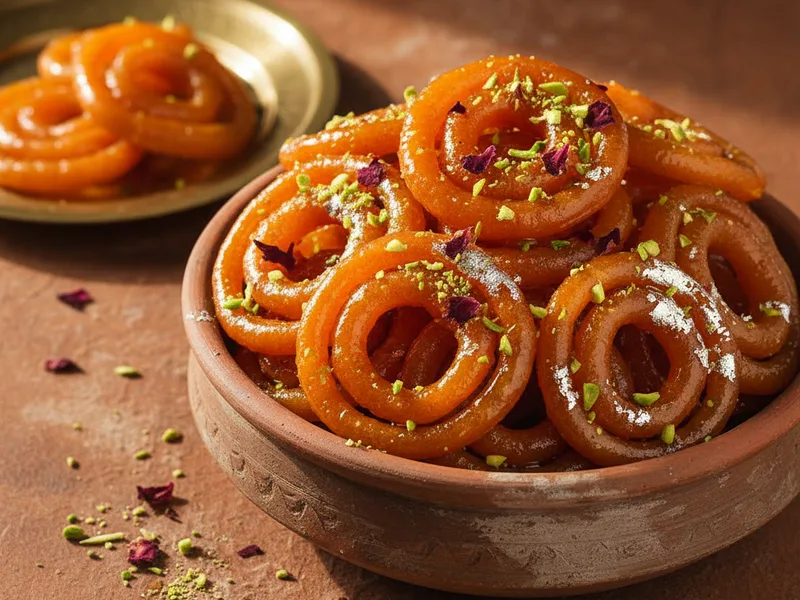
Instant Jalebi — Crispy Homemade in 30 Minutes
Crispy, bright orange instant jalebi made with a quick yeast-free batter that's ready in 15 minutes, piped into hot oil in concentric circles and soaked in saffron-cardamom sugar syrup. Breakfast, snack, or dessert — jalebi never asks for permission.
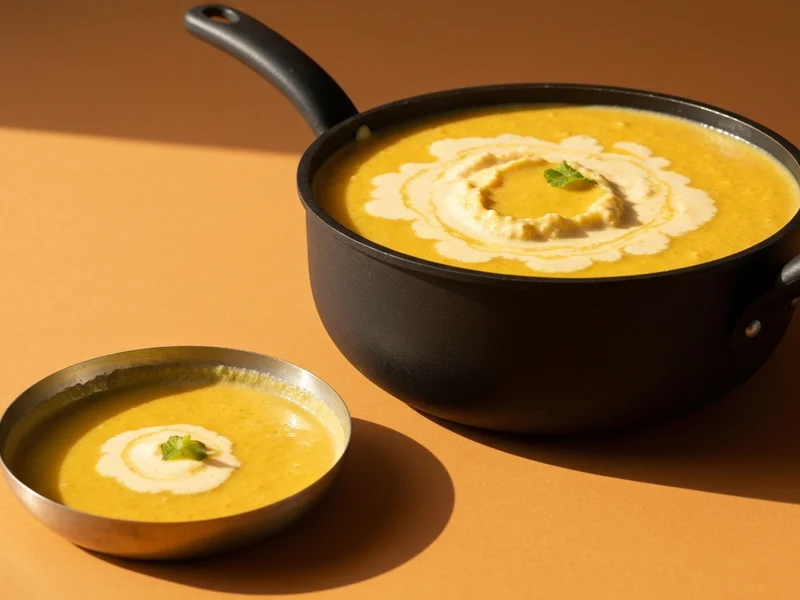
Sheer Khurma
The Eid morning vermicelli pudding — toasted sevaiyan simmered in sweetened milk with dates, pistachios, almonds, and cardamom. No Eid is complete without it.
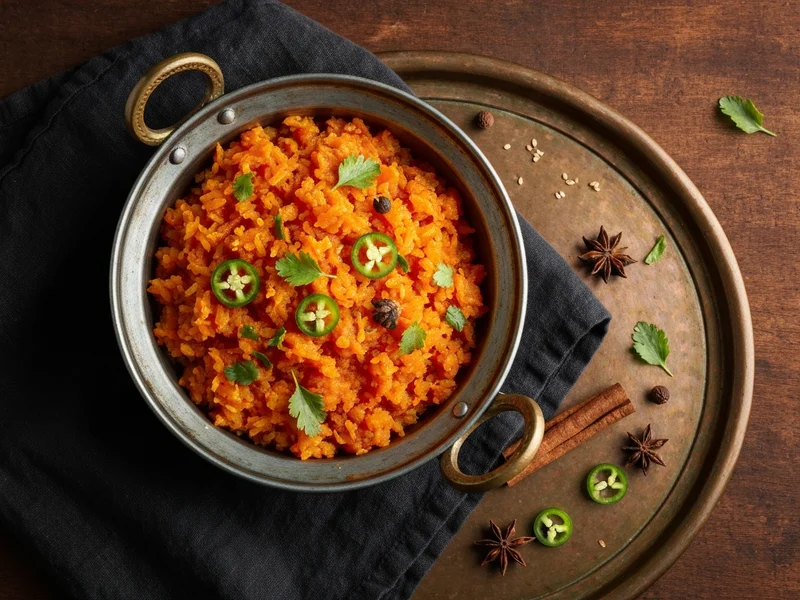
Gajar Ka Halwa — Classic Pakistani Carrot Dessert
Gajar ka halwa is Pakistan's most beloved winter dessert — slow-cooked grated carrots in full-fat milk, sugar, and cardamom, finished with a shower of nuts and a knob of ghee. Rich, aromatic, and impossibly comforting, it turns a humble root vegetable into something genuinely spectacular.
What Cooks Are Saying
Absolutely delicious! The flavours are spot on — tastes just like what I grew up eating.
This recipe is a keeper. Followed it exactly and it turned out perfect.
My husband said it's the best he's ever had. Coming from him that means everything!
Leave a Review
Tried this recipe? Share your experience — your review helps other cooks.