
Punjab cuisine
Traditional Rabri
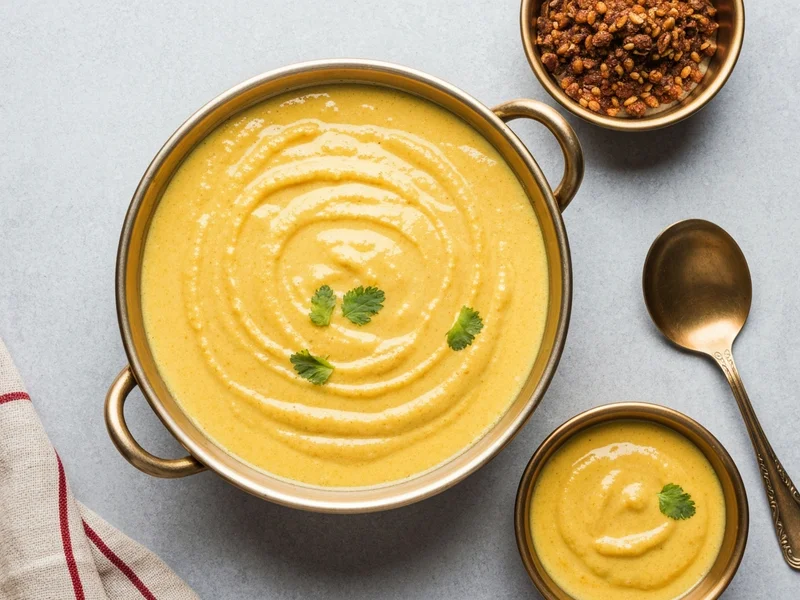
Traditional Rabri is a traditional Punjab Pakistani dish. Traditional Rabri is slowly reduced sweetened milk layered with thick cream, perfumed with saffron and cardamom — Pakistan's most regal milk dessert. Each spoonful is dense, intensely flavoured, and unapologetically rich.
Rabri is what happens when you refuse to rush milk and treat time as an ingredient.
The Lahori version leans sweeter and more saffron-heavy than its Indian counterparts, with a thicker consistency that borders on solid. The magic of rabri is in the malai layers — thin films of cream that form on the surface as the milk reduces, which you fold back in repeatedly rather than skimming off. Those layers are the texture. They're the reason rabri tastes like no other dessert on earth. It's the kind of thing you make for someone when you want them to know you really tried.
Ingredients
Instructions
- BLOOM THE SAFFRON: Gently warm 3 tablespoons of doodh (milk) in a small bartan (bowl) — it should be warm enough to touch but not scalding. Add the zafran (saffron) threads and stir once. Let it sit for at least 15 minutes — the milk will turn a deep golden orange and smell extraordinary. WHY: Saffron's colour and aroma compounds (crocin and safranal) need warm liquid to activate. Dry saffron added directly to a large pot of boiling milk just disappears into the noise. Set this aside while you work on the milk.
- REDUCE THE MILK — PHASE 1: Pour all 2 litres of doodh (full-fat milk) into a wide, heavy-bottomed degh (pot) or pateela (saucepan). A wide pot is key — more surface area means faster evaporation and more malai formation. Bring to a rolling boil over high heat, stirring constantly to prevent a skin from sticking to the bottom. Once boiling, reduce to medium heat. HINT: Do not walk away from this pot in the first 10 minutes. Milk boils over violently and without warning. Stand by with a chamcha (ladle) to stir down any foam threatening to rise over the rim.
- COLLECT THE MALAI LAYERS: As the milk simmers, a thin skin (malai) will form on the surface every few minutes. DO NOT stir it back in yet. Instead, use the back of a chamcha (ladle) or a flat spatula to gently push this skin to the sides and bottom edge of the pot, where it will stick. FUN FACT: These folded cream layers are literally what makes rabri rabri — they create the distinctive striated, layered texture that separates it from plain kheer. You're essentially making layer upon layer of concentrated cream inside the pot. Repeat this every 3-4 minutes for the next 45 minutes.
- ADD SUGAR AND SAFFRON: Once the milk has reduced to roughly half its original volume (about 45-60 minutes in), add the cheeni (sugar) and the bloomed saffron along with its soaking liquid. Stir well to dissolve the sugar. The milk will turn a beautiful golden-yellow. WHY: Adding sugar to full-volume milk early can cause caramelisation on the pan bottom — it's hard to clean and imparts a burnt taste. Halfway in, the milk is concentrated enough to handle the sugar safely. Continue simmering on medium-low heat.
- REDUCE TO FINAL CONSISTENCY: Continue simmering and folding malai layers for another 30-40 minutes. If using khoya (reduced milk solids), crumble it in now — it will melt into the mixture and accelerate thickening. The rabri is ready when it's reduced to about one-quarter of the original volume and has a thick, creamy, slightly grainy texture. HINT: It will thicken further as it cools — pull it off the heat when it's slightly looser than your target consistency. If you wait until it looks perfectly thick, it'll set like cement once cold.
- ADD AROMATICS AND NUTS: Take the pot off heat. Stir in elaichi powder (cardamom) and kewra water (if using). Fold in half the sliced pista (pistachios) and badam (almonds) — these get mixed through the rabri. WHY: Adding cardamom off the heat preserves its volatile aromatic oils, which evaporate quickly. Adding it during cooking would give you a ghost of cardamom, not the real thing. Stir gently from the bottom up to fold in those beautiful malai layers without completely breaking them apart.
- CHILL AND GARNISH: Transfer the rabri into a wide serving bartan (bowl) or individual cups. Let it cool to room temperature, then refrigerate for at least 2 hours — ideally overnight. Cold rabri is the correct form. The texture should be dense and creamy with visible layers of malai throughout. HINT: Rabri served warm is technically kheer with ambitions. The cold version is a completely different texture experience — the fat sets slightly and the whole thing becomes intensely concentrated. Garnish with remaining sliced pistachios, almonds, and a pinch of extra saffron threads right before serving.
Chef's Secrets
- Width over depth: a wide, shallow pan will reduce milk in 60-70% of the time a narrow tall pot takes. Invest in a wide-bottomed degh — it also gives you more malai surface.
- The milk should never be at a violent rolling boil during reduction — that scorches the bottom. A steady, active simmer with gentle bubbles around the edges is the sweet spot.
- Rabri keeps in the fridge for 4-5 days and actually improves after day 2 as the flavours meld. Make it the day before a dinner party.
- Diaspora note: In the UK and US, whole milk has a lower fat content than Pakistani doodh. Add 100ml of heavy cream to 2 litres of whole milk to compensate — it speeds up reduction and improves malai formation.
- Serve rabri alongside jalebi for the classic Pakistani pairing: the syrupy crunch of jalebi against the cold cream of rabri is one of the great food combinations in the world.
Common Questions
How long does Traditional Rabri take to make?
Total time is 2h 15m — 15m prep and 2h cooking.
How many servings does this recipe make?
This recipe makes 6 servings, and is rated medium difficulty.
Which region of Pakistan is Traditional Rabri from?
Traditional Rabri is from Punjab, Pakistan — one of the country's most distinctive culinary traditions.
What do you serve with Traditional Rabri?
Serve cold in individual clay cups (matkas) or a wide bartan. Pair with hot jalebi for the classic halwai combo. Garnish with silver warq (edible silver leaf) for special occasions. Also works as a topping for falooda or over warm gulab jamun.
Goes Well With
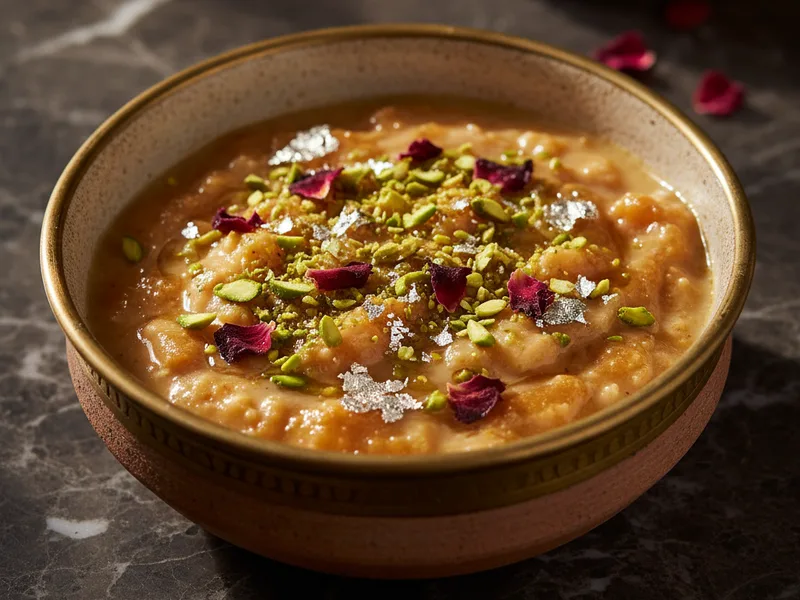
Creamy Rabri — Lahori Style
Lahori-style rabri made by slow-simmering full-fat milk for over an hour, constantly collecting the creamy skin layers to create a thick, textured, intensely flavourful condensed milk dessert. The base of countless Pakistani sweets and perfect eaten straight with a spoon.
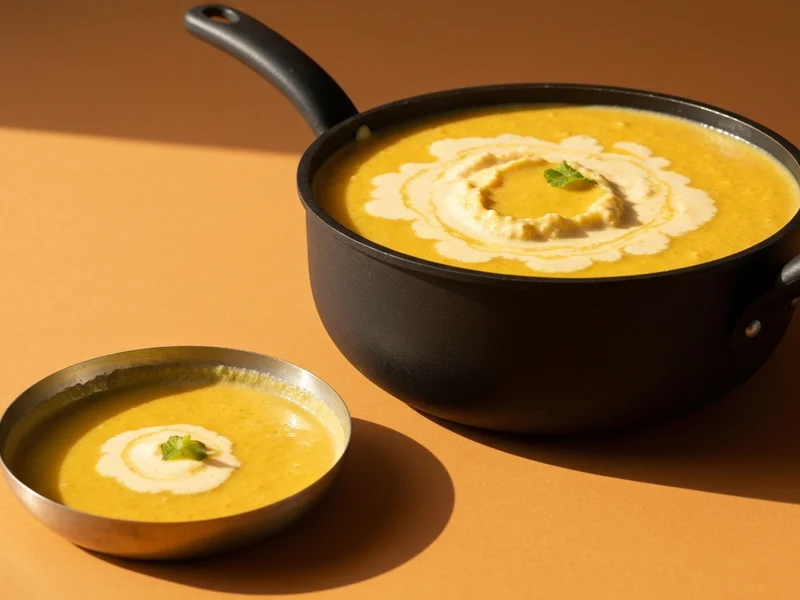
Sheer Khurma
The Eid morning vermicelli pudding — toasted sevaiyan simmered in sweetened milk with dates, pistachios, almonds, and cardamom. No Eid is complete without it.
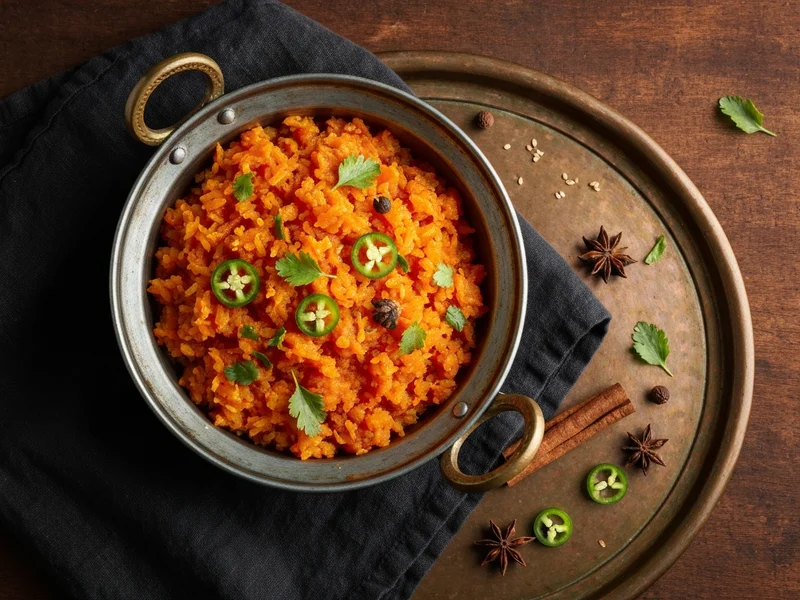
Gajar Ka Halwa — Classic Pakistani Carrot Dessert
Gajar ka halwa is Pakistan's most beloved winter dessert — slow-cooked grated carrots in full-fat milk, sugar, and cardamom, finished with a shower of nuts and a knob of ghee. Rich, aromatic, and impossibly comforting, it turns a humble root vegetable into something genuinely spectacular.
What Cooks Are Saying
Absolutely delicious! The flavours are spot on — tastes just like what I grew up eating.
This recipe is a keeper. Followed it exactly and it turned out perfect.
My husband said it's the best he's ever had. Coming from him that means everything!
Leave a Review
Tried this recipe? Share your experience — your review helps other cooks.